Dogs get all the credit when it comes to animal-assisted therapy. They are everywhere. They patrol college campuses during finals week, sit patiently with nervous flyers at airport gates, and comfort people in hospital wards.
But dogs can be high-energy. They bounce around. They crave constant validation.
For someone dealing with severe psychiatric conditions, that intense energy can sometimes feel like too much to handle. That is why a highly unusual initiative at the Ville-Evrard hospital complex in Neuilly-sur-Marne, just outside of Paris, is ditching the traditional therapy animal playbook.
Instead, they are using donkeys.
The program operates out of 19th-century farm buildings surrounded by dense woods, tucked away within the hospital grounds. It sounds like a pastoral postcard, but the work happening here is serious medicine. Five donkeys are helping patients with complex mental health struggles find their footing again.
The Surprising Science of Donkey Therapy
People often assume donkeys are stubborn or dull. It is a bad stereotype. In reality, donkeys possess a highly specific evolutionary trait that makes them perfect for psychiatric intervention. When a horse gets scared, it runs. When a donkey gets scared, it stops, freezes, and evaluates.
This deep sense of caution translates into a incredibly calm, deliberate demeanor.
For a psychiatric patient struggling with racing thoughts or severe trauma, this slow rhythm acts like an emotional anchor. You cannot rush a donkey. If you are anxious, aggressive, or chaotic, the donkey will simply stand still. To get the animal to move, walk, or cooperate, you have to regulate your own internal state first.
A 2025 systematic review published in Frontiers in Psychiatry looked closely at donkey-assisted interventions. The data revealed that spending structured time with these animals directly improves emotional regulation, communication, and social interaction. For adults, researchers noted measurable boosts in personal autonomy and motor coordination. It is not just about petting a soft animal. It is about a bi-directional feedback loop.
What Happens in the Stable stays in the Mind
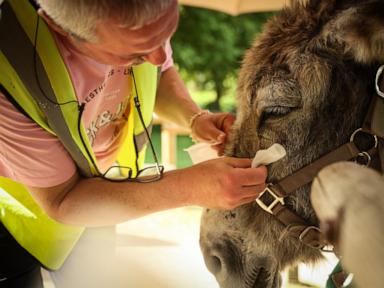
The routine at Ville-Evrard is grounded in basic husbandry. Patients do not just show up to look at the animals. They take care of them. They muck out stables. They lift heavy hooves to scrape out dirt and stones. They lead the five resident donkeys on long walks through the wooded paths of the hospital complex.
These actions require physical presence. You have to focus entirely on the task at hand.
Think about the mental energy required to safely pick up a donkey's hoof. You have to lean your body weight against a large animal, communicate your intent without words, and execute a physical task that requires coordination. For someone dealing with profound depression or a dissociative disorder, that exercise forces a hard pivot back into the physical world. It breaks the cycle of rumination.
- Patience training: Donkeys move at their own pace, forcing patients to slow down.
- Non-verbal communication: Patients learn to read body language, which builds empathy.
- Physical confidence: Managing a large animal builds a sense of capability that translates back into daily human life.
The sensory aspect of the work matters just as much. The smell of hay, the rhythmic sound of brushing coarse fur, and the warmth of the animal's skin offer a grounding experience that traditional clinical walls simply cannot replicate.
Why Traditional Clinical Settings Fail Some Patients
Psychiatric wards can feel sterile, restrictive, and intensely clinical. Medication and talk therapy are crucial, but they often focus heavily on the intellect. They require a patient to articulate pain, dissect trauma, and talk through their darkest moments.
Sometimes, people run out of words.
The Ville-Evrard program works because it asks for nothing but presence. A donkey does not care about a clinical diagnosis. It does not know your medical history, and it does not judge a patient for having a bad day. If you show up with calm energy, the donkey accepts you.
This lack of judgment allows patients to lower their defenses. Hospital staff note that patients who rarely speak in group therapy sessions will chat naturally while grooming an animal. The donkey becomes a social catalyst, a neutral third party that makes human connection feel safe again.
How to Apply These Grounding Concepts at Home
You probably do not have a 19th-century French barn or a herd of donkeys in your backyard. That is fine. The core therapeutic principles used at Ville-Evrard can be integrated into your own mental health toolkit without buying a farm.
First, look for opportunities to engage with larger animals if you feel stuck in your head. Local horse rescues, farm sanctuaries, or community agricultural programs often need volunteers for basic maintenance and grooming. The physical labor involved in caring for a larger creature provides the exact same grounding feedback loop used in France.
Second, embrace the "freeze and evaluate" mindset when anxiety strikes. Instead of reacting to a stressful trigger with panic or flight, channel the donkey's natural defense mechanism. Stop moving. Stand completely still. Take three slow breaths and look at your immediate physical surroundings. By forcing your body into stillness, you send a powerful signal to your nervous system that you are safe, allowing your brain time to analyze the situation logically rather than emotionally.