A brand-new 300 km/h train sounds great until the corridor slices right through your family's best hayfield. That's the gut check driving Quebec farmers right now. On November 12, 2026, the Union des producteurs agricoles (UPA) released a report by Vision Transport challenging the massive price tag of Alto, the proposed high-speed rail project linking Quebec City and Toronto.
Here's the punchline up front. The UPA and Vision Transport argue that upgrading existing rail infrastructure could cost roughly $9 billion to $9.4 billion—or about $11 billion once you add a 20 percent contingency reserve. Meanwhile, Alto has estimated its high-speed rail plan at $60 billion to $90 billion, the Parliamentary Budget Officer put the range at $75 billion to $113 billion, and independent industry voices have floated numbers as high as $150 billion.
Look at that gap. A roughly $11 billion upgrade versus $60 billion to $113 billion or more for a brand-new high-speed line. No wonder rural landowners, taxpayers, and politicians are arguing loudly.
What the Quebec Farmers Study Actually Proposes
Most casual coverage treats the UPA study as a simple "no" to trains. Honestly, that misses the point. UPA president Martin Caron hasn't been arguing against moving people faster between Quebec and Ontario—he's asking why Ottawa hasn't seriously tested cheaper ways to modernize what already exists.
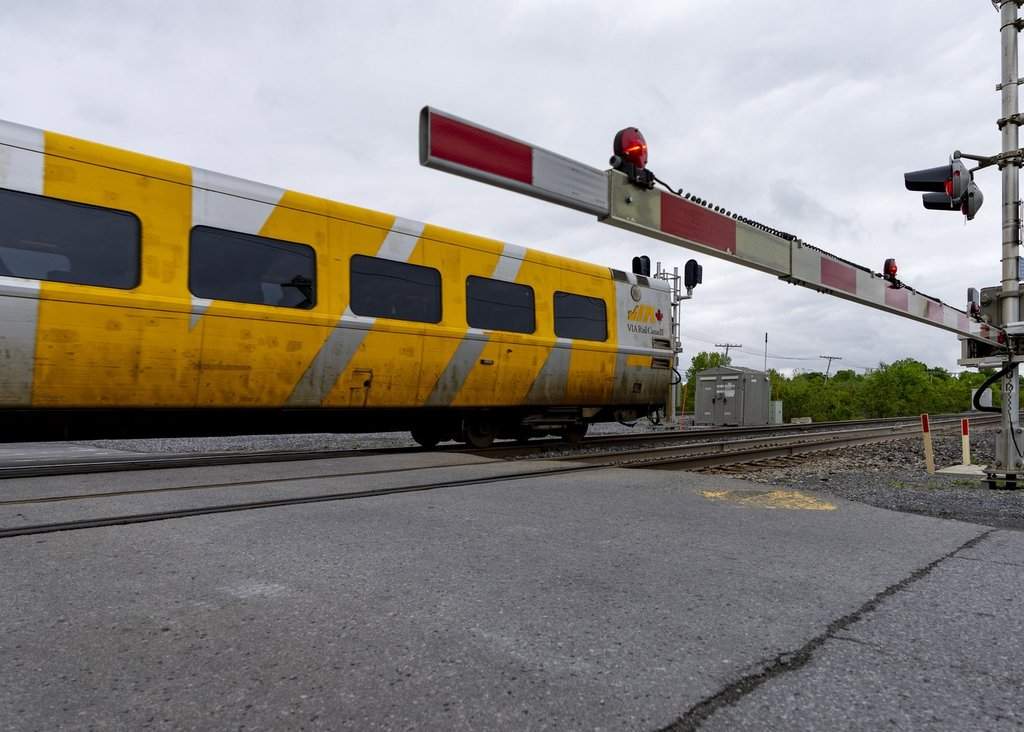
Vision Transport's blueprint focuses on optimizing the existing corridor rather than carving a fresh high-speed right-of-way across farmland. Instead of fencing both sides of a brand-new 300 km/h alignment and wiping out every level crossing, the plan keeps the current 924 level crossings while equipping 533 of them with full barriers. It also leaves room to build overpasses on a third of those crossings if planners want to shave another eight minutes off the Montreal-to-Toronto trip.
The rolling stock changes matter just as much. Vision Transport points to tilting trains paired with steeper track banking on curves so trains can hold higher speeds without rebuilding the entire corridor from scratch.
Is it slower than true high-speed rail? Yes. Alto's vision aims to link Toronto and Montreal in about three hours and stretch roughly 1,000 kilometres from Quebec City to Toronto in around four hours and 30 minutes, with stops like Trois-Rivières, Laval, Montreal, Ottawa, and Peterborough. A modernized conventional corridor won't match pure high-speed travel times, and critics are already pointing out that difference.
Why Farmland Loss Fuels the Backlash
Anyone who has walked a farm knows a straight line drawn on a map isn't just dirt. A wide rail corridor can split a single productive parcel in two, leaving triangular corners too awkward or narrow for modern combines and sprayers to turn efficiently.
Even when farmers receive compensation for expropriated land, cash doesn't replace fertile soil that's gone out of production. Agricultural groups across Quebec, Ontario, and Canada have warned that a massive new corridor threatens farmland and could push costs well above initial projections.
There's also a political layer here that makes this fight harder to brush off. Quebec Premier Paul St-Pierre Plamondon has criticized Alto as a potential "financial fiasco," tying the debate to broader questions about social acceptability and fiscal discipline. When provincial leaders and farm unions echo each other on budget risk, Ottawa can't treat rural pushback as a minor zoning headache.
High-Speed Rail Costs and the Counter-Argument
If you're trying to make sense of the numbers, you have to look at both sides of the ledger. Mega-projects in North America have a well-earned reputation for ballooning past early estimates—which explains why a Leger poll commissioned by the Canadian Taxpayers Federation found most Canadians doubt the $60 billion to $90 billion figure will hold.
Still, Alto isn't conceding the economic case. Just days after the farmers' study came out, a report by Aviseo Conseil commissioned for Alto argued the high-speed line could add $24.5 billion per year to Canada's GDP once operating, driven by productivity and intercity travel. That same analysis estimated that failing to build the line could cost Quebec and Ontario more than $50 billion by 2050 as intercity trips climb from roughly 80 million a year toward a projected 115 million by 2059, forcing expensive highway expansions instead.
So which side is right? That depends on what you think the biggest risk is.
- Risk of building Alto: A staggering capital bill—potentially north of $100 billion—along with farmland fragmentation, construction delays, and years of political friction.
- Risk of settling for upgrades: Spending around $11 billion on a faster conventional service that still leaves highway and airport bottlenecks unresolved, and potentially still runs into track ownership and capacity hurdles on corridors where freight and passenger rail mix.
In my view, the biggest mistake policymakers can make right now is treating a $9 billion to $11 billion upgrade and a $60 billion-plus high-speed line as an all-or-nothing religious war. Real infrastructure planning means comparing total lifecycle costs, realistic ridership, freight and track rights, and actual agricultural impacts side by side—not cherry-picking whichever spreadsheet flatters your side.
What to Watch and Do Next
If you follow Canadian infrastructure, agricultural policy, or intercity travel, this debate isn't going away anytime soon. A few practical steps can help you stay sharp as the numbers get picked apart:
- Read the primary reports, not just headlines. Compare the Parliamentary Budget Officer's cost range ($75 billion to $113 billion) against Vision Transport's $11 billion (with contingency) modernization estimate and Aviseo Conseil's GDP projections so you see what each model includes and excludes.
- Watch track ownership and right-of-way details. Pay close attention to who owns existing tracks along key segments and how crossing upgrades or new alignments affect local municipalities and farm parcels.
- Follow public consultations and parliamentary debates. Track feedback from agricultural groups like the UPA alongside federal and provincial responses—especially as parliamentarians debate alternatives and future ridership assessments.