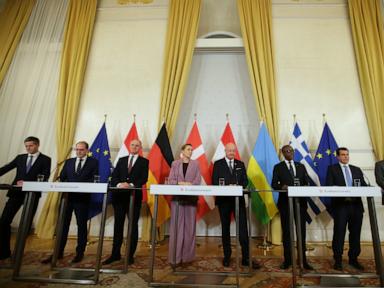
The fluorescent lights in a Brussels conference room hum at a frequency designed to keep people awake, though rarely to make them feel anything. On a crisp autumn morning in October 2024, twenty-seven national leaders sat around a polished table, sipping lukewarm espresso and debating a phrase so sterile it sounded like an airport terminal upgrade.
Return hubs.
To the officials drafting the communiqués, these words represented administrative relief, a pressure valve for strained asylum systems and rising populist anger. To anyone who has ever stood at the edge of a razor-wire fence with nothing but a damp passport and a dead phone battery, those same words meant something entirely different. They meant a waiting room at the end of the world.
I remember the smell of damp wool and diesel exhaust at the border crossings of Southeastern Europe a few winters ago. When you spend enough time reporting from the edges of the continent, you stop hearing policy terms as abstractions. You start seeing them as concrete, steel, and locked doors. You watch how a single sentence agreed upon in a climate-controlled room in Belgium ripples outward, turning into a twelve-foot chain-link perimeter in a muddy field thousands of miles away.
To understand how Europe arrived at the decision to build return hubs—facilities located outside the European Union where rejected asylum seekers are sent while awaiting deportation—you cannot start with the law. You have to start with a number that has haunted European ministries for a decade.
Twenty percent.
For years, Eurostat data has told a blunt, uncomfortable story. Out of every ten people ordered to leave the European Union because their asylum claims failed, roughly eight stayed. Only about one in five was actually returned to their country of origin. The reasons were tangled in diplomacy and geography. Home countries refused to issue travel documents. People vanished into the shadow economies of major cities before deportation flights could be arranged. Legal appeals stretched across years.
Governments panicked. Voters turned sharply toward hardline parties promising walls, naval blockades, and mass expulsions. By the time the European Council gathered in late 2024, the political consensus that had held since the post-war era was cracking under the weight of its own contradictions. Europe still claimed to uphold the right to asylum, yet its leaders were desperately searching for a way to make arrival irrelevant.
The Anatomy of a Legal Detour
Consider a hypothetical scenario to see how this machinery actually works on the ground.
Meet Tariq. Tariq is a thirty-one-year-old mechanic from a coastal town in North Africa where inflation has gutted the currency and drought has ruined the surrounding farms. He is not fleeing a formal war, which means under strict international definitions, he does not qualify for refugee status. He crosses the Mediterranean in a fiberglass skiff, survives a storm that claims two of the men sitting beside him, and washes ashore on an Italian island.
Under the old system, Tariq’s journey into legal limbo began the moment his boots hit the sand. His fingerprints were taken. He filed an asylum claim, knowing it would likely be rejected, because the backlog gave him eighteen months to find construction work in Milan and send money home. When the rejection finally arrived, the Italian state handed him a piece of paper ordering him to leave within thirty days. Tariq folded the paper, put it in his pocket, and boarded a train north.
Now, rewind that tape and apply the logic of return hubs.
In this new reality, once Tariq’s claim is rejected in an accelerated border procedure, he does not get a piece of paper and an open train station. He is placed on a chartered flight to a third country—a nation outside the EU that has signed a bilateral agreement with Brussels or a single member state, exchanging border enforcement for trade deals, visa liberalization, or direct cash injections.
Think of a return hub like an airline layover you never booked, in a city you have never visited, with no confirmed departure time. You are no longer inside the terminal where your rights are guaranteed by domestic courts, yet you are not home either. You are suspended in diplomatic space.
Ursula von der Leyen, President of the European Commission, framed this shift in a letter to EU leaders just before their October 2024 summit. She pointed directly to the Italy-Albania protocol as a template worth studying, a signal that what was once dismissed as a radical fringe idea had officially entered the European mainstream. In that deal, Italy funded and built two processing centers on Albanian soil, guarded by Italian personnel, designed to hold migrants intercepted at sea while their claims were vetted.
Wait. Look closely at the distinction between the Albanian model and true return hubs, because this is where the political sleight of hand happens.
Italy’s centers in Albania were built to process initial asylum claims offshore, a concept fraught with immediate legal roadblocks from European judges who ruled that countries like Egypt or Bangladesh could not simply be declared "safe" by executive decree. Return hubs, by contrast, target people who have already had their claims rejected inside Europe. By moving them out of the EU after the legal verdict is sealed, policymakers believed they could bypass the thorniest human rights objections while solving the twenty-percent deportation bottleneck.
The Ghosts of Past Experiments
History rarely invents new tools for managing unwanted people; it mostly polishes old ones and gives them softer names.
If you want to know what happens when wealthy democracies outsource their border obligations to poorer neighbors, you do not need to guess. You only need to look toward the South Pacific. For over two decades, Australia ran offshore detention facilities on the tiny island nation of Nauru and on Manus Island in Papua New Guinea. The goal was identical to Europe’s current ambition: deterrence through geographic distance. Make the prospect of reaching the mainland so bleak, so thoroughly severed from legal recourse, that boats stop leaving the shore.
The human cost on those islands became an open wound. Doctors working inside the camps documented rates of self-harm and pediatric resignation syndrome—children withdrawing so deeply into trauma that they stopped speaking, eating, or opening their eyes—that stunned the medical community. Financially, the program ballooned into billions of taxpayer dollars, enriching private security contractors while trapping thousands of people in decade-long purgatories.
When the United Kingdom attempted its own version with the Rwanda asylum plan, spending hundreds of millions of pounds before a single forced deportation flight ever left the tarmac, critics warned of the exact same trap. The legal battles alone paralyzed the British government for years, demonstrating how difficult it is to square offshore transfers with the European Convention on Human Rights.
Yet Brussels pressed forward anyway. Why?
Because domestic politics in Europe had reached a boiling point where doing nothing carried a higher electoral penalty than failing expensively. In Germany, a spate of knife attacks by rejected asylum seekers shattered public trust and forced Chancellor Olaf Scholz’s coalition to reinstate land border controls across all nine neighboring frontiers, tearing at the fabric of the Schengen free-movement zone. In the Netherlands, a far-right government openly demanded an opt-out from EU asylum rules. In Poland, Prime Minister Donald Tusk announced the temporary suspension of asylum rights at the Belarusian border, accusing Moscow and Minsk of weaponizing migration to destabilize the West.
Fear changes the geometry of a room. When leaders feel the ground shifting beneath their feet, principles that seemed permanent yesterday suddenly look like luxuries they can no longer afford.
Inside the Machine of "Innovative Solutions"
In the diplomatic lexicon of Brussels, nobody ever says offshore detention. They say innovative solutions.
Let us strip away the euphemisms and look at the mechanics required to make a return hub function. For a hub to exist, three separate pieces must lock into place, and every single one carries invisible fractures.
First, you need a willing host country. Which nations outside the EU are prepared to accept thousands of rejected migrants from around the world—people who are not their own citizens and whom Europe itself could not deport? The answer, inevitably, points toward countries in the Western Balkans or North Africa that are deeply reliant on European financial aid or eager for EU accession talks. Critics call this checkbook diplomacy; human rights lawyers call it neo-colonial outsourcing. Imagine a town in Tunisia or Bosnia suddenly tasked with housing frustrated, desperate men from Pakistan, Eritrea, and Syria who know their European dream has ended in a fenced compound. How long does local goodwill last before riots break out inside the perimeter or resentment boils over in the surrounding streets?
Second, you need legal guardrails that hold up in court. Under the EU’s existing Return Directive, a person can only be sent back to their country of origin, a country they transited through, or a nation where they have genuine ties. Sending someone to a third country they have never set foot in requires rewriting European law from the ground up. In March 2025, the European Commission unveiled its legislative overhaul to do precisely that—proposing a common European system for returns that explicitly opened the door to bilateral return hubs, alongside stricter detention rules and entry bans for anyone refusing to cooperate.
Third, and perhaps most crucially, you need an exit ramp. A return hub is supposed to be a transit point, not a permanent colony. Yet if a person’s home country refused to take them back when they were sitting in a detention center in Frankfurt or Paris, why would that same government suddenly issue travel papers because the person is now sitting in a camp outside Tirana or Tunis?
Nobody in Brussels has offered a convincing answer to that question.
I admit, when I first read the legislative drafts, I found myself caught between two irreconcilable truths. On one hand, a nation-state without the ability to enforce its own borders eventually loses the social solidarity required to maintain welfare systems and public trust. If an asylum system cannot distinguish between those fleeing persecution and those seeking economic opportunity—and cannot enforce the outcome of its own courts—the entire humanitarian enterprise collapses under public cynicism. On the other hand, watching some of the wealthiest, most legally sophisticated nations on earth pay poorer neighbors to hold vulnerable people out of sight feels like an abdication of moral adulthood.
What Happens When the Lights Go Out
Picture again that hypothetical mechanic, Tariq, sitting on a plastic chair inside a prefabricated barracks somewhere beyond the borders of the European Union.
There are no cameras here. Journalists face months of bureaucratic delays to get accreditation, and when they do arrive, they are escorted along predetermined corridors by security contractors. The legal aid lawyers who once argued Tariq’s case in Milan are a thousand miles away, separated by jurisdictions and language barriers. His phone has limited signal. The days stretch into weeks, and the weeks bleed into months, marked only by the clatter of metal food trays and the rumble of generators outside the fence.
Around him are men from a dozen different countries, united only by the fact that Europe decided they were surplus to requirements. Some begin to lose their grip on time. Others look toward the perimeter fence, calculating whether a smugglers’ route back toward the Mediterranean coast is worth the risk of drowning a second time.
This is the quiet secret of border deterrence: it rarely stops human desperation. It simply reroutes it into darker, more dangerous channels, enriching the very smuggling networks European leaders claim they want to destroy. When legal pathways shrink and detention replaces processing, people do not stop moving; they just stop trusting the law.
Europe built its modern identity on the promise that human dignity was non-negotiable, an idea forged in the ashes of a continent that knew all too well what happened when states began categorizing human beings as logistical problems to be relocated elsewhere. That memory was supposed to be the anchor holding the European project steady when political storms rolled in.
Today, the anchor is dragging.
Somewhere along a dusty road outside a capital city that does not belong to the European Union, bulldozers are clearing scrub brush and pouring concrete foundations for perimeter walls, paid for in euros, designed to keep the consequences of a broken global system neatly out of frame.