Two in the morning smells like stale coffee and ozone.
When a hospital network or a local manufacturer or a regional clinic goes dark at two in the morning, the silence in the server room is heavy enough to ache in your chest. No fan whirs. No status lights blink green. Just the hum of the fluorescent tubes overhead and the sickening realization that every file you spent ten years building is now wearing a digital padlock. For a different look, read: this related article.
Crisis.
That is the word people reach for when ransomware hits. You call the specialists. You pay the retainer. You hand over the keys to the people who claim they know how to talk to monsters in the dark, trusting that when the sun comes up, the doors will swing open and you will be whole again. Similar coverage on this trend has been provided by Financial Times.
Now consider what happens when the rescuer cuts a quiet deal behind your back.
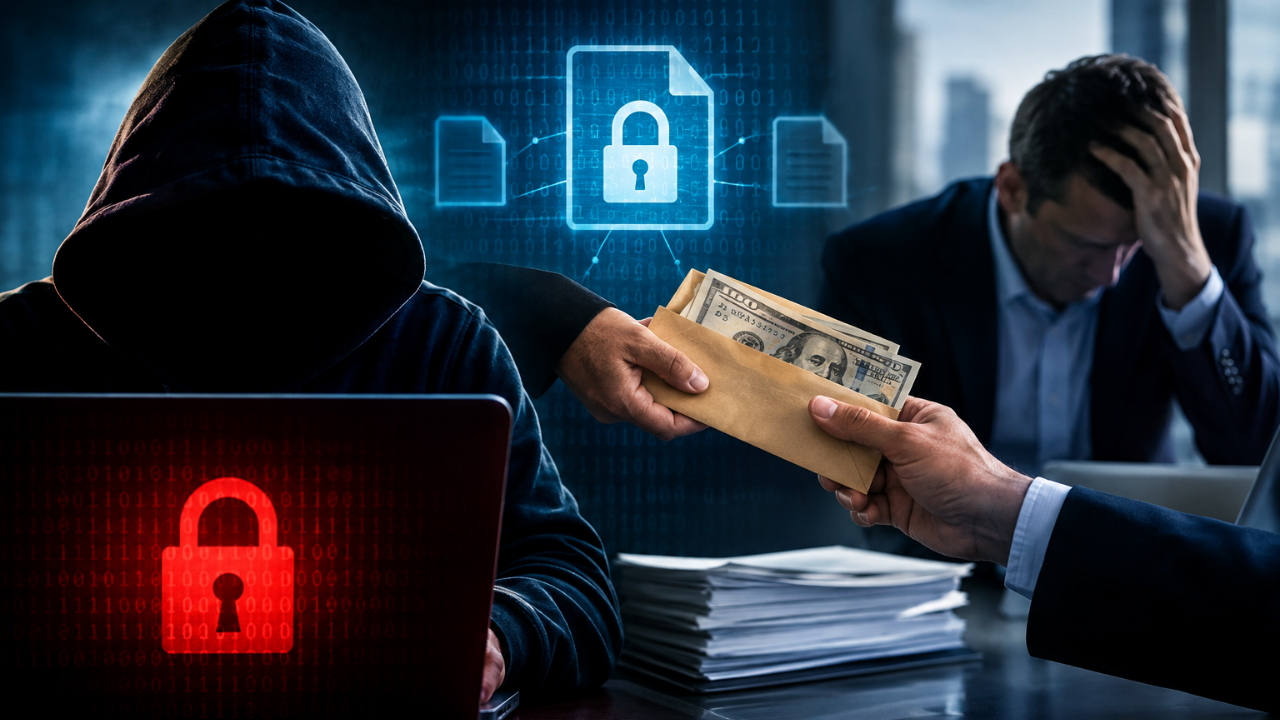
Based on the case summary—a Florida cyber owner accused of misleading ransomware victims, a firm charged $19M, and an alleged $8M secret payment to hackers—the core accusation cuts right through the polite theater of incident response. A victim comes looking for protection, clarity, and honest stewardship during the worst week of their business life. Instead, the allegations paint a picture of a firm collecting steep sums—charged $19M in the headline account—while funneling $8M secretly to the extortionists and leaving clients in the dark about what was actually happening with their money and their data.
I have sat in enough incident rooms to know how desperate people look at 3:00 a.m. when payroll is due on Friday and every drive is encrypted. Your hands shake on the trackpad. You want certainty so badly you will swallow almost any reassurance that sounds calm and authoritative.
And that vulnerability is precisely why a breach of trust by a supposed defender stings worse than the initial attack.
The Architecture of Desperation
To understand why a secret payment feels so corrosive, we have to look at how extortion works when nobody is watching.
Let us use a hypothetical scenario to make the mechanics plain. Suppose a mid-sized regional logistics company—let us call it Harborline Freight, entirely fictional—wakes up to find its dispatch schedules frozen and a ransom note demanding a wire in cryptocurrency. Harborline has cyber insurance and hires an outside response firm. The firm promises expertise, discretion, and speed.
At first, the relationship feels like a lifeline. The firm tells Harborline not to panic, not to speak directly to the attackers, and to let trained negotiators handle the backchannel.
Reasonable. Standard practice, even.
Yet once money moves in secret—especially when a client is told one story about strategy, costs, or leverage while millions are quietly routed to the threat actors—the boundary between rescuer and broker blurs. In the Florida case summarized in the reference, the firm faced a $19M charge and allegations of secretly paying $8M to hackers while misleading victims. Even without every granular line item from a raw headline, the emotional and financial arithmetic is unmistakable: victims paid heavily expecting clean, transparent protection, while a massive sum allegedly went straight into the pockets of the very people holding their operations hostage.
Metaphorically speaking, it is like hiring a locksmith to free your family from a locked room, paying him a fortune to pick the tumblers, and later discovering he slipped cash to the burglar who welded the hinges shut—and never told you he had a key in his pocket the whole time.
Why do people fall for opaque arrangements in the heat of an attack?
Because panic narrows your vision. When your servers are down, you rarely ask every hard accounting question on day one. You ask, Can we get back online? You trust the person wearing the calmest voice in the room.
What Victims Actually Think They Are Buying
When an executive signs an engagement letter with an incident response firm, they rarely think they are merely buying hours on a billing sheet. They think they are buying truth.
They want to know:
- Are the attackers still inside our network?
- Was customer or patient data stolen before the files were locked?
- If money changes hands, do we actually get reliable decryption keys—or just a promise from criminals who have already proven they have no conscience?
- Is our advisor working for us, or optimizing their own margin and convenience?
Honesty is expensive in a crisis. Telling a client, "Paying may not recover everything, the attackers may keep copies of your files, and every dollar sent to them funds the next wave of attacks," is harder than offering a tidy illusion of control.
Yet misleading victims during a ransomware crisis does more than distort a ledger. It robs the victim of informed consent at the exact moment their company's survival is on the line. A business leader can weigh moral trade-offs, legal risks, insurance rules, and operational realities only if they are told the truth about where the money goes and what risks remain.
Following the Money in the Shadows
Eight million dollars is not a rounding error. Nineteen million dollars is not a minor dispute.
Numbers of that scale force an uncomfortable question about incentives in the cyber-response world. When a firm sits between a desperate victim and an anonymous extortion gang, information asymmetry becomes currency. The victim cannot easily see what happens inside encrypted chats, crypto wallets, or backroom negotiations unless the firm chooses to report it accurately.
If a firm misleads victims about payments or negotiations, several quiet distortions happen at once:
- Trust collapses. Once a client learns they were misled during an emergency, every report, timeline, and assurance from that point forward feels suspect.
- Financial risk compounds. Paying hackers secretly—especially if the victim is kept in the dark about the terms or amounts—can collide with insurance expectations, regulatory scrutiny, and internal governance.
- The extortion economy gets fed. Every secret payout reinforces the attackers' business model, proving once again that locking down someone else's livelihood is a profitable enterprise.
I will admit something candidly: even seasoned security professionals sometimes struggle to explain to a frightened CEO why ransomware negotiations are so murky. There is no customer service desk for extortionists. There is no escrow guarantee from people committing a felony. When someone claims they can make a nightmare go away quietly, the human brain wants to believe them.
Belief is a heavy tax when it is misplaced.
The Human Cost Behind the Charge
Headlines love clean numbers. A $19M charge. An $8M secret payment. A Florida cyber owner accused of misleading victims.
Those numbers read like chess pieces on a board. They are not.
Behind a ransomware attack are real people whose Tuesdays were normal until suddenly they were not. There is the IT director who hasn't slept horizontally in four days, staring at event logs until the letters swim. There is the clinic receptionist turning away patients whose charts are locked out. There is the small-business founder wondering if a decade of sweat is about to evaporate because a third party wasn't straight with them.
When a cyber firm misleads victims in that environment, the betrayal feels personal. You invited people into your house during a fire. You expected them to carry buckets of water, not strike private deals by the back fence.
How to Read a Crisis Without Wearing Blindfolds
You do not need a law degree or a forensic lab to ask sharper questions when an incident strikes—or before one ever does.
Start with radical clarity around money and authority. Any organization engaging outside cyber responders should know, in plain language, who has authority to communicate with attackers, whether any funds are ever proposed to be sent to threat actors, how every dollar is accounted for, and what disclosures are made to leadership and insurers.
Ask direct questions before the crisis hits:
- How do you report negotiation activity and payment amounts to the client?
- Under what circumstances, if any, would funds be transferred to an attacker, and who must approve it?
- How do you verify that stolen data is not merely being leveraged again later?
- What records do you keep so we can audit every action taken on our behalf?
A trustworthy partner welcomes clear guardrails. A partner who bristles at basic transparency during an emergency is giving you information before the invoice even arrives.
When the Lights Come Back On
Restoring a system is only half the story. Restoring trust is the part nobody can automate.
A company can rebuild a server from backups in days. It can patch vulnerabilities over a weekend. It can retrain staff and tighten access controls before the next quarter begins.
But when the people you hired to protect you hide what they did with millions of dollars while you were fighting for your footing, the damage lingers long after the screens light up again. Because the next time an alarm rings at two in the morning, you won't just wonder what the hackers are doing.
You will wonder who on your side is telling you the truth.