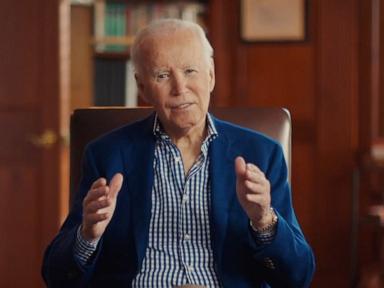
The room is quiet. It is the kind of heavy, deliberate silence that only exists when the rest of the world is screaming.
On a heavy wooden desk sits a stack of yellow legal pads, their blue lines clean and empty. Beside them, a felt-tip pen. A man sits in the leather chair, looking at the blank paper. He has spent more than fifty years in the bright, harsh glare of public life, trading words like currency, throwing them at crowds, whispering them to grieving families, and projecting them from the most powerful podium on earth.
Now, he has to write them down.
Joe Biden is preparing to publish his presidential memoir. But the most telling detail of this massive, highly anticipated publishing event is not the size of the advance or the name of the ghostwriter. It is the timing. The book will not hit the shelves until after the midterm elections have come and gone.
To the casual observer of Washington, this timing feels like a simple scheduling note. To those who understand the brutal, high-stakes theater of political literature, it is a defensive maneuver of the highest order.
The Weight of the Blank Page
Writing a book when you have held the nuclear codes is not an exercise in creative expression. It is a calculated act of historical preservation.
Consider the sheer volume of lived experience that must be compressed into a single, bound volume. Every phone call with a foreign dictator, every tense midnight meeting in the Situation Room, every agonizing decision that cost lives or saved them. How do you explain the crushing burden of a global pandemic to a reader sitting on a comfortable sofa? How do you describe the feeling of watching a nation fracture from the inside out?
A presidential memoir is a delicate dance between vulnerability and defense.
The public wants the raw truth. They want the tears, the anger, the unspoken doubts. They want to know what it felt like when the doors closed and the cameras stopped flashing. But the political apparatus demands a shield. Every sentence in a president’s memoir is a potential weapon. A single misplaced adjective can trigger a diplomatic crisis or sink a legislative agenda.
This is why the process of writing these books is more akin to a military campaign than an artistic endeavor.
Teams of researchers scour diaries, official schedules, and classified briefings to ensure every timeline is airtight. Transcribers go through hundreds of hours of recorded reflections, looking for the narrative thread that connects a chaotic four-year term into a coherent, logical arc. It is exhausting work. It is also lonely. At the center of it all is a man trying to convince the world—and perhaps himself—that he did the right thing.
The Midterm Firewall
Why wait?
If the manuscript is ready, or nearly ready, why hold it back? Why let the dust settle on the midterms before sharing this story with the world?
The answer lies in the volatile chemistry of modern political campaigns.
A presidential memoir released in the heat of an election cycle is not treated as literature. It is treated as ammunition. Imagine a candidate on a debate stage, clutching a freshly printed hardcover, pointing to page 142 to score a point against an opponent. Imagine cable news hosts spending weeks dissecting a single paragraph about a legislative compromise, turning a retrospective thought into a contemporary scandal.
By pushing the release date past the midterms, the authors of this strategy are building a firewall.
They are protecting the candidates running under the party banner from having to defend or explain the President's personal reflections on the campaign trail. They are also protecting the book itself. They want the memoir to be evaluated by historians and citizens, not by campaign managers looking for a soundbite.
It is a rare moment of discipline in a town that usually thrives on instant gratification.
But this delay also reveals a deeper truth about our current political moment. We have lost the ability to view history with any sense of perspective. Everything, even the reflective memoirs of an aging leader, is instantly sucked into the vortex of the immediate. The decision to wait is an admission of this sad reality. It is a quiet plea for a brief window of sanity, a hope that once the ballots are cast and the noise of the election fades, we might actually be willing to listen.
The Ghost in the Room
To understand the true nature of the presidential memoir, we must look at the people who actually help build them.
Every great leader has a shadow. In the publishing world, these shadows are the elite ghostwriters—brilliant journalists and historians who spend months living inside the mind of the president. They sit across from the leader for hours, asking difficult questions, pushing past the practiced talking points, trying to find the human heart beneath the political armor.
They listen to the cadence of the president's voice, learning the specific rhythm of his speech, the words he repeats when he is tired, the stories he tells when he wants to avoid a difficult topic.
It is an strange, intimate relationship.
The writer must disappear entirely. Their name will likely not appear on the cover. Their job is to become a perfect mirror, reflecting the president's voice back to the world, but with the rough edges polished and the structure tightened.
In Biden's case, this process carries a unique emotional weight. This is a man whose entire life has been defined by a deep, complicated relationship with words. He fought a severe stutter as a child, learning to navigate the English language like a minefield. He has suffered profound personal tragedies—the loss of his first wife and daughter, and later, his son Beau. He has spent decades speaking to a nation in grief, using his own pain as a bridge to connect with others.
How do you capture that specific, bruised empathy on a page?
How do you translate the voice of a man who has lived through so much history into a narrative that feels fresh, urgent, and true?
The writer tasked with this challenge is not just organizing facts. They are trying to capture lightning in a bottle. They are trying to find the human being who sits behind the desk, long after the staff has gone home and the West Wing has fallen dark.
A Legacy Written in Ink
There is an old saying in Washington that history is written by the victors.
But in the modern era, history is written by those who sign the richest publishing contracts.
The presidential memoir has become a traditional final act of the American presidency. From Ulysses S. Grant writing furiously on his deathbed to save his family from bankruptcy, to Barack Obama’s sweeping, philosophical reflections, these books are more than just merchandise. They are the final, definitive attempts by our leaders to control their own stories.
They are writing for the future.
They are writing for the student who will open this book fifty years from now, trying to understand what it was like to live through these turbulent times. They are writing for the critics who doubted them, the allies who supported them, and the vast, silent majority of citizens who simply wanted to believe that someone was at the wheel.
When the book finally arrives in bookstores, long after the midterm signs have been taken down and the next political cycle has begun, it will be met with the usual flurry of reviews, interviews, and talk show appearances.
But the real test of the book will not be its position on the bestseller list.
The real test will be whether it managed to capture the truth of a human being who held the world’s most difficult job. Did it show the doubt? Did it show the fear? Or was it just another polished piece of campaign literature, designed to protect a legacy rather than reveal a soul?
The pen is still moving. The legal pads are filling up. The clock is ticking toward the election, and then, toward the release.
But for now, in the quiet of the library, the story is still being shaped. The last word is still waiting to be written.


