The receipt in David’s pocket was barely two inches long, printed on cheap thermal paper that smudged if you rubbed it with a damp thumb. It listed four items: a two-hour full-body meridian massage, a plate of hand-pulled Lanzhou beef noodles, a freshly squeezed passionfruit green tea, and an overnight stay in a four-star boutique hotel with floor-to-ceiling windows overlooking a quiet river.
The total came to 310 yuan. Roughly 340 Hong Kong dollars.
Back in his 280-square-foot subdivided flat in Sham Shui Po, that exact sum wouldn't even cover a mediocre Friday night dinner for two at a mid-range Causeway Bay bistro, let alone a roof over his head for the night. David—a composite character built from the thousands of thirty-something Hong Kong office workers making this exact trek every Friday evening—wasn’t standing in Futian or Luohu, the glittering border districts of Shenzhen that dominated headlines throughout 2023 and 2024. He was fifty miles further north, sitting in a quiet, tree-lined cafe in Dongguan.
Shenzhen had gotten too expensive. The secret was out, the crowds were suffocating, and the prices had crept upward until the border city began to feel suspiciously like the very metropolis Hongkongers were trying to escape.
So, they kept going.
The Border Rush That Lost Its Bargain
To understand why trains heading deep into Guangdong province are suddenly packed with Cantonese speakers carrying empty wheeled suitcases, you have to remember the euphoria of early 2023. When the border between Hong Kong and mainland China finally reopened after three years of pandemic isolation, the dam broke. At first, the destination was almost exclusively Shenzhen. For a city battered by soaring inflation, stagnant wages, and the highest housing costs on earth, Shenzhen felt like a pressure valve. You could cross at Lok Ma Chau, step onto a clean, hyper-efficient subway, and suddenly your Hong Kong dollar—pegged to a muscular US dollar—felt like a superpower.
For a year, Shenzhen’s mega-malls were flooded with weekend warriors from Kowloon and Hong Kong Island. They came for the bubble tea, the bulk groceries at Sam’s Club, the dental cleanings, and the hotpot.
Then came the inevitable correction. Economics never sleeps.
As millions of Hong Kong visitors poured tens of billions of dollars into Shenzhen’s retail and hospitality sectors, Shenzhen’s merchants did what merchants everywhere do when demand outstrips supply. They raised their prices. A trendy coffee in Nanshan District climbed to 45 yuan. A decent hotel near Futian railway station on a Saturday night breached 1,000 yuan. The queues at popular restaurants stretched to three hours, turning a relaxing weekend getaway into an endurance test of standing under fluorescent mall lights while staring at a digital ticket number on a WeChat mini-program.
By late 2024 and into 2025, a quiet realization rippled through Hong Kong’s group chats and online forums. Shenzhen wasn’t a bargain anymore. It was just a slightly cheaper, significantly more crowded extension of Central.
The Psychology of the Second-Tier Push
Consider what happens next when a consumer tastes abundance, only to watch it slip out of reach again. They don't go back to deprivation. They look further down the track.
High-speed rail has fundamentally altered the geography of the Pearl River Delta, shrinking distances that once required grueling cross-border coach rides into forty-minute sprints. Think of the Greater Bay Area not as a collection of separate cities, but as a single, sprawling subway map where the price of everything drops by twenty percent with every three stops you travel away from the Shenzhen River.
Once Hongkongers realized that an extra twenty-five minutes on a bullet train from West Kowloon Station could land them in Guangzhou, Foshan, Huizhou, or Zhongshan, the psychological barrier vanished.
Let’s look at the numbers, because cold math is the engine driving this warm-blooded migration. According to data from Hong Kong’s Immigration Department, outbound trips by Hong Kong residents to the mainland routinely top 1.5 to 2 million per weekend. While Shenzhen still captures the lion’s share of day-trippers, hotel booking platforms and cross-border rail operators have recorded a sharp, undeniable surge in multi-day bookings for second-tier Guangdong cities. In places like Zhongshan—newly connected via the massive Shenzhen-Zhongshan Link bridge that slashed travel times from two hours to thirty minutes—weekend property viewings and short-term hotel stays by Hongkongers have spiked dramatically.
Why? Because in Huizhou, a beachfront apartment overlooking the South China Sea rents for less than a parking space in Tai Koo Shing. In Foshan, the spiritual home of Cantonese cuisine, you can eat dim sum crafted by third-generation masters for a third of what you would pay in Tsim Sha Tsui, without a waiter hovering over your shoulder to flip the table in sixty minutes.
Anatomy of a Weekend Escape
Walk through the departure hall of Hong Kong West Kowloon Station on a Friday at 6:30 PM, and you can feel the collective exhale.
The air smells faintly of floor wax and takeaway egg tarts. Around you are young couples in athleisure, retirees pulling canvas trolleys, and exhausted junior accountants still wearing their lanyards tucked into their jacket pockets. Everyone is moving with a brisk, practiced urgency. There is no tourist confusion here; these are commuters to a parallel life.
Take Sarah, a hypothetical composite of the countless middle-aged Hong Kong civil servants and teachers who have turned weekend travel into a fine art. Five years ago, Sarah spent her weekends in Hong Kong—brunch in Soho, a movie in Mong Kok, maybe a hike up Dragon’s Back. Today, she rarely spends a Saturday in her home city.
When Sarah boards the train to Guangzhou, she isn't just chasing cheap goods. She is buying space.
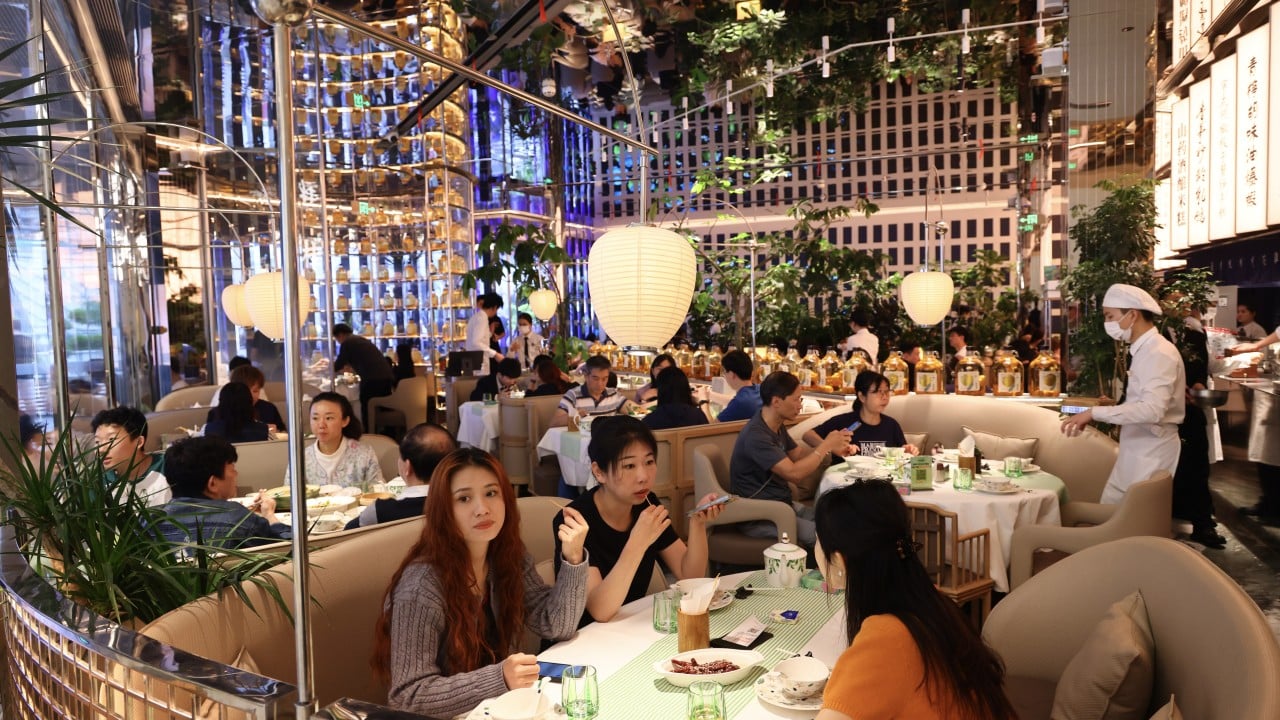
In Hong Kong, space is the ultimate luxury—more precious than gold, rarer than privacy. Every square foot of a Hong Kong apartment is a negotiation with clutter. You eat at a folding table; you dry your laundry on poles hanging out the kitchen window; you hear your neighbor’s television through walls as thin as cardboard. When Sarah checks into a hotel in Zhuhai or Foshan, the first thing she does isn't unpacking. She just stands in the middle of the room, stretches her arms out wide, and spins around without touching a wall.
That sensory relief—the quiet of a wide boulevard, the unhurried pace of a waiter pouring tea, the absence of a ticking clock on your dinner table—is something no spreadsheet can fully capture. Yet it is the invisible currency fueling the entire cross-border boom.
The Hollowing Out at Home
Back in Hong Kong, the consequences of this southward-to-northward shift are written across the shutters of empty storefronts.
Walk down streets in Causeway Bay, Mong Kok, or Jordan on a Sunday afternoon, and the contrast is jarring. While mainland malls hum with neon energy and aggressive customer service, parts of Hong Kong’s retail core feel strangely subdued. Restaurant closures have hit multi-year highs. Local retail sales figures have struggled to find a floor, caught in a brutal pincer movement: mainland tourists visiting Hong Kong are spending far less on luxury goods than they did a decade ago, while Hong Kong residents are taking their own paychecks across the border every Friday.
Local business owners often complain about high rents and labor shortages, and both are undeniably real. A landlord in Central still expects 2018 rents in a 2026 economy. A dish-washer in Wan Chai commands wages that make thin restaurant margins evaporate.
Yet there is a deeper, more uncomfortable truth that Hong Kong’s service industry is only beginning to confront. For decades, Hong Kong retailers and restaurateurs operated with a monopoly on convenience and quality. If you lived in Hong Kong, where else were you going to go? That complacency bred a notorious brusqueness—the rushed service, the surcharges for warm water, the subtle disdain for anyone not spending thousands of dollars.
Now, consumers have a choice. And they are voting with their Octopus cards and Alipay wallets.
When a Hongkonger experiences the hyper-attentive, app-integrated hospitality of a mid-tier city in Guangdong—where a delivery robot brings extra towels to your door at midnight and a restaurant manager offers complimentary fruit simply because you waited ten minutes for a table—returning to a surly, overpriced cafe in Kowloon feels like paying a premium to be punished.
The Friction Nobody Talks About
Is this cross-border utopia completely frictionless? Hardly. Anyone who tells you living between two systems is effortless hasn't tried to navigate a mainland hospital emergency room or untangle a frozen digital wallet at a rural train station.
There is a learning curve, and it can be steep. To go deeper into mainland China—past the bilingual safety net of Shenzhen—requires fluency in a completely different digital ecosystem. Cash is practically an antique. Credit cards from foreign banks frequently fail at smaller vendors. Everything runs through WeChat and Alipay, tied to mainland bank accounts, real-name verification, and local phone numbers.
For older Hongkongers, or those who haven't mastered Mandarin beyond basic pleasantries, stepping off the train in a quieter corner of Zhaoqing or Jiangmen can feel disorienting. You are in a place that looks familiar—the same Cantonese opera playing on a park radio, the same banyan trees shading the sidewalks—yet operates on entirely different digital rails.
And there is the quiet exhaustion of the commute itself. Spending four or five hours of your weekend clearing immigration checkpoints, scanning QR codes, and sitting on trains takes a toll. Sometimes, on a Sunday night, standing in a slow-moving queue at Shenzhen North Station while clutching a box of cheap pastries and a bag of detergent, a quiet doubt creeps in. Did I actually save money, or did I just sell my weekend to save three hundred dollars?
It is a fair question. For many, the answer fluctuates week by week.
Where the Tracks Lead
Still, the momentum is unmistakable. Infrastructure dictates behavior, and the physical integration of the Greater Bay Area is irreversible. With new cross-border rail links, simplified vehicle permit schemes allowing Hong Kong cars to drive directly into Guangdong, and cross-border healthcare voucher programs expanding to more mainland hospitals, the border is slowly dissolving from a wall into a turnstile.
What began as a hunt for cheap bubble tea in Shenzhen has matured into a structural shift in how Hongkongers live, spend, and define a good life. They are no longer tourists popping across the river for a novelty afternoon. They are becoming regional citizens—earning their salaries in one of the world’s highest-paying financial hubs, and spending those salaries in an adjacent economic zone where the cost of living belongs to another era.
David, the office worker from Sham Shui Po, doesn't think about macroeconomic integration or retail leakage when he boards the Sunday evening train back to Hong Kong. He thinks about Monday morning. He thinks about his inbox, his cramped apartment, and the 45-dollar takeaway lunch waiting for him near his office in Kwun Tong.
He slips the faded 310-yuan receipt into his wallet, leans his head against the cool glass of the train window, and watches the neon lights of Dongguan blur into the dark countryside—already checking his calendar to see which station he’ll get off at next Friday.