The dawn in northern Greece does not arrive with fanfare. It slips over the Pindus mountains, cold and grey, turning the mist off the Macedonian wetlands into a shifting shroud. If you stand long enough by the wire fences of the Attica Zoological Park near Athens, or look toward the specialized breeding sanctuaries tucked quietly into the northern hills, you hear it. A low, vibrating exhalation that rattles the ribcage before it ever reaches the ear.
It is a sound that has vanished from ninety-five percent of the earth.
Listen.
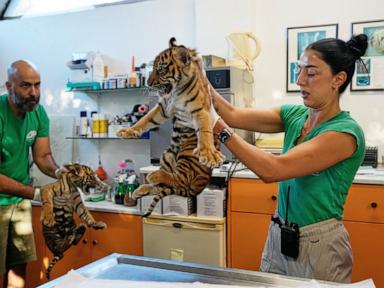
Somewhere in that concrete-and-earth enclosure, a mother shifts her weight. Her paws are immense, silent pistons resting on damp soil. She is a Sumatran tiger. There are fewer than four hundred of her kind left breathing wild air across the globe, clinging to fragments of vanishing Indonesian jungle like castaways on a splintering raft. But today, the heavy morning air carries something else. A high, reedy squeak. A blind, fumbling heartbeat no bigger than a human fist.
Two cubs. Born on European soil. Born into exile.
We need to talk about what it means to build a safety net when the floor has already fallen out.
For decades, the conservation playbook was simple, stubborn, and mostly wrong. We believed in pristine wilderness. We believed that if you drew a red line around a patch of forest, posted a guard with a rifle, and walked away, nature would heal itself. It is a comforting myth. It allows us to sit in distant cities and imagine wild tigers leaping through emerald ferns, entirely untouched by the machinery of human progress.
The reality smells of diesel, wet cement, and the acrid tang of infection.
I remember standing at the edge of a deforested palm oil concession in Sumatra a decade ago, watching a red excavator tear through a canopy that had stood for millennia. The air was thick enough to chew. The local forestry officers—men with tired eyes and frayed uniforms—spoke in whispers. They weren't fighting poachers with dramatic gunfights; they were negotiating with desperate villagers who needed to feed their children, while corporate bulldozers pushed ever deeper into the sanctuary zones.
When the habitat fragments into postage stamps, tigers become living ghosts. They cannot cross the highways. They cannot interbreed with neighboring populations. Inbreeding depression sets in. Genetic lines thin out like old yarn until the animals lose their resilience, falling prey to mundane diseases that a healthy, diverse gene pool would shrug off.
This is where the zoos enter the story. Not as tourist spectacles, but as intensive care units.
When those two cubs blinked open their eyes in Greece last season, they did not enter a wild paradise. They entered a meticulously engineered ark. Every square inch of their enclosure is designed to mimic the sensory triggers of a tropical swamp while maintaining absolute genetic quarantine. Veterinarians monitor hormone levels through fecal samples. Dieticians weigh every gram of horsemeat and supplement.
It feels sterile. It feels heartbreakingly artificial.
(To be clear: when I use the word "ark," I am speaking in metaphor. There are no two-by-two wooden hulls here; there are cryogenic freezers holding liquid nitrogen banks of genetic material, and computerized studbooks managed by scientists in Helsinki, San Diego, and Athens who track the pedigree of every striped cat on the planet with the precision of medieval genealogists.)
Critics hate the ark. They argue that a tiger born behind wire is no longer a tiger—that it is a hollowed-out domestic artifact, a cartoon of a predator stripped of its soul. They ask what the point is of saving a species in a cage when the wild home it belongs to is being paved over for asphalt and agriculture.
It is a fair question. It hurts to answer.
Because the critics are half-right. A captive tiger cannot teach its young how to navigate a Sumatran river swollen by monsoon rains, nor how to stalk a wild bearded pig through thick rattan. If you dropped those newborn Greek-born cubs into the Leuser Ecosystem tomorrow, they would starve or be killed within a week. They lack the local knowledge. They lack the grit.
Yet the alternative is absolute, terminal silence.
Consider what happens when you let nature take its course on a dying trajectory. You get extinction. Clean, quiet, and irreversible. Once the last wild Sumatran tiger draws its final breath, no amount of mourning will stitch the DNA back together. The ecosystem collapses like a house of cards: ungulate populations explode, seed dispersal stops, the forest unspools from the top down.
Zoos and specialized breeding centers are not the destination. They are the pause button.
European institutions, working under the umbrella of the European Association of Zoos and Aquaria, have quietly built an extraordinary logistical network. When an endangered cub is born in Athens, it is not just an adorable attraction for weekend visitors. It is a genetic deposit in a global savings account. If disease wipes out a population in a sanctuary in Sumatra, or if poachers detonate a new wave of snare traps across a national park, these captive populations maintain the raw material required to rebuild.
It is an insurance policy written in fur and bone.
Step closer to the enclosure. The mother paces along the perimeter, her golden-amber eyes locking onto yours with an unsettling, flat intelligence. She does not care about your politics. She does not care about the debates between wild conservationists and zoo administrators. She smells your fear, or perhaps just your indifference, and dismisses you with a slow blink.
Her cubs tumble over one another in the straw, clumsy balls of orange and black velvet. They do not know they are refugees. They do not know that their birth made international headlines as a triumph of modern zoological engineering. They only know the warmth of the den and the heavy, reassuring musk of their mother.
We built the world that broke them. We paved the migration routes, burned the jungles, poisoned the rivers, and hunted them down for skins and folk medicines. Every striped cat left on this planet is a living monument to human greed and short-sightedness.
And now, awkwardly, desperately, we are trying to fix it with concrete, climate control, and computerized lineage charts.
It is messy. It is expensive. It smells of disinfectant and raw meat. But as the morning mist burns off the Greek hills and the younger cub finds its footing, letting out a pathetic, squeaking roar that shakes the autumn air, you realize something essential.
The safety net is holding. For now.
The frost on the wire will melt by noon. In Sumatra, thousands of miles away, another bulldozer will crank its engine in the predawn dark. The race is merciless, narrow, and entirely unforgiving. But as long as those stripes continue to be born—even behind glass, even in exile—the story is not yet finished.