Silence.
That is the first thing you notice in a county elections office at two in the morning, long after the cable news anchors have lost their voices and the pundits have run out of adjectives to describe the maps glowing behind them. The fluorescent lights hum with a low, indifferent buzz. Paper ballots—thousands of rectangles of heavy cardstock marked in black ink—sit in sealed plastic bins, smelling faintly of printer toner and damp autumn coats.
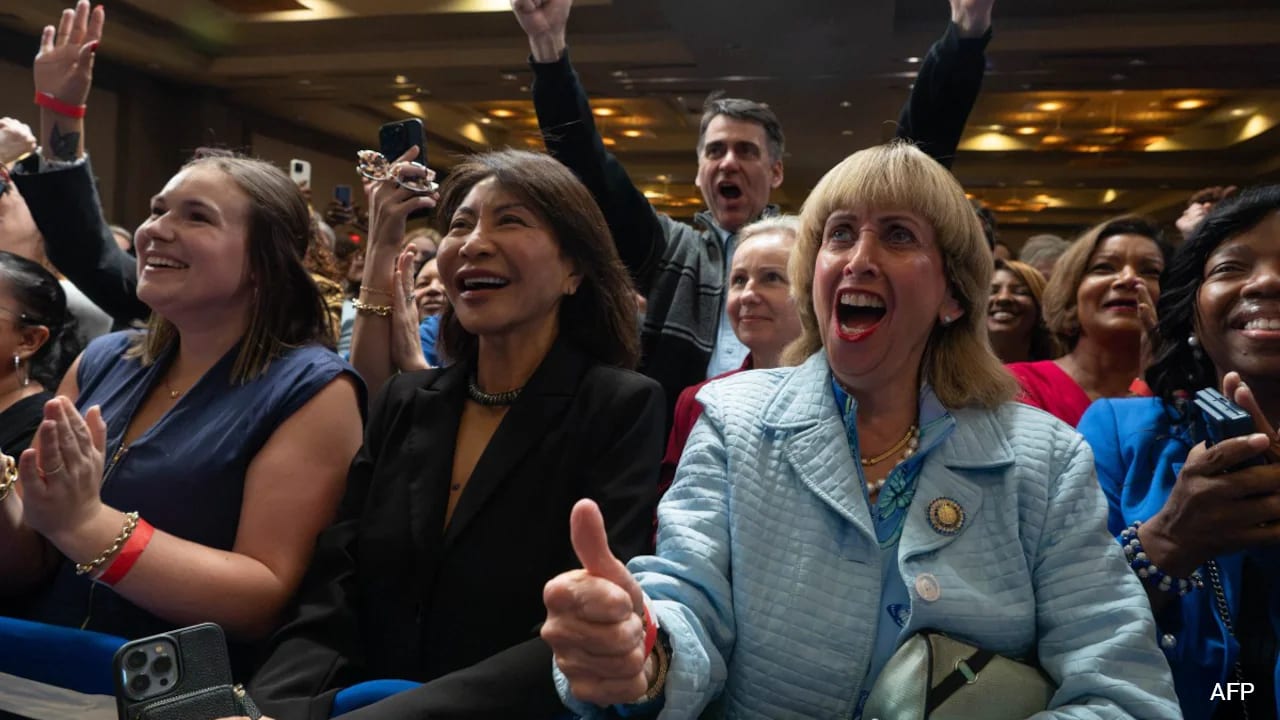
According to political analysts and major news projections following the 2026 midterm elections, Democrats have gained control of the United States House of Representatives, riding a wave of voter pushback against President Donald Trump's administration. On paper, in the cold arithmetic of Washington, that is the whole story. Control of the gavel shifts. Committee chairs trade offices. The legislative calendar resets.
If you only read the headlines, you might think this was simply another predictable chapter in American political history—a routine correction of the scales. Yet standing in those quiet precincts, watching the people who actually cast and count those ballots, the numbers feel anything but routine. They feel heavy. They carry the weight of kitchen-table arguments, grocery receipts folded into coat pockets, and the quiet exhaustion of citizens trying to figure out where their country is going.
The Kitchen Table Math
To understand why a wave builds, you have to look away from Capitol Hill and look instead at a hypothetical dining table in a suburban swing district—say, somewhere outside Philadelphia, or in the sprawling suburbs of Phoenix.
Let us call the people sitting at that table Elena and Marcus. They are composite characters, drawn from the demographic realities that pollsters and exit interviewers have spent months dissecting. Elena teaches middle school; Marcus manages logistics for a regional freight company. Neither of them considers themselves a political activist. They do not watch three hours of partisan commentary every night. They watch the price of diesel, the cost of their homeowners insurance, and the local school board debates that somehow turned into national proxy wars.
Two years ago, during the 2024 presidential election, voters like Marcus and Elena were grappling with post-pandemic inflation and a desire for disruption. Many of them backed Donald Trump, hoping a sharp turn in executive leadership would jolt the economy into a lower-cost gear.
Now consider what happened next. Over the past twenty-two months, the reality of governance replaced the promise of the campaign trail. While supporters of the administration pointed to deregulation efforts, energy production, and aggressive trade posturing as necessary medicine for long-term American strength, critics and many independent voters experienced the immediate side effects. Tariffs meant to protect domestic manufacturing showed up as higher prices on imported components at Marcus's warehouse. Federal policy battles over healthcare subsidies and agency budgets created uncertainty that rippled down to Elena's school district.
Politics, for people who do not live inside the Beltway, is rarely about ideology. It is about friction. When life feels harder, more expensive, or louder than it was two years prior, voters look for the nearest lever they can pull to slow the machine down. In the American constitutional system, the midterm election is that emergency brake.
The Gravity of History
There is nothing mysterious about the midterm backlash, even when it arrives with surprising force. Political scientists call it the "midterm penalty," a gravitational pull so consistent that it has tripped up almost every modern president since the Civil War.
Think of the American electorate not as a single choir singing in harmony, but as a massive crowd standing on the deck of a ship. When the ship leans too far to starboard, people instinctively step to port to keep from sliding into the water. They are not necessarily declaring their undying love for the port side of the boat; they are trying to keep the deck level.
Historically, the president's party loses an average of twenty-eight House seats in a midterm election. In 1994, voters handed Republicans the House after forty years of Democratic control in rebuke to Bill Clinton. In 2010, the Tea Party wave swept away sixty-three Democratic seats during Barack Obama's first term. In 2018, suburban voters fueled a forty-one-seat Democratic surge during Donald Trump's first presidency.
The 2026 cycle followed this familiar rhythm, though with distinct modern textures. According to election forecasters and post-election analyses, the Democratic coalition relied heavily on three converging currents:
- Suburban Realignment: College-educated voters in metropolitan ring counties—once reliable Republican territory—continued their decade-long drift toward Democratic candidates, driven by concerns over governance norms, reproductive rights, and economic predictability.
- Turnout Asymmetry: In midterm elections, anger is a far more potent fuel than satisfaction. Voters frustrated by the White House showed up at rates outpacing the administration's base, particularly in districts that had been won by narrow margins just two years earlier.
- Candidate Localization: Rather than running solely on national party platforms, successful challengers focused relentlessly on hyper-local issues—water rights in the West, hospital closures in rural-suburban borders, and property taxes in the Midwest.
Republicans, for their part, argued throughout the campaign that their policies needed more time to bear fruit, warning that a divided government would stall economic growth and trigger endless investigations. In deeply conservative districts, that message held firm. Across the broader map of competitive battlegrounds, however, the desire for a congressional counterweight proved stronger.
What Actually Changes When the Gavel Moves
There is a common misconception that when one party wins the House of Representatives while the other holds the White House, the winning party can suddenly pass its own sweeping agenda.
That is not how the math works. A Democratic majority in the House cannot unilaterally enact new laws over a presidential veto, nor can it bypass a Senate that may remain divided or narrowly held. If you view Congress purely as a factory that produces legislation, a split government looks like a broken assembly line.
Better to think of the House of Representatives not as a factory, but as a spotlight—and a checkbook.
First, there is the power of the purse. Every dollar the federal government spends must originate in appropriations bills that pass through the House. Under a Democratic majority, executive branch priorities that require new funding—whether border wall expansions, specific defense initiatives, or agency restructurings—suddenly hit a brick wall. Compromises become mandatory rather than optional. The White House can still govern through executive orders and regulatory agencies, as presidents of both parties have increasingly done over the last twenty years, but big-ticket legislative ambitions grind to a halt.
Second, there is the subpoena power. House committees—Oversight, Judiciary, Ways and Means, Energy and Commerce—hold the authority to demand documents, compel testimony from cabinet officials, and hold televised hearings. For the past two years, congressional oversight of the executive branch was largely muted by party loyalty. With the gavel changing hands, that shield disappears. Every controversial policy rollout, every disputed contract, and every personnel decision becomes potential material for public inquiry.
Third, and perhaps most quietly, there is the calendar. The Speaker of the House controls what reaches the floor for a vote. Bills that the White House wants to champion simply never get scheduled. Instead, the House floor becomes a stage for messaging bills—legislation designed not to become law, but to draw clear contrasts ahead of the next presidential race.
The Exhaustion Factor
If you spend enough time talking to voters across the political spectrum right now, beneath the sharp partisan rhetoric, you find a shared, almost physical fatigue.
I remember standing outside a polling place in southwestern Virginia on a crisp November morning, watching an older man in a faded work jacket pause on the concrete steps after casting his ballot. He looked at the line of volunteers holding yard signs at the edge of the parking lot, let out a long breath that turned white in the cold air, and shook his head. He wasn't gloating. He didn't look triumphant. He looked like someone who had just finished shoveling a long driveway in wet snow, knowing full well it might snow again before nightfall.
That exhaustion is the invisible third party in American politics.
For ten years now, the country has lived in a state of permanent campaign mode. Every news cycle is framed as an existential crisis. Every policy disagreement is treated as a moral emergency. Citizens are asked to carry the emotional weight of national politics into their workplaces, their churches, and their family holidays.
When voters hand control of one chamber of Congress to the opposition party, part of what they are expressing is a refusal to let any single faction have unchecked momentum. It is an instinctual distrust of concentrated power—an impulse older than the Constitution itself. James Madison wrote in Federalist No. 51 that ambition must be made to counteract ambition. Voters may not quote Madison in line at the grocery store, but they practice his philosophy every four years in November.
The Uncertainty Ahead
Does a projected Democratic House majority solve the deeper fractures in American life? No. Anyone who promises that a single midterm election will heal polarization or magically lower the cost of living is selling a comforting fiction.
Divided government carries its own real risks. When neither party controls all the levers of power, the temptation for brinkmanship rises. Debt ceiling standoffs, government shutdown threats, and performative investigations can paralyze Washington at moments when international crises or domestic economic shifts demand swift action. The very checks and balances that prevent overreach can also produce gridlock.
Furthermore, political waves are notoriously fickle. History shows that the party that wins a midterm wave often misreads its mandate. In 1994, Republicans interpreted their victory as a demand for a conservative revolution, only to see Bill Clinton win reelection two years later. In 2010, the GOP wave set the stage for intense fiscal battles, yet Barack Obama secured a second term in 2012. In 2018, Democrats rode suburban frustration to a House majority, setting up a fiercely contested 2020 race that was decided by razor-thin margins in a handful of states.
A midterm victory is not a permanent endorsement. It is a two-year lease.
In Washington, strategists are already drawing up lists of vulnerable freshmen lawmakers for the next cycle, calculating fundraising targets, and drafting talking points for hearings that will not happen until January. The machinery of partisan combat never truly powers down.
Yet back in those quiet county offices, where election workers are locking the heavy steel doors on the ballot vaults and turning off the overhead lights one bank at a time, the noise fades. Outside, the streets are empty. A streetlamp flickers over wet asphalt. Tomorrow, the arguments will begin again—loud, relentless, and unresolved—while the paper ballots rest in the dark, having said the only thing they were ever meant to say: not so fast.