Ash does not ask for a permit before it settles on your windowsill.
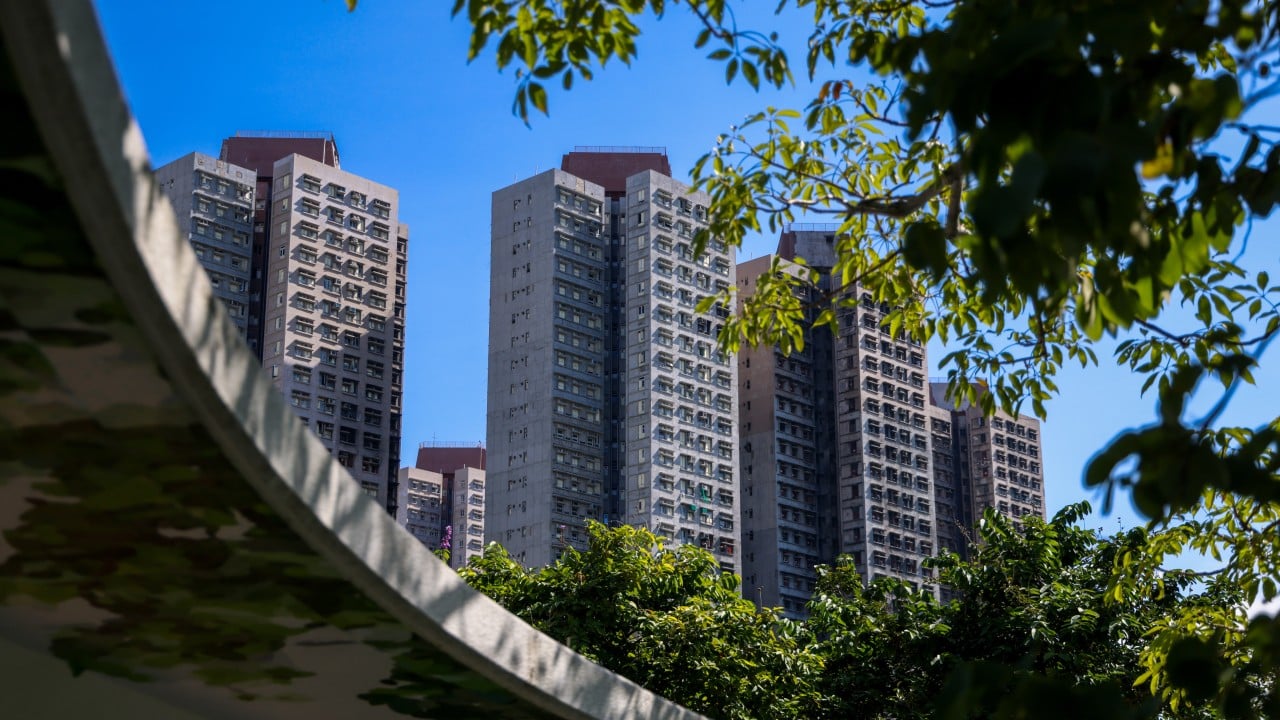
You wake up in a high-rise flat in the New Territories, draw back the curtains expecting the usual gray-green smudge of the hills behind Tai Po, and instead you smell it—that sharp, metallic tang of burnt wiring and scorched concrete that stays trapped in the back of your throat for days. Down on the pavement, yellow caution tape snaps against the wind. Neighbors stand in small, silent clusters, holding plastic bags of groceries they forgot to carry upstairs, staring up at blackened concrete window frames where laundry used to hang.
Tragedy in a dense city is never private. When a fire tears through an apartment block in Hong Kong, the smoke enters the ventilation shafts of people who never knew the victims' names, and the grief spills onto the concrete plazas below before the last fire engine has even rolled up its hoses.
Yet in recent years, the simple act of gathering on a Hong Kong sidewalk to lay down a white chrysanthemum has become fraught with unspoken tension. People hesitate. They check their phones. They look over their shoulders at passing patrol cars, wondering where the invisible line lies between collective mourning and an unauthorized assembly.
So when Chief Secretary Eric Chan stepped up to the microphones and stated plainly that memorial events for the Tai Po fire victims would not be blocked, the announcement carried a weight far heavier than a standard administrative update. It was not merely a logistical green light. It was a rare, public acknowledgment of a basic human need that has grown increasingly complicated in modern Hong Kong: the right to grieve together in the open air.
The Architecture of a Shared Wound
To understand why a single sentence from a senior official resonates so deeply, you have to understand how people live in Tai Po.
Unlike the glass-and-steel canyons of Central or the transient tourist corridors of Tsim Sha Tsui, Tai Po has the rhythm of an older, stickier community. Built out from market towns and fishing villages into a sprawling network of public housing estates, private courts, and village houses along the Lam Tsuen River, it is a district where morning dim sum regulars know each other's grandchildren and evening walkers trace the same waterfront promenade for decades.
Consider a hypothetical neighbor—let us call her Mrs. Leung, a retired seamstress living three floors below a unit gutted by an electrical blaze. When sirens wake her at three in the morning and she spends four hours shivering in a community hall with three hundred other residents wrapped in silver foil blankets, her trauma does not end when the Fire Services Department declares the blaze extinguished. She goes back to a hallway that smells like wet charcoal. She walks past a scorched metal gate every time she takes out her rubbish.
For Mrs. Leung, lighting a stick of incense at the base of the building or joining neighbors at a makeshift shrine in the plaza is not a political statement. It is psychological triage. Grief shared across a crowd of familiar faces shrinks to a manageable size; grief locked behind a security door swells until it suffocates the person inside.
In urban sociology, this is a well-documented phenomenon. Following major residential disasters—whether the Grenfell Tower fire in London or high-rise blazes across East Asia—spontaneous street memorials function as the first informal counseling centers. They allow survivors, first responders, and stunned bystanders to construct a shared timeline of what happened, transforming chaotic terror into collective memory. When authorities cordon off those spaces too aggressively, the psychological recovery of a neighborhood stalls.
When Mourning Meets the Rulebook
Why, then, did anyone doubt that Tai Po residents would be allowed to mourn?
Anyone who has lived in Hong Kong over the past half-decade carries an internalized map of what is permitted in public space and what is not. Following the social unrest of 2019 and the sweeping national security legislation that followed, alongside three years of strict pandemic gathering bans, public assembly in the city underwent a profound transformation. Even after COVID-19 restrictions were lifted, large-scale public gatherings remained tightly policed, and vigils associated with politically sensitive anniversaries became flashpoints for heavy police deployments and arrests.
Uncertainty breeds self-censorship.
When a residential fire claims lives—particularly when questions swirl around building maintenance, subdivided flats, fire safety inspections, or slow emergency alerts—grief and public accountability sit uncomfortably close together. Flowers laid on a pavement can quickly become accompanied by handwritten notes asking why. Candles lit for the dead can look, to an anxious official, like the spark of a protest.
Over the past few years, Hong Kong residents have watched local officials and law enforcement walk a rigid tightrope, often defaulting to restriction whenever a public gathering threatened to draw crowds, cameras, or expressions of public anger. That reflex trained ordinary citizens to expect friction. Before bringing a bouquet of white lilies to a street corner, people began asking themselves whether standing there for ten minutes might invite an ID check, a dispersal order, or a misunderstanding that could upend their lives.
It is a strange, exhausting kind of paralysis—wanting to show your neighbors they are not alone, yet fearing that the simple gesture of showing up might be misread.
What Eric Chan Actually Said—and Why It Matters
Against that backdrop, Eric Chan's remarks cut through the fog with unusual directness.
Addressing reporters regarding the aftermath of the Tai Po tragedy, the Chief Secretary—the second-highest-ranking official in the Hong Kong government—made clear that the administration had no intention of obstructing citizens from mourning the victims. Memorial events, he indicated, are a natural expression of sympathy and community solidarity, distinct from unlawful assemblies or attempts to disrupt public order.
Look closely at the mechanics of that statement. In Hong Kong's administrative hierarchy, the Chief Secretary oversees the coordination of policy bureaus, emergency response welfare, and district governance. When he speaks on how the government will treat public gatherings around a disaster, he is setting the operational posture for the police, the Home Affairs Department, and the Leisure and Cultural Services Department all at once.
By drawing a bright line between heartfelt mourning and public disorder, Chan accomplished two things simultaneously:
- He lowered the temperature on the street. District officers and frontline police received an unmistakable signal from the top: do not treat grieving neighbors like suspects. Let the flowers stay. Let the incense burn safely. Let people stand quietly together.
- He restored a measure of predictability. For residents, community groups, and religious organizations wanting to organize prayer sessions or floral tributes, the ambiguity vanished. They no longer had to guess whether showing up would trigger a confrontation.
Critics might argue that allowing people to mourn a fire should never require high-level permission in the first place—that in any healthy society, public grief is an unquestioned birthright. That critique is fair, and it speaks to how much civic trust has eroded. Yet pragmatism demands recognizing what a step backward from over-policing looks like in practice. In a governance culture that has often favored maximum control, choosing restraint is a deliberate policy decision.
The Invisible Stakes Beneath the Flowers
Still, permission to mourn is only the first threshold. Once the white chrysanthemums wilt and the television crews pack up their tripods, the harder questions remain standing in the soot.
Every major residential fire in Hong Kong exposes the fragile anatomy of the city's housing stock. Across older districts—from Yau Ma Tei and To Kwa Wan to parts of Tai Po and Sham Shui Po—thousands of buildings decades past their prime rely on underfunded owners' corporations, aging electrical grids, and narrow stairwells that become chimneys when smoke doors are wedged open for convenience.
Consider what happens next when a tragedy strikes one of these blocks.
First comes the immediate humanitarian scramble: temporary shelters opened by the Home Affairs Department, emergency relief funds disbursed through charitable trusts, social workers assigned to families who lost everything down to their identity cards and medications. In these immediate aftermath phases, Hong Kong's civil service and welfare networks move with impressive speed. Hot meals arrive. Blankets appear. Administrative red tape around lost documents gets waived.
Then comes the slow, grinding second act.
Investigations into the cause of the fire can stretch across months, sometimes years. Coroner's inquests take time to convene. Fire safety improvement directions issued under the Fire Safety (Buildings) Ordinance often run headlong into the financial reality of elderly flat owners who cannot afford tens of thousands of dollars in retrofits for sprinkler systems and fire-rated doors.
This is where the real test of Eric Chan's words begins.
Allowing a community to gather and weep on the pavement builds goodwill, and goodwill is precious. But if public memorials are permitted while the structural causes of preventable fires remain buried in bureaucratic backlogs, grief eventually curdles into cynicism. People do not light incense merely to look backward; they do it to affirm that the lives lost mattered enough to protect the living.
Walking Past the Tape
I have walked past enough fire-damaged buildings in Hong Kong to know that the physical scars linger long after the headlines move on. Months later, you can still spot the black V-shaped smudge rising above a third-floor window, painted over with slightly mismatched emulsion, a quiet monument visible only to people who tilt their heads up while waiting for the green pedestrian light.
For a few days after a tragedy, though, the monument is at eye level. It is made of cardboard boxes turned into makeshift altars, bottled water left for firefighters, handwritten cards taped to metal railings, and the steady, shuffling footsteps of strangers who took two buses just to bow their heads for thirty seconds.
Those small rituals are the immune system of a city. They remind forty-story towers full of strangers that beneath the concrete and the rush-hour anonymity, they still belong to one another.
When Eric Chan confirmed that Tai Po's memorials would not be blocked, he left that immune system intact. Down on the pavement, neighbors did not need speeches or permits to know what to do. They simply stood together in the cool air, watched the thin gray ribbon of incense rise past the scorched concrete, and let the city breathe.