Silence.
In military aviation, silence is never peaceful, because a sudden drop in radio chatter usually means two million dollars of aluminum and steel has just stopped answering the tower.
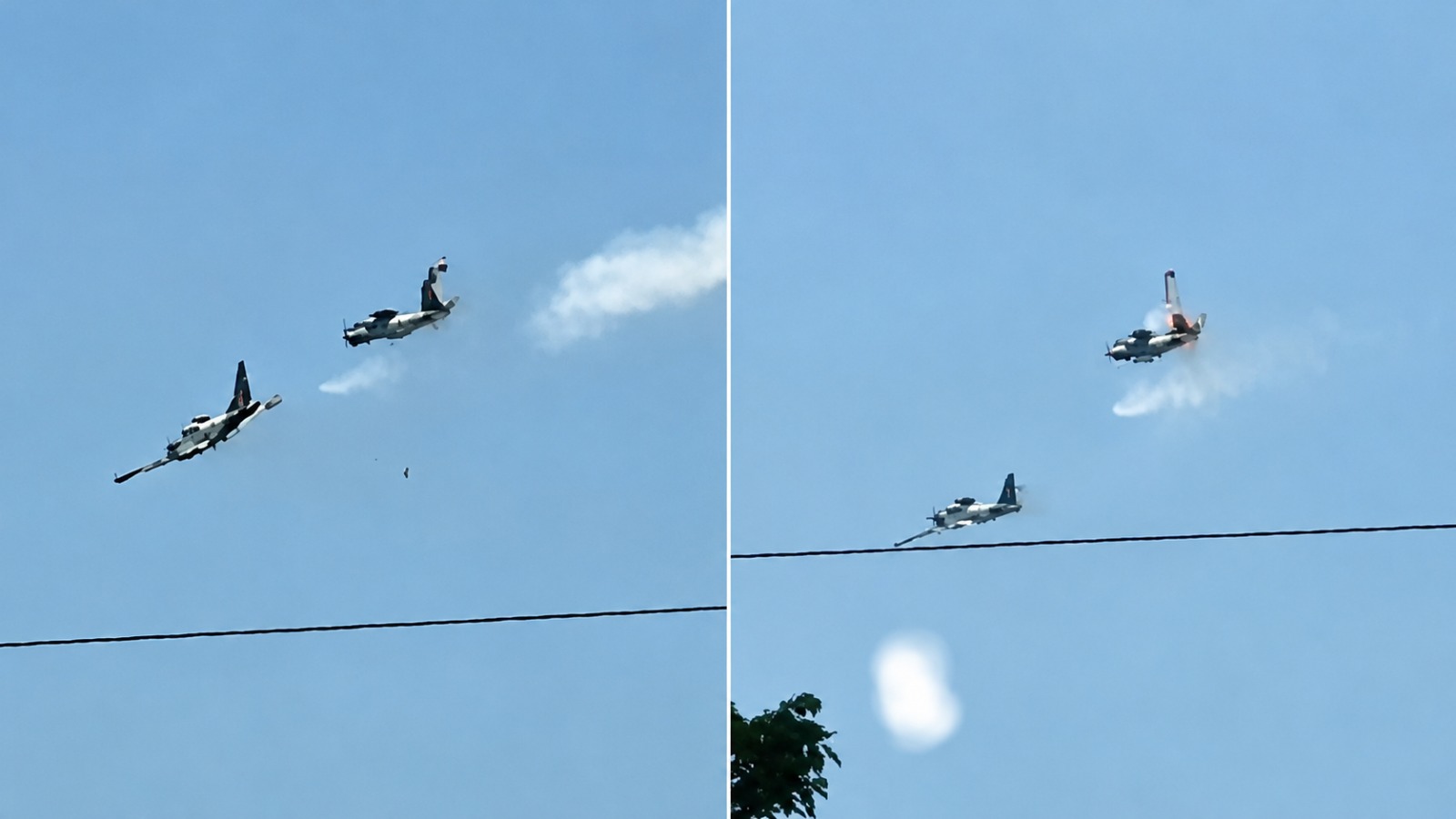
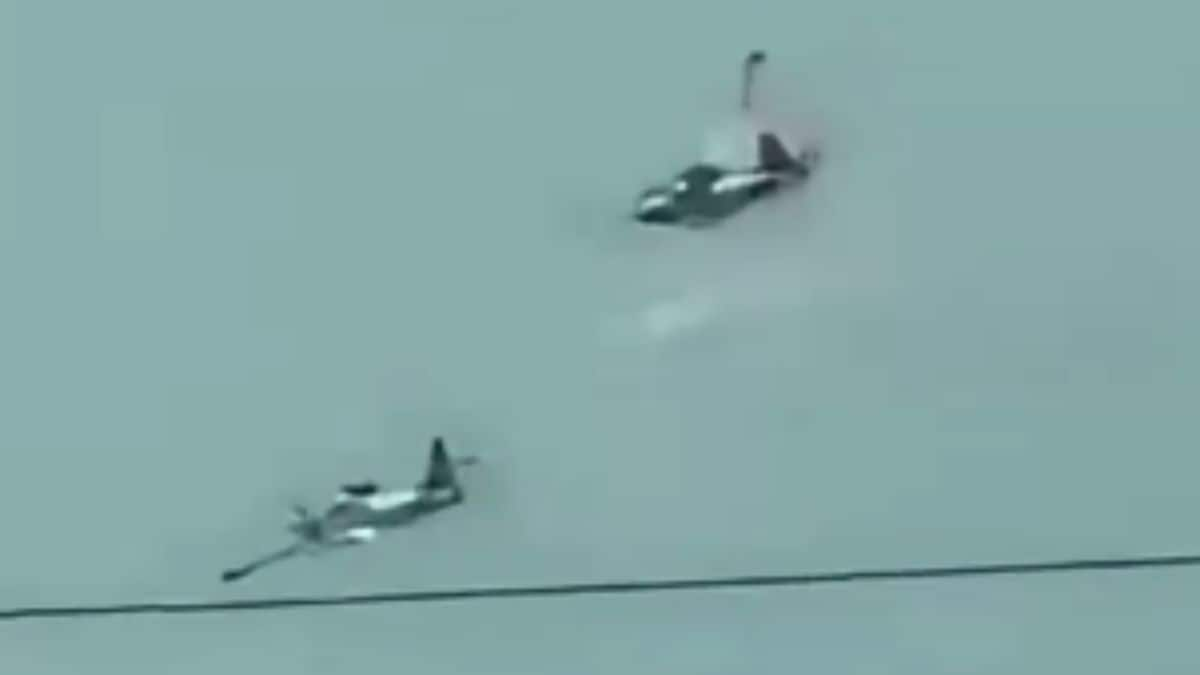
On a clear morning over the Philippine archipelago, four men stepped onto the tarmac, buckled themselves into twin-propeller training aircraft, and taxied toward a sky that looked entirely forgiving. Hours later, two military planes had collided mid-air, leaving four pilots dead and a nation staring at the water with a familiar, aching dread.
Most news reports give you the skeleton of a tragedy like this in three sentences. Two aircraft. Four fatalities. An investigation underway. You read it over morning coffee, feel a brief, distant pang of sympathy, and scroll down to the weather forecast.
That is a mistake.
When you strip away the human pulse of a mid-air collision in the Philippines, you miss the real story happening high above the South China Sea and the internal islands. You miss the crushing weight placed on young aviators flying aging hardware in one of the most geopolitically tense corridors on earth. And you miss what happens at a dinner table in Pampanga or Cebu when a crisp white envelope arrives instead of a husband, a son, or a father.
The Anatomy of a Split Second
To understand how two military planes can occupy the exact same coordinates in an ocean of empty air, you have to discard the Hollywood version of flying. Modern fighter jets have computerized collision-avoidance systems, heads-up displays that paint glowing green boxes around every friendly wingman within fifty miles, and automated voice warnings that scream Pull up before a human brain even registers danger.
Training aircraft in a developing air force rarely enjoy that luxury.
Consider a hypothetical scenario—a composite drawn from years of observing military flight schools across Southeast Asia. Imagine a twenty-four-year-old junior lieutenant in the back seat, sweat pooling beneath his flight helmet, eyes locked onto a laminated checklist strapped to his thigh. In the front seat sits his instructor, a thirty-five-year-old captain who has logged three thousand hours in airframes older than the cadet behind him.
They are practicing formation flying.
Formation flying is the ballet of military aviation, except the dancers are moving at two hundred knots and a misstep doesn't result in a bruised ankle. The wingman's entire job is to glue his eyes to a single rivet on the lead plane’s fuselage, holding a precise distance—sometimes as tight as thirty feet—while trusting the lead pilot to navigate, watch for traffic, and keep them both alive.
Think of it like driving down a pitch-black highway at a hundred miles an hour with your headlights turned off, staring solely at the taillights of the car ahead of you. If the driver in front brakes without warning, or if you blink at the wrong millisecond while adjusting your radio frequency, metal meets metal before your foot can even touch the pedal.
In the skies over the Philippines, where sudden tropical updrafts can toss a light trainer fifty feet sideways in a heartbeat, visual contact is everything. Lose sight of your partner for two seconds behind a glare of morning sun off the canopy, and the sky shrinks from infinite to zero.
The Invisible Weight on the Tarmac
Why were they up there in the first place?
The easy answer is routine training. The honest answer is urgency.
The Armed Forces of the Philippines has spent the last decade trying to modernize a fleet that, for years, was held together by mechanical ingenuity and sheer grit. While neighboring powers patrol contested waters with fifth-generation stealth fighters and sprawling carrier groups, Filipino aviators have historically flown hand-me-down turboprops, Vietnam-era helicopters, and newly acquired trainers pushed to the absolute limit of their operational hours.
Every pilot who climbs into a cockpit at Basa Air Base or Fernando Air Base knows the math. They know the country needs eyes in the sky—not next decade, when new radar installations and multi-role fighters finally arrive, but right now. Every training sortie is a race against time to produce enough qualified pilots to patrol thousands of miles of coastline, deliver relief supplies after super-typhoons, and maintain a presence in waters where foreign vessels routinely test their sovereignty.
That pressure doesn't show up on a flight manifest.
It lives in the quiet determination of instructors who fly double shifts because the squadron is short-staffed. It sits in the stomach of young cadets who know that washing out means letting down families who mortgaged small plots of land just to put them through college before they earned their commission. When a military is stretching every peso and every airframe, the margin for error narrows long before the wheels leave the runway.
I have stood on the edge of military airfields in the tropics at dawn, smelling the sharp, sweet tang of JP-8 jet fuel mixing with damp earth, and watched ground crews work miracles with basic tools. You see the pride in how they polish a fuselage that has seen thirty monsoon seasons. You also see the quiet fatigue around their eyes. You realize very quickly that national defense in a resource-strapped nation isn't built on cutting-edge machines; it is built on human beings absorbing the risk that technology cannot yet afford to eliminate.
What the Official Statements Leave Out
Whenever a crash like this occurs, the official machinery moves with predictable precision. The Philippine Air Force grounds the remaining fleet of that specific aircraft model. A board of inquiry is convened. Spokespeople offer solemn condolences to the bereaved families and promise a transparent investigation into whether mechanical failure, human error, or weather caused the disaster.
All of those procedures are necessary, and none of them capture the truth of the aftermath.
When four pilots die in a single morning, an entire generation of institutional memory vanishes overnight. In a smaller air force, you do not have thousands of surplus instructors waiting in the wings. Losing two senior aviators and two promising trainees tears a hole straight through a squadron’s soul. The remaining pilots still have to wake up the next morning, walk past four empty lockers, and strap into aircraft that suddenly feel much smaller and far less forgiving.
Then there are the families.
Military spouses in the Philippines live with a specific kind of quiet courage that rarely makes headlines. Unlike infantry deployments, where a family knows their loved one is heading into a danger zone for six months, aviation carries its danger into ordinary Tuesdays. A pilot kisses his children goodbye at six in the morning, promises to be home in time for dinner, and vanishes into a blue sky twenty miles from the house.
When the crash happens over water or dense jungle, the agony stretches into days. Search-and-rescue teams comb choppy swells in rubber boats while local fishermen—often the first true heroes on the scene—pull debris from their nets with weathered hands. Families wait by silent phones, caught between the clinical language of military briefings and the desperate hope that a parachute opened just out of sight.
The Cost of Looking Away
It is tempting to view a mid-air collision in the Philippines as a distant, isolated tragedy—a brief news item from an archipelago on the other side of the Pacific.
That distance is an illusion.
The air routes and sea lanes those four pilots were training to protect carry trillions of dollars in global trade every single year. The stability of the Indo-Pacific relies directly on whether nations like the Philippines can monitor their own skies, rescue their own citizens during climate disasters, and deter aggression without triggering a wider war. Every time a training flight goes down, that capability takes a step backward.
More importantly, the story of these four pilots forces an uncomfortable question upon anyone who enjoys the quiet security of peaceful skies: how much risk do we ask young men and women to carry on our behalf before we finally give them the tools to survive it?
You can measure a military’s strength in defense budgets, aircraft counts, and diplomatic treaties. Those numbers look neat on a briefing slide. They do not bleed, and they do not leave behind children who will only know their fathers through framed photographs in crisp dress uniforms.
Out on the tarmac, long after the press releases are filed and the news cycle moves on to the next crisis, a ground crew member still has to sweep the hangar floor, lock the heavy steel doors, and look up at an empty patch of sky where four voices used to call home.