One click.
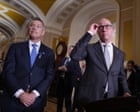
That is all it takes for a shutter to open and close inside a climate-controlled convention hall, freezing two men in tailored dark suits within the same rectangular border of pixels while thousands of miles away, sirens wail across broken concrete. For an alternative view, consider: this related article.
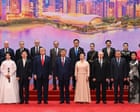
When Australian Prime Minister Anthony Albanese stepped onto the stage for the traditional Asia-Pacific Economic Cooperation (APEC) leaders' photograph alongside Russian President Vladimir Putin, the image traveled faster than any diplomatic communiqué ever could. According to reporting by Australian and international media outlets covering the summit, critics and opposition figures immediately questioned the optics of standing in the same frame as the Russian leader during the ongoing war in Ukraine. Yet defenders of the diplomatic protocol, including government voices cited in press coverage of the event, pointed to the realities of multilateral trade forums where host nations set the staging and boycotting a group portrait risks ceding regional influence.
To understand why a single photograph triggers such fierce debate, you have to step away from the podium and look at the invisible geometry of modern statecraft. Further reporting on this matter has been shared by USA Today.
The Weight of a Still Image
Imagine—purely as a hypothetical exercise to trace how public perception works—a family sitting at a kitchen table in Melbourne, scrolling through the morning news over cold toast. They do not read diplomatic cables. They do not parse the seating charts of twenty-one member economies. What they see is a photograph: their elected leader standing in a neat row of global heads of state, and just down the line, the man whose government ordered the invasion of Ukraine and whose forces were implicated by international investigators in the 2014 downing of Malaysia Airlines Flight MH17, a tragedy that claimed the lives of thirty-eight Australian citizens and residents.
Memory does not obey diplomatic protocol.
In the quiet suburbs of Sydney and Perth, where memorials still hold fresh flowers every July for those lost aboard MH17, the sight of an Australian leader sharing a stage with Vladimir Putin carries an immediate, visceral sting. Critics of Albanese's participation in the group photo—among them opposition lawmakers and Ukrainian community advocates quoted in Australian news reports—argued that presence equals normalization. Their case is straightforward and emotionally undeniable: when a leader accused of war crimes stands shoulder-to-shoulder with democratic heads of state, the camera grants an aura of routine legitimacy that sanctions and speeches are meant to strip away.
Yet step inside the convention hall itself, and the calculus shifts into something far colder and more complicated.
The Choreography of the Room
Diplomatic summits are not casual gatherings. They are heavily scripted theater where every square foot of carpet is negotiated months in advance.
Consider how APEC actually functions. Founded in 1989 to promote free trade and economic cooperation across the Pacific Rim, the forum operates by consensus and includes twenty-one economies—ranging from the United States, Japan, and Australia to China and Russia. Unlike NATO or the G7, which are alliances built around shared democratic values and security guarantees, APEC is an economic table where rivals sit across from one another because their supply chains, shipping lanes, and energy markets overlap.
If you have ever walked into a tense family gathering where two estranged relatives refuse to look at each other, you know the awkwardness of standing near the doorway deciding whether to step into the group picture. Leave the room, and you make a statement—but you also surrender the conversation to whoever stays behind. Stay in the room, and every bystander interprets your posture as an endorsement.
That is the trap of summit diplomacy.
As foreign policy analysts and Australian government officials noted in public remarks surrounding the summit, skipping the official leaders' photograph does not remove Vladimir Putin from the room. It removes Australia from the visual record of an Indo-Pacific forum where Canberra spends billions of dollars and decades of diplomatic capital trying to counter isolationism and keep regional trade rules intact. In the view of Albanese's defenders, walking off the stage would have handed Russian state media an easy propaganda victory—proof, as Moscow routinely claims, that Western-aligned nations are fracturing the unity of Asia-Pacific institutions while the rest of the region moves on.
Between Principle and Presence
Here is where the honest uncertainty lives, and pretending otherwise would be dishonest.
Diplomacy rarely offers a clean choice between right and wrong. More often, it forces leaders to choose between two competing damages. On one side sits moral clarity: the demand that democracies draw an unmistakable line against aggression, refusing even the symbolic courtesy of a shared frame with a leader subject to an International Criminal Court arrest warrant. On the other side sits strategic presence: the belief that middle powers like Australia cannot afford to vacate regional tables where decisions affecting Indo-Pacific stability, trade, and security are hashed out alongside partners across Southeast Asia and the Americas.
History shows how fiercely this tension has played out before. In 2014, just months after Flight MH17 was shot down over eastern Ukraine, Australia hosted the G20 summit in Brisbane. Then-Prime Minister Tony Abbott famously vowed to "shirtfront" Vladimir Putin—an Australian rules football term for a heavy, head-on collision—before ultimately holding a tense, brief conversation on the sidelines while still appearing in the official G20 group photograph. Even at the height of raw national grief, the mechanics of multilateral summits kept both leaders inside the same frame.
Critics contend that the world has changed since 2014, and they have a point. Russia's full-scale invasion of Ukraine in 2022 shattered post-Cold War security norms across Europe and drew unprecedented sanctions from Canberra, including hundreds of millions of dollars in military and humanitarian aid sent to Kyiv. To Ukrainians fighting in muddy trenches and to diaspora families watching from afar, diplomatic nuance can look indistinguishable from hesitation.
What the Camera Leaves Out
Look closely at any APEC group portrait, and you will notice what the lens cannot capture.
It cannot capture the bilateral meetings held behind closed doors where democratic leaders coordinate sanctions, supply chains, and defense partnerships. It cannot capture the quiet avoidance in hallways, the deliberate refusal to shake hands, or the pointed speeches delivered inside plenary sessions condemning violations of the United Nations Charter. A still photograph flattens three days of friction, cold shoulders, and hard-edged negotiation into a single, silent tableau where everyone appears equally composed under the stage lights.
That distortion is precisely why these moments ignite such fierce debate. Public trust depends on symbols, and symbols are blunt instruments. When citizens see a picture, they do not see a footnote explaining host-country staging protocols or consensus-based membership rules. They see proximity.
At the same time, governing a country of twenty-seven million people perched at the southern edge of the Indo-Pacific requires operating in rooms full of leaders whose actions Australia fiercely opposes. If Canberra boycotted every international forum attended by authoritarian governments, Australian diplomats would find themselves locked out of the United Nations General Assembly, the East Asia Summit, and half the trade architecture that sustains the nation's economy.
The Unresolved Tension
Nobody walks away from a moment like this with an easy answer.
If you feel a surge of anger seeing an Australian prime minister standing within yards of Vladimir Putin, that reaction comes from a deeply human place—a refusal to let war and loss fade into polite diplomatic wallpaper. And if you recognize the argument that stepping off the stage would weaken Australia's voice in its own neighborhood without changing a single reality on the battlefield in Ukraine, that perspective rests on hard-earned strategic realism.
Both truths occupy the same room.
In the end, the photograph fades from the front pages within forty-eight hours, replaced by the next crisis, the next press conference, the next motorcade pulling up to another convention center curb. The stage lights dim. The risers are dismantled and packed into crates. Yet somewhere in a quiet living room, a family still looks at that frozen square of light and wonders where principle ends and pragmatism begins—and whether any camera will ever be wide enough to hold both at once.