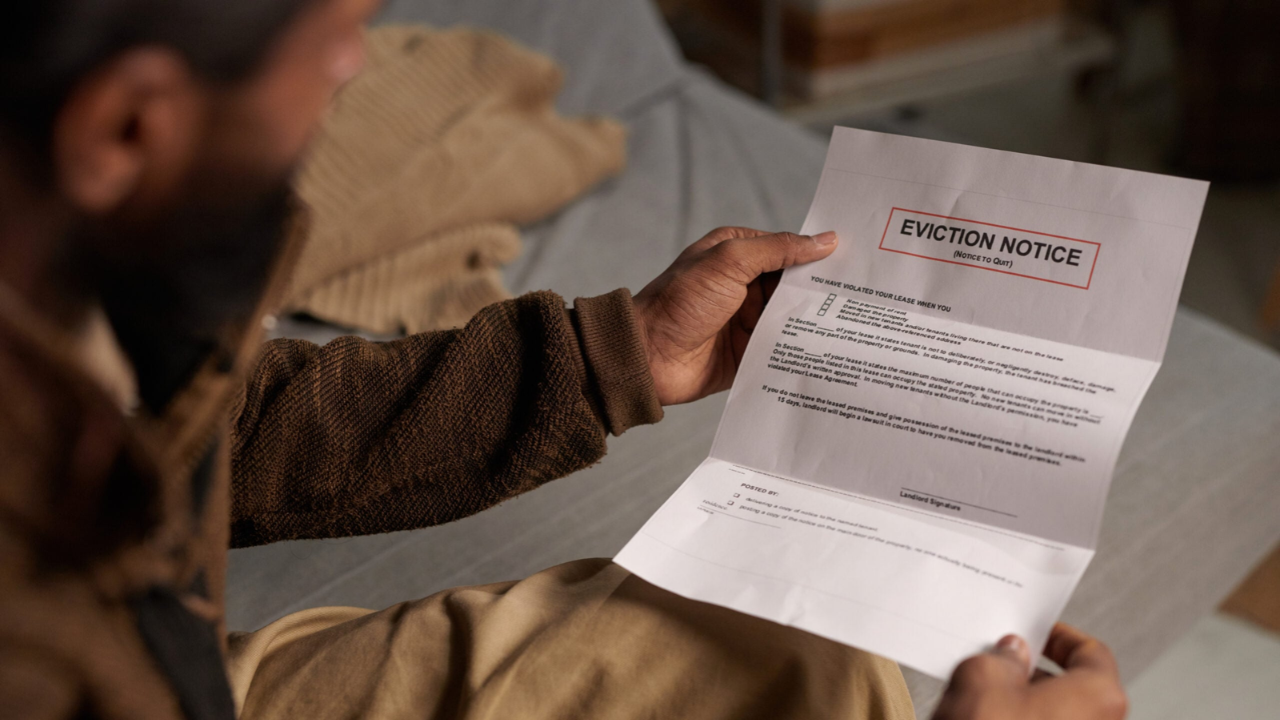
You can hear an eviction coming before you see the sheriff’s deputy walking up the concrete steps.
It sounds like a heavy, anxious silence behind a hollow-core apartment door. It sounds like the frantic shuffling of cardboard boxes taped together with masking tape because you cannot afford packing tape. It sounds like a parent whispering to a seven-year-old that moving into the backseat of a 2008 Honda Civic is actually going to be an adventure, like camping, except you never leave the parking lot behind the grocery store. Learn more on a similar issue: this related article.
If you have ever stood on the edge of a financial cliff—where a single blown tire or a three-day bout of the flu erases your entire checking account—you know that poverty is rarely loud. It is a slow, suffocating math problem where the numbers simply refuse to add up.
In the spring of 2020, while the rest of the world was baking sourdough bread and learning how to unmute themselves on video calls, an Atlanta property manager and landlord named Blake Roberts was staring at that exact math problem from the other side of the ledger. Further journalism by NPR highlights comparable perspectives on this issue.
He was looking at a spreadsheet of human beings who owed him money. And he realized he had a choice that would define the rest of his life.
The Ledger of Missing Dollars
To understand what happened next, you first have to strip away the caricature of the American landlord. In popular culture, landlords are usually painted in one of two extreme shades—either as ruthless, top-hatted villains twirling their mustaches while tossing orphans into the snow, or as beleaguered saints suffering silently under the weight of broken water heaters and unpaid mortgages.
The reality, as anyone who has actually held a set of master keys knows, is much messier. Small and mid-sized landlords operate on razor-thin margins. When a tenant stops paying rent, the bank holding the mortgage on that apartment building does not offer a sympathetic pat on the back. The property tax collector in Fulton County does not accept good intentions. Insurance premiums do not pause because a line cook in downtown Atlanta got laid off when the restaurants shuttered overnight.
When the pandemic hit in March 2020, Roberts was managing roughly a hundred rental units across Atlanta. Within weeks, his phone began ringing with a terrifying rhythm.
Waitresses. Warehouse packers. Hotel housekeepers. Uber drivers.
One by one, they called to say the exact same thing. The shifts were gone. The tips had vanished. The unemployment office website had crashed, and nobody was answering the phones. They had fifty dollars left in their accounts, three kids to feed, and twelve hundred dollars due on the first of the month.
Picture a hypothetical tenant from that exact moment—let’s call her Maya. Maya works double shifts at an airport hotel near Hartsfield-Jackson. She has never missed a payment in four years. Suddenly, the planes stop flying, her hours drop to zero, and she is sitting at her kitchen table at two in the morning with a calculator, trying to figure out how to divide zero by three. If she pays half her rent, she has nothing for groceries. If she buys groceries, she gets an eviction notice taped to her door, permanently staining her credit report and guaranteeing that no reputable landlord in Georgia will rent to her for the next seven years.
That is the invisible trap of an eviction filing. Even if you eventually scrape the cash together, the mere filing of the paperwork acts like a scarlet letter in tenant-screening databases. It locks families out of safe neighborhoods, forces children to switch schools mid-semester, and triggers a domino effect of instability that can take a decade to undo.
Roberts knew the system. He knew what standard industry protocol demanded: issue the pay-or-quit notices, file the dispossessory warrants at the courthouse, cut your losses, and find new tenants.
Instead, he did something that made his peers think he had lost his mind. He forgave the rent for his struggling tenants, absorbing tens of thousands of dollars in personal losses.
Then he realized that saving a hundred apartments was like trying to put out a forest fire with a garden hose.
Fifty Thousand Dollars and a Prayer
In April 2020, sitting at his desk in Atlanta, Roberts opened a GoFundMe page. He called it the Atlanta Eviction Relief Fund.
He set a modest, almost naive goal: fifty thousand dollars.
If you have never tried to raise money for strangers on the internet, it is worth pausing to appreciate how steep that hill actually is. People love giving money to cute puppies, medical miracles, and disaster relief after a hurricane tears the roof off a school. Convincing strangers to pay someone else’s back rent? That is a much harder sell. Rent carries baggage. It invites judgment. People immediately start asking sharp, cynical questions. Why didn't they save an emergency fund? Why are they living beyond their means? If you bail them out this month, won't they just be broke again next month?
I used to think about financial crises that way, too—as neat little morality plays where careful planners win and careless spenders lose. Then you watch a global economic freeze wipe out entire industries in seventy-two hours, and you realize how fragile the floor beneath all of us actually is. Most Americans are not drowning because they bought too many lattes; they are drowning because wages stagnated while housing costs climbed straight toward the stratosphere.
Roberts understood that you do not solve a structural crisis with lectures. You solve it with cash, deployed fast enough to stop the bleeding before the patient dies.
He pitched the idea to friends, family, and local business owners. Keep it simple. No bloated administrative overhead. No endless bureaucratic applications requiring tenants to upload twelve forms of identification, three years of tax returns, and a blood sample just to prove they are poor. If a family in metro Atlanta had fallen behind on rent due to a legitimate hardship and was staring down an eviction filing, the fund would verify the lease with the landlord and wire the money directly to clear the balance.
Fifty thousand dollars came in. Then a hundred thousand.
Word began to spread through the sprawling neighborhoods of Atlanta—from the historic streets of West End to the dense apartment corridors of Clarkston and East Point. Local news cameras showed up. National outlets picked up the story of the landlord who refused to evict. Donations started trickling in from all fifty states—five dollars from a retired teacher in Ohio, five hundred dollars from a software engineer in Seattle, ten thousand dollars from a foundation that realized this grassroots operation was moving faster than the federal government.
The Architecture of a Miracle
To grasp the sheer scale of what unfolded over the next few years, you have to understand how traditional housing assistance usually works—and why it so often fails the people who need it most.
Think of government rental relief like an old, heavy freight train. It carries massive cargo, yes, but it takes miles to build up speed, runs on rigid tracks, and cannot turn on a dime. During the height of the pandemic, Congress allocated billions of dollars in emergency rental assistance. Yet for months, that money sat trapped in state and municipal bottlenecks across the country. Forms were forty pages long. Websites crashed. Landlords refused to participate because they didn't want to wait four months for a check while their own bills piled up.
By the time the freight train finally arrived at the station, tens of thousands of families had already been thrown off the platform.
What Roberts and his growing team built—which eventually formalized into a full-fledged nonprofit called Star-C (and its dedicated eviction relief initiatives)—operated less like a freight train and more like an emergency room triage unit.
Speed was the secret weapon.
When a tenant is served with an eviction notice in Georgia, the clock moves brutally fast. You have seven days to file an answer with the court. Miss that deadline, and a judge can sign a default judgment against you without ever hearing your side of the story. Days later, a marshal shows up to set your sofa, your kids' mattresses, and your winter coats on the curb in front of the neighbors.
Roberts’ team stepped directly into that seven-day window. They didn't just hand out checks; they negotiated with landlords. They persuaded property owners to waive late fees, drop court filings, and accept lump-sum payments that kept families in their units and kept apartment buildings financially solvent.
Consider the math of that intervention.
A single eviction costs a landlord an average of three thousand to five thousand dollars once you factor in court fees, legal costs, lost rent during vacancy, and the expense of painting and cleaning a turned-over apartment. Meanwhile, the cost to society—emergency shelter beds, foster care interventions, lost school days, emergency room visits from stress-related illnesses—runs into the tens of thousands of dollars per family.
Paying three thousand dollars to keep a family housed isn't charity. It is the smartest investment a city can possibly make.
Sixteen Million Dollars Later
Numbers, after a certain point, lose their texture. When you hear that a fifty-thousand-dollar fundraiser eventually ballooned into 16.5 million dollars, your brain registers a big, impressive figure and moves on.
So let’s break that number down until you can actually hold it in your hands.
Sixteen point five million dollars is not a windfall from a single billionaire writing a vanity check. It is a massive, sustained coalition of individual donors, philanthropic foundations, corporate partners, and municipal funds that recognized a proven engine when they saw one.
More importantly, look at what that money bought: 5,500 families kept their keys.
Stop and picture five thousand five hundred front doors across metro Atlanta.
Assume an average household size of three people—a mother, a father, a child, or a grandmother raising two grandkids. That is roughly sixteen thousand human beings who did not wake up in a shelter. Sixteen thousand people who did not have to pack their lives into black contractor garbage bags while strangers watched from their cars.
Imagine a hypothetical third-grader—let’s call him Devon—living in an apartment complex off Buford Highway. Because an anonymous stranger in another state donated fifty bucks, and an Atlanta landlord decided to build a bridge instead of a wall, Devon gets to stay in Mrs. Miller’s class. He gets to keep playing with the same friends at recess. He doesn't spend the winter wondering where he is going to sleep that night, his nervous system flooded with cortisol instead of multiplication tables.
That is the invisible dividend of eviction prevention. You cannot measure the trauma that didn't happen. You cannot graph the divorces that were avoided because financial panic didn't tear a marriage apart, or the jobs that were kept because a worker had a shower, a clean uniform, and a reliable bus stop every morning.
The Myth of the Easy Fix
It would be comforting to wrap this story up with a neat bow and pretend that a single generous landlord solved Atlanta’s housing crisis.
He didn't. Nobody could.
If you drive through Atlanta today, the tension is still humming right beneath the glittering skyline of Midtown and the trendy coffee shops along the BeltLine. Rents across the metro area have surged dramatically over the past six years. Corporate investors have bought up thousands of single-family starter homes, turning neighborhoods that used to be stepping stones to the middle class into permanent rental portfolios. Wages at the bottom of the service economy still lag far behind the cost of a two-bedroom apartment.
Even Roberts himself would tell you that emergency rental relief is a tourniquet, not a cure. A tourniquet stops a person from bleeding out on the sidewalk, which is miraculous and essential—but you still have to fix the underlying wound.
And let’s be honest about the uncomfortable questions that always shadow direct financial aid. Does helping people pay rent create dependency? Are there people who take advantage of the system?
In any program that touches five thousand five hundred households, there will inevitably be a handful of messy cases. Life is complicated. People make bad financial choices alongside bad luck. Yet the data gathered by Roberts’ organization—and mirrored by eviction prevention programs across the country—tells a remarkably consistent story. The overwhelming majority of families who receive emergency rental relief do not return six months later asking for another handout. They hit a pothole—a medical emergency, a sudden layoff, a domestic crisis, a global pandemic—and once the pothole was filled, they regained their footing and resumed paying their own way.
Most people do not want to be rescued. They just want a fighting chance to stand back up.
The Master Key
There is a quiet, stubborn power in refusing to accept that the way things have always been done is the only way they can be done.
For decades, the relationship between landlords and tenants in America has been framed as a zero-sum game—a cold, transactional tug-of-war where one side’s survival requires the other side’s ruin. If you can’t pay, you’re out. Business is business. Nothing personal.
Blake Roberts looked at that unwritten rule and realized it was a lie. Housing is never nothing personal. It is the literal foundation upon which every single human life is built. Without four walls and a locking door, nothing else works—not education, not healthcare, not employment, not dignity.
What started with one man sitting at a desk in Atlanta, hoping to scrape together fifty thousand dollars so he wouldn't have to put his neighbors on the street, became proof of what happens when empathy is paired with ruthless operational efficiency. Sixteen and a half million dollars. Five thousand five hundred families. Thousands of quiet mornings where coffee still brews in the kitchen, backpacks still hang by the front door, and children walk out to catch the school bus instead of wondering where they will sleep tonight.
Sometimes, changing the world doesn't require burning the whole system down. Sometimes it just takes one person holding the keys, refusing to turn the lock.