The script sits on a kitchen table in Queens, curled at the edges from three months of nervous revisions and late-night coffee spills.
Outside, the elevated train rattles the windowpanes every seven minutes. Inside, a thirty-two-year-old filmmaker—let’s call her Maya, a composite built from dozens of independent directors currently grinding out their twenties and thirties in editing suites across New York and Los Angeles—is staring at a spreadsheet that refuses to bend. She has the casting locked. She has a cinematographer who understands how natural dusk hits brick walls in October. She has a story about grief, memory, and two estranged sisters that makes everyone who reads the draft go quiet for ten full seconds before speaking.
What Maya does not have is $120,000.
In the independent film industry, $120,000 is a strange, electric number. To a major Hollywood studio, it is less than the catering budget for a single week of superhero reshoots. To a first-time female director trying to shoot a short film without compromising her crew's wages or her visual ambition, it is the difference between a movie that exists only in her head and a movie that screens at a major festival, lands an agent, and opens the door to a feature career.
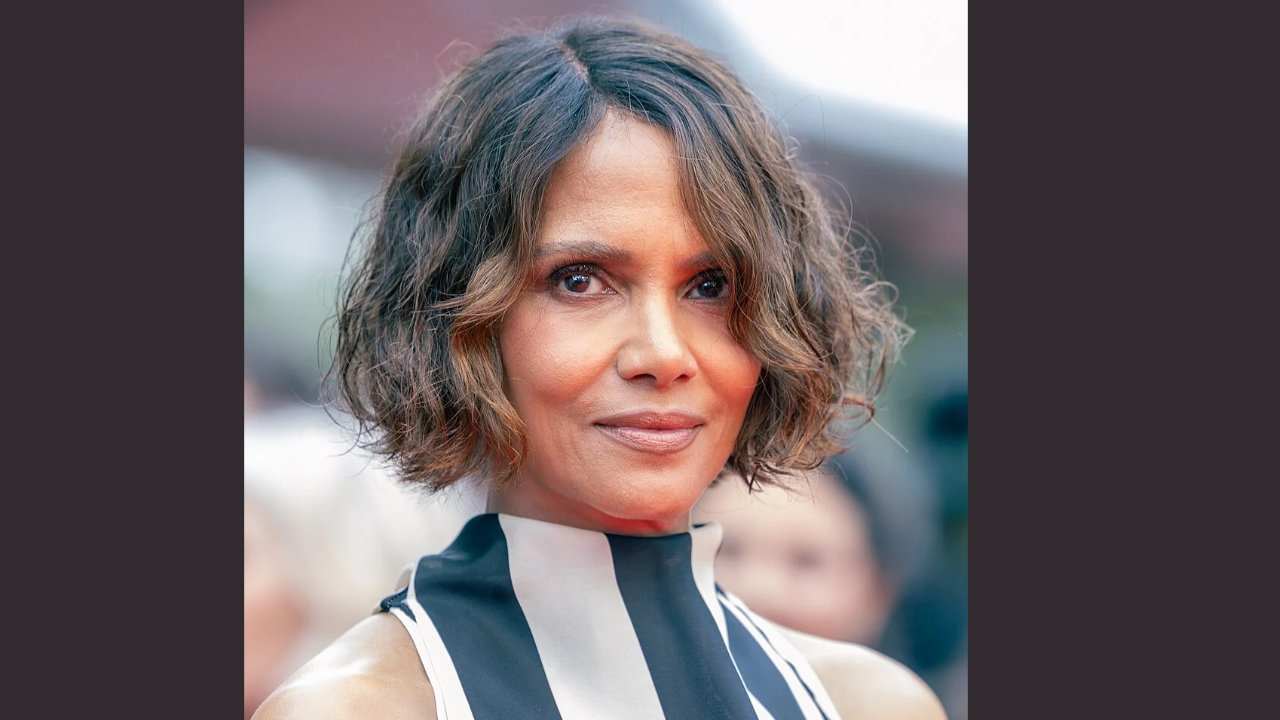
That gap—the chasm between raw, undeniable talent and the cold math of production financing—is the exact fault line where the Tribeca Festival and Chanel have planted a flag. And when the Through Her Lens program recently gathered its jury, with Academy Award winner Halle Berry stepping into the room to help decide who walks away with that $120,000 production grant, the stakes stretched far beyond a ceremonial press release.
The Architecture of an Unseen Wall
To understand why a single grant matters so much, you have to sit in a pitch room where the air conditioning is set ten degrees too cold and watch how power actually moves in cinema.
For decades, the pipeline for directing was treated like a meritocracy by people who never had to push against a locked door. If you had the vision, the theory went, you simply picked up a camera and made something undeniable. Yet the numbers told a different, stubbornly lopsided story. According to long-running research from the USC Annenberg Inclusion Initiative, women have historically accounted for a small fraction of directors across top-grossing films, and women of color have occupied an even narrower slice of that pie—often hovering in the single digits year after year.
Why does that happen? Not because women lack stories. Walk through any film school or independent screening room and you will find notebooks overflowing with urgent, singular scripts.
The bottleneck happens at the exact moment an idea needs capital to become physical reality.
Think of filmmaking like building a bridge across a canyon. Writing the script is drawing the blueprints on paper; it costs nothing but time, obsession, and solitude. Shooting the film is pouring the concrete and hoisting the steel. You need permits, insurance, lenses, sound mixers, lighting trucks, locations, and editors. Without seed money, the blueprints stay rolled up in a drawer. And because traditional financiers have historically equated "safe investment" with "directors who look like the directors who made money in 1998," emerging women filmmakers have repeatedly been asked to prove they can build a bridge before anyone will sell them a single bag of cement.
I remember sitting on a folding chair at a downtown screening years ago, watching a brilliant young director field questions after her twenty-minute short. A producer in the third row asked her how she had achieved such a rich, anamorphic look on a micro-budget. She smiled politely and gave a technical answer about vintage lenses. Later, in the lobby, she told me the truth: she had maxed out three credit cards, borrowed her cousin's minivan to haul lighting gear through a snowstorm, and eaten white rice for four months so she could pay her sound designer a fair day rate.
She made a masterpiece. Then she couldn't afford to make another film for four years because she was busy digging herself out of debt.
Why Halle Berry in the Room Changes the Gravity
Celebrity involvement in arts philanthropy can sometimes feel like window dressing—a famous face brought in for step-and-repeat photos before the cameras pack up and go home. Halle Berry’s presence on the Through Her Lens jury carries a fundamentally different weight, rooted in history that everyone in Hollywood remembers vividly.
In March 2002, Berry stood on the Kodak Theatre stage holding the Academy Award for Best Actress for Monster’s Ball, becoming the first—and, astonishingly, still the only—Black woman to win in that category. In her tear-streaked speech, she famously said the moment was for every nameless, faceless woman of color who now had a chance because that door had been opened.
Over twenty years later, Berry has spoken candidly about the bitter irony that followed that night. The phone did not ring with a flood of prestige scripts from visionary auteurs. The door she had pried open required constant, exhausting force just to keep from swinging shut again. When Berry stepped behind the camera herself to direct Bruised in 2020, she had to fight tooth and nail to get the project financed, navigating skepticism from executives who questioned whether an actress best known for being in front of the lens could command a set.
She learned the mechanics of gatekeeping from both sides of the camera.
So when Berry sits across from emerging filmmakers in the Tribeca-Chanel program, she isn't evaluating them from an ivory tower. She knows what it feels like to hold a script that no one else can visualize yet. She knows the specific courage it takes for a woman to walk into a room, claim authority over fifty crew members, and say, This is the frame, this is the pacing, and this is how the story breathes.
In the jury room, that lived experience acts like a tuning fork. Mentors and jurors aren't just looking for neat, market-tested formulas. They are listening for a pulse—an unmistakable directorial voice that refuses to apologize for taking up space.
Inside the Crucible of Through Her Lens
Launched in 2015 as a partnership between Tribeca Enterprises and Chanel, the Through Her Lens program was built specifically to dismantle the isolation that kills so many promising projects in development.
Most grants hand over a check and wish you luck. That approach often leaves first-time directors vulnerable to the hundred hidden traps of production—bad contracts, bloated schedules, or post-production bottlenecks that swallow the budget whole. Tribeca and Chanel designed something closer to an intensive artistic foundry.
Each year, a small cohort of selected U.S.-based women and non-binary filmmakers—typically five teams consisting of a writer and director, or a writer-director—are brought into a multi-day workshop in New York City. For three days, their scripts are pulled apart and rebuilt under the guidance of masterclasses, one-on-one mentorship, and peer critique from established directors, producers, and actors.
Consider what happens next in that process.
On day one, a filmmaker arrives clutching her script like a shield, terrified that changing a single scene will dilute her vision. By day two, after sitting with seasoned editors and cinematographers who ask razor-sharp questions about motivation and visual subtext, the shield comes down. She realizes the feedback isn't trying to turn her movie into someone else's movie; it is trying to make her movie sharper, leaner, and impossible to ignore.
By day three, the cohort steps into the final pitch.
This is where the tension peaks. Standing before a jury that includes heavyweights like Berry alongside leading industry executives and filmmakers, each team has a narrow window to pitch not just a plot summary, but an entire sensory world. They have to convey how the film sounds, how the camera moves when a character lies, and why this specific story cannot wait another five years to be told.
One project receives the top prize: $120,000 in full production financing, plus ongoing creative support from Tribeca Studios to shepherd the short film from pre-production through completion. The remaining finalists don't walk away empty-handed either—each receives development grants to keep their momentum alive so the work done in the workshop doesn't evaporate on the train ride home.
The Economics of a Short Film That Actually Gets Made
People outside the film business often ask a reasonable question: Why spend $120,000 on a short film when some independent features are shot for twice that?
The answer lies in how short films function in the modern ecosystem. A short film is not meant to turn a profit at the box office. It is a proof of concept—a calling card written in light and sound.
When a director shoots a short on a shoestring budget with borrowed gear and unpaid favors, the seams often show. Muffled dialogue or flat lighting can distract an executive from recognizing a brilliant directorial sensibility. Conversely, when a filmmaker has $120,000 in institutional backing, she can hire a seasoned director of photography, cast actors who bring psychological depth to every silence, pay her crew fairly, and finish the color grade and sound mix to theatrical standards.
That polish buys something priceless: legitimacy.
Look at the track record of Through Her Lens alumni. Films born in this program haven't merely vanished into private Vimeo links. They have premiered at Sundance, Tribeca, and Toronto. Their directors have gone on to helm episodes of prestige television, sign with major talent agencies, and secure financing for debut feature films. The short film becomes the undeniable visual evidence that answers every skeptical financier's question before it can even be asked.
It shifts the conversation from Can she direct? to When can she start?
What Happens When the Lens Turns
There is a quiet, cumulative magic that occurs when different people hold the camera.
For over a century, cinema trained audiences to view the world through a remarkably narrow aperture. Certain kinds of heroes were framed as universal; everyone else was framed as a sidekick, a cautionary tale, or an exotic detour. Even the way light was metered on film stock for decades was calibrated primarily for pale skin tones, literally leaving darker faces underexposed in the shadows unless a cinematographer fought the technical defaults of the medium.
Changing who directs changes the defaults.
When a woman steps behind the lens with full creative control and the resources to execute her vision, the camera lingers on details that were previously treated as trivial. A mother counting exact change at a pharmacy counter becomes a thriller. Two old friends sitting in a parked car outside a wedding reception becomes an epic. The choreography of domestic labor, the unspoken politics of a family dinner, the quiet terror of starting over at forty—suddenly, these moments are given the sweeping cinematography, orchestral weight, and narrative urgency once reserved exclusively for bank heists and battlefield charges.
Audiences are hungry for that specificity. Every time a nuanced, deeply human story breaks through the noise of algorithm-driven content, it proves that "universal" was never about sanding away identity. Universal is what happens when someone tells the truth about a specific corner of human experience with total precision.
Back at the Kitchen Table
Let’s return to Maya, our composite filmmaker in Queens, staring at that stubborn budget spreadsheet while the train rumbles past her window.
For months, she has been translating her imagination into compromises. If I can't afford the night shoot, I'll rewrite the scene for afternoon. If I can't afford the crane shot, I'll hold on a static close-up. If I can't pay for three days at the diner, I'll cut the third act in half. Each compromise is small on its own, like shaving a millimeter off a wooden sculpture. Eventually, if you shave away enough millimeters, you lose the shape you set out to carve.
Then the call comes. The jury has deliberated. The funding is real.
Suddenly, the math reverses. Instead of shrinking the story to fit a tiny bank account, the resources expand to meet the ambition of the script. The night shoot goes back on the schedule. The crew gets paid what their craft is worth. The story gets to be told at full volume, without an ounce of apology.
In the grand ledger of global entertainment, $120,000 is a modest sum. It will not single-handedly rewrite a century of Hollywood imbalance overnight, nor will it rescue every worthy script gathering dust on a hard drive.
Yet out on a soundstage or a rainy street corner next autumn, a young director is going to look through a viewfinder, adjust the focus until a character’s eyes snap into sharp relief, and call Action on a scene that would never have existed without that bet.


