Silence.
In modern American politics, silence is an extinction event, yet when a leader famous for never retreating suddenly whispers a doubt, the silence that follows in living rooms across the country is deafening.
For years, the rhetoric surrounding mass deportation was delivered like an anvil dropping onto concrete—loud, uncompromising, absolute. Millions cheered the promise of swift, sweeping enforcement, convinced that a blunt instrument was the only tool left to fix a broken border. Then came the quiet concession, a single remark suggesting that the policy might have been "too tough" for voters at the ballot box, and suddenly the granite wall showed a hairline fracture.
You could almost hear the collective intake of breath from two entirely different Americas. In one, an elderly retiree in Pennsylvania stared at his morning coffee, wondering if the toughness he voted for had finally crossed a line he hadn't meant to draw. In another, a mother in Phoenix kept her keys near the front door, listening to the hum of every passing sedan and calculating how many minutes it would take to pack a single duffel bag.
The Architecture of a Hard Line
To understand why a subtle shift in political tone feels like an earthquake, you have to strip away the cable news chyrons and look at how policy actually enters a human life.
On paper, immigration enforcement is a ledger of statutes, detention bed capacities, and transportation logistics. In reality, it is a tide that rises slowly in the dark until it reaches the floorboards of ordinary houses. When Donald Trump remarked that his deportation stance may have alienated voters, he wasn't merely analyzing an election post-mortem; he was inadvertently acknowledging a fundamental collision between abstract political slogans and visceral human empathy.
Consider a hypothetical scenario—call it a composite portrait drawn from thousands of real American neighborhoods.
Meet Elena, a 42-year-old line cook in a mid-sized Ohio town, and her neighbor, Marcus, a retired factory supervisor who proudly planted a campaign sign in his front yard every four years. For nearly a decade, Marcus handed Elena's kids surplus tomatoes over their shared chain-link fence. He knew Elena didn't have papers; she had mentioned it once in passing, quietly, the way people confess a chronic illness they cannot afford to treat. To Marcus, "deportation" was a word meant for strangers on the evening news—men with blurred faces crossing desert scrub at midnight. It was never meant for the woman who shoveled his driveway after an ice storm.
When the rhetoric escalated into promises of neighborhood sweeps, workplace raids, and the removal of millions regardless of community ties, Marcus felt a cold knot tighten in his stomach. He wanted order at the border. He wanted the law respected. Yet standing at his kitchen window watching Elena's daughter practice riding a bicycle on the sidewalk, the sweeping promise of "toughness" stopped sounding like strength and started feeling like cruelty.
That cognitive dissonance is where elections are won and lost. Voters frequently demand the iron fist in theory while flinching when they see whom it is about to strike in practice.
Why Voters Flinch at the Edge of Extremes
Political scientists have long observed a recurring pattern in American public opinion, a pendulum that swings violently toward strict enforcement during moments of perceived chaos, only to recoil the instant enforcement threatens to tear through the social fabric of local communities.
Look back at the history of American immigration crackdowns, from Operation Wetback in 1954 to the workplace raids of the late 2000s. Every single time, the initial political surge was fueled by frustration over strained municipal budgets, overwhelmed border towns, and a sense that federal authorities had lost control. And every single time, public support eroded the moment cameras captured crying children outside meatpacking plants or long-time business owners led away in handcuffs.
Why does this happen? Think of a heavy snowstorm. From inside a warm house, watching the flakes bury the streets feels exhilarating, a dramatic reset of the world outside. You only realize the cost when the power lines snap, the pipes freeze, and you have to dig your neighbor's car out of a four-foot drift with a plastic shovel.
Slogans are the snowfall. Policy is the frozen pipe.
Polling consistently reveals this exact split in the American psyche. Majorities routinely tell researchers they favor stronger border security and the deportation of individuals convicted of violent crimes. Yet those same majorities turn sharply against policies that target undocumented residents who have lived in the United States for over a decade, paid taxes, and raised American-born children. When a campaign blurs the line between those two groups—treating a cartel smuggler and a longtime church deacon as identical targets—swing voters begin to back away.
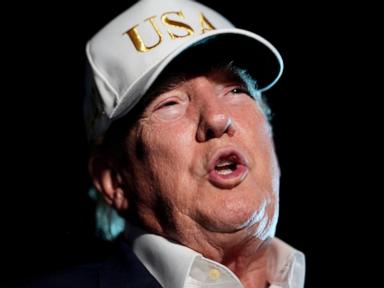
Trump's candid reflection that the posture "might have been too tough" cuts straight to this vulnerability. In a political culture built on doubling down, admitting that an aggressive stance carried an electoral penalty is rare. It signals an awareness that suburban independents, moderate conservatives, and even segments of Hispanic and working-class voters drew an invisible boundary. They wanted a locked front door, not a demolition crew tearing down the walls of the house.
The Invisible Ledger of Fear and Economics
Walk through any agricultural valley in California, any construction site in Texas, or any hospitality corridor in Florida, and you will feel the invisible tremors that tough-on-immigration rhetoric sends through the economy long before a single bus leaves a detention center.
I remember standing inside a wholesale produce warehouse in the Midwest a few years ago during a rumor of an imminent federal audit. The air smelled of damp cardboard and bruised apples, cold enough to turn breath into white plumes. Half the loading bays were empty. Forklifts sat parked with their keys dangling from the ignitions. The warehouse manager, a third-generation business owner who voted straight-ticket Republican his entire adult life, stood clutching a clipboard with white knuckles. He wasn't making a political speech; he was staring at three hundred pallets of perishable tomatoes that would rot before Monday because forty percent of his crew had stayed home out of fear.
"Nobody wants chaos," he told me quietly, rubbing his temples. "We just want a system that makes sense."
That moment stays with you because it exposes the lie that immigration policy exists in a vacuum. When an administration signals uncompromising, blanket removals, the shockwaves hit Main Street immediately. Small businesses lose workers overnight. Local tax revenues dip. Hospitals see a sudden drop in emergency room visits from parents terrified that seeking care for a feverish child might trigger an inquiry into their legal status.
Economists at institutions from the Brookings Institution to the Peterson Institute for International Economics have repeatedly modeled what happens when mass removal moves from campaign speech to operational reality. Removing millions of workers from sectors like construction, elder care, agriculture, and food processing doesn't magically create millions of high-paying vacancies for native-born workers; instead, it creates severe labor bottlenecks, drives up the cost of groceries and housing, and shrinks local economies.
Voters may not read econometric studies over breakfast, yet they feel the friction in their daily lives. They notice when the local diner cuts its hours due to staff shortages. They notice when framing crews vanish from a half-built housing development down the road. And deep down, even voters who deeply resent illegal immigration begin to question whether the cure is worse than the disease.
The Anatomy of a Political Recalibration
When a political figure hints that a signature policy went too far, the natural instinct among pundits is to treat it as a tactical calculation. Was it a trial balloon? A way to soften edges ahead of future battles? A moment of unguarded honesty?
Honestly, it is difficult to know where genuine reflection ends and political instinct begins. Anyone who claims to read the exact internal calculus of a leader known for theatrical unpredictability is selling certainty they do not possess. What matters far more than the internal motive is the external reality it confirms: even the fiercest advocates of hardline enforcement recognize that American voters possess a built-in moral circuit breaker.
Consider what happens next when that circuit breaker trips.
First, the language begins to shift. Notice how quickly "deport them all" evolves into "focus on the worst first." The emphasis pivots back toward violent offenders, national security threats, and recent border crossers—categories where public consensus remains overwhelmingly solid. Second, the quiet exemptions start to appear. Agricultural lobbies, restaurant associations, and construction executives begin knocking on congressional doors, explaining in plain terms what happens to food prices and mortgage rates if their workforce disappears.
Yet for the millions of people living in the crosshairs of those policies, a slight softening in political post-election commentary offers cold comfort. Trust, once shattered by the threat of expulsion, does not grow back because of a single nuanced interview.
What Toughness Actually Costs
There is a profound difference between strength and harshness, though modern politics constantly tries to confuse the two.
Strength is building an asylum system with enough judges and border personnel to adjudicate claims in weeks rather than years, so legitimate refugees find safety and fraudulent claims are turned back swiftly and humanely. Strength is creating legal pathways that match the actual labor needs of the American economy, bringing workers out of the shadows where they can pay full taxes and compete on a level playing field without being exploited by unscrupulous employers.
Harshness is simpler. Harshness requires no legislative compromise, no funding negotiations, no patient administrative reform. It requires only a microphone, a scapegoat, and the willingness to treat human beings as abstractions.
For a while, harshness sells. It satisfies the immediate itch for vengeance against a system that feels broken and unfair to people who waited in line, paid their fees, and followed every rule. It projects decisive action in an era of legislative paralysis.
Until the bill comes due.
The bill comes due when a high school valedictorian is separated from the only country she has ever known. It comes due when a decorated military veteran discovers his spouse faces removal over a paperwork technicality from twenty years ago. It comes due in the quiet shame of neighbors who realize they cheered for an abstract crackdown without ever asking who would be caught in the net.
In acknowledging that his deportation policy might have been too tough for the electorate, Trump stumbled onto a truth that transcends party lines and campaign cycles. America is a nation obsessed with the rule of law, fiercely protective of its borders, and deeply impatient with government dysfunction. At the exact same time, it remains a nation bound together by millions of daily, invisible acts of neighborliness—the shared lawnmower, the extra plate of food, the quiet nod at the bus stop.
Policy can survive without elegance, and politicians can survive without consistency, yet no political movement can outrun the basic human instinct to recoil when the hammer swings too close to home.
Somewhere tonight, in a quiet suburban neighborhood, a porch light flickers on against the gathering dark, illuminating two driveways separated by a low wooden fence and a single shared strip of grass.