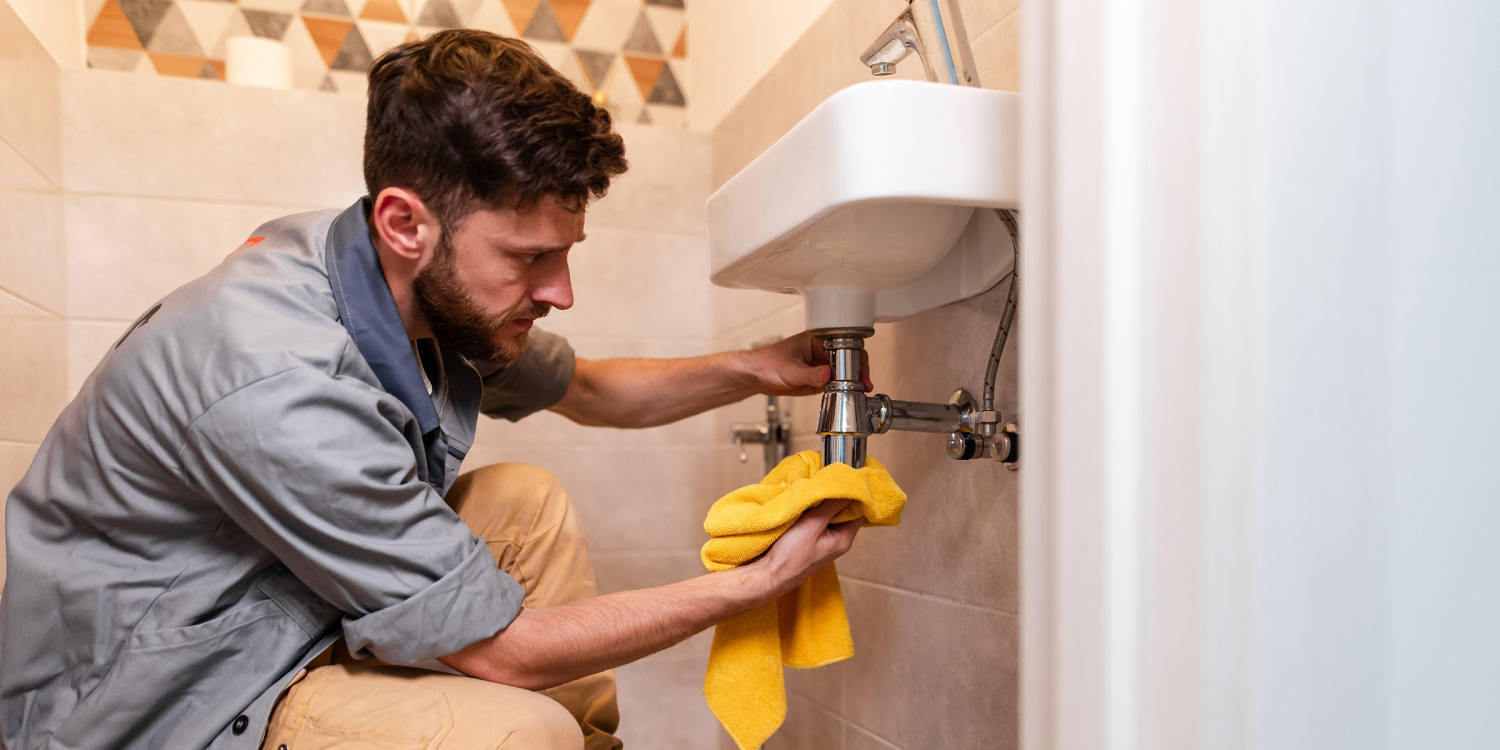
Two in the morning is when a house tells the truth.
During the day, a home is loud with distractions. The hum of the refrigerator masks the hiss in the crawlspace. Footsteps on the stairs drown out the rhythmic, patient ticking of water hitting drywall. You make coffee, answer emails, walk past the utility closet a dozen times, and assume that because the ceiling isn't collapsing, everything behind the paint is dry.
I used to believe that too. Until a Tuesday morning in November when I walked downstairs in wool socks and felt the oak floorboards give slightly beneath my heel, cold and spongy like wet cardboard.
There had been no dramatic burst. No geyser erupting from beneath the kitchen sink. Just a pinhole fracture in a braided stainless-steel supply line behind the refrigerator—a failure so small it barely registered on the water bill for two months. By the time my socks got wet, water had wicked three feet up the plaster, saturated the subfloor, ruined the cabinetry, and started a quiet, thriving colony of black mold inside the wall cavity. The remediation crew arrived with industrial dehumidifiers that roared like jet engines for ten days straight. The final invoice cleared fourteen thousand dollars.
All of it caused by a leak you couldn't hear over a ceiling fan.
When homeowners ask whether a smart water leak detector is actually worth the money, they usually frame the question around gadgets and price tags. They look at a fifty-dollar plastic puck sitting on a hardware store shelf and weigh it against an immediate, guaranteed expense. What they rarely see is the asymmetry of the bet. You are wagering the cost of a decent dinner against the single most common, insidious, and financially devastating threat to residential property in the modern world.
The Invisible Math of Residential Water Damage
Insurance companies track disasters with cold precision, and their data tells a story most homeowners never hear until they file a claim. According to the Insurance Information Institute, water damage and freezing account for nearly one in four homeowners insurance claims every year. Fire gets the headlines. Burglary triggers the anxiety that sells security cameras and motion lights. Yet water quietly causes more property loss than fire and theft combined, averaging well over ten thousand dollars per incident.
Consider a hypothetical couple—let’s call them Marcus and Elena—who buy a modest three-bedroom colonial built in the late nineties. They spend their first weekend changing the locks, testing the smoke detectors, and installing a smart doorbell. They feel protected. What they don't know is that the rubber supply hose feeding their upstairs washing machine is twelve years old, brittle from a decade of pressure surges, and rated for a lifespan of five.
On a Wednesday afternoon while Marcus and Elena are at work, that hose splits.
A standard half-inch residential water line delivers roughly six to ten gallons of water every minute. Within twenty minutes, two hundred gallons have pooled across the laundry room floor, found the seams in the subflooring, and begun raining down through the recessed lighting cans in the living room ceiling below. By the time Elena unlocks the front door at six o'clock, over two thousand gallons have moved through the structure of their house. The drywall has turned to paste. The hardwood has cupped beyond sanding. Family photo albums stored in cardboard boxes in the hallway closet are fused into solid blocks of pulp.
In that scenario, the tragedy isn't just the ruined timber or the deductible. It is the displacement. Families don't just lose drywall to major leaks; they lose months of normal life living in extended-stay hotels while contractors gut their kitchens down to the studs.
And the worst part? Even catastrophic pipe bursts are only half the problem. The true silent killers of homes are the slow drips—the failing wax ring under a guest bathroom toilet, the sweating condensate pan in an attic HVAC unit, the hairline crack in a water heater tank that weeps a teacup of water every hour. Left unchecked, moisture transforms wood into food for fungi within forty-eight hours. By the time a yellow stain blooms across your ceiling, the damage behind it is already weeks or months old.
How a Fifty-Dollar Puck Changes the Timeline
To understand why home experts overwhelmingly endorse leak detectors, you have to think of water damage not as an event, but as a race against time.
Think of a water leak detector as a smoke alarm for your plumbing. Nobody debates whether smoke detectors are worth buying, even though most people go their entire lives without hearing one go off during an actual fire. We buy them because fire doubles in size every thirty seconds, and early warning is the only thing that keeps a kitchen flare-up from becoming a total loss. Water operates on a slightly slower clock, but the principle is identical. The difference between catching a leak at three minutes versus catching it at eight hours is the difference between grabbing a bath towel and calling a general contractor.
At their core, most leak sensors rely on simple, reliable physics. Two or more gold-plated metal probes sit flush against the bottom of a small, waterproof housing. Water is conductive; air is not. The moment even a film of moisture—often less than a millimeter deep—bridges the gap between those probes, an electrical circuit closes.
What happens next depends on the tier of technology you choose, and this is where many buyers get tripped up by confusion.
Standalone audible alarms are the simplest entry point. Costing between fifteen and twenty-five dollars, these battery-operated units sit on the floor and emit an eighty-five-to-one-hundred-decibel shriek when wet. They require no Wi-Fi, no hub, and no smartphone app. Their limitation, however, is obvious: if you are asleep on the third floor with a white-noise machine running, or three hundred miles away on vacation, a siren in the basement helps nobody.
Smart Wi-Fi or hub-connected sensors solve the distance problem. Ranging from thirty to sixty dollars per sensor, devices from brands like Govee, Moen, YoLink, and Aqara link to your home network. The second the probes detect moisture, the sensor screams locally while simultaneously pushing an urgent alert to your phone—bypassing Do Not Disturb settings if configured properly. Many of the better units also monitor ambient temperature and humidity, warning you when a basement pipe is approaching freezing temperatures long before ice expands and splits the copper.
Automatic smart shutoff valves represent the apex of home water defense. Installed directly on your main water line—either by a plumber who cuts into the pipe, or via retrofit motors that clamp over an existing ball valve—systems like Flo by Moen or Phyn monitor water pressure and flow rates across your entire plumbing network twenty-four hours a day. Using ultrasonic sensors or micro-turbines, they learn the signature of your household's normal water usage. They know what a shower looks like versus a toilet flush. If a pipe bursts, or if paired floor sensors detect a leak while you are on a flight across the Atlantic, the valve physically turns itself closed in seconds, choking off the water supply before the room even floods.
Yes, a whole-home automatic shutoff system runs anywhere from five hundred to over a thousand dollars once you factor in professional installation. That number makes people flinch. Yet put it next to the average water damage claim, or factor in the insurance discounts many carriers now offer—often five to ten percent off annual premiums for homes equipped with automatic shutoff valves—and the math starts tilting heavily in your favor.
Where Leaks Actually Hide
Buying a handful of sensors and dropping them randomly around the house is a common rookie mistake. Water obeys gravity, and plumbing fails at predictable stress points. If you want maximum protection without turning your home into a maze of blinking plastic discs, you place them where rubber meets pressure and where appliances drain.
Start with the water heater. Traditional tank heaters hold forty to eighty gallons of water under constant thermal expansion and contraction. Eventually, internal corrosion wins. Placing a sensor inside the drain pan—or directly beside the base on concrete—catches the first telltale weeping before the tank gives way entirely.
Move next to washing machines and dishwashers. Both rely on pressurized intake hoses and plastic drain pumps that endure violent vibrations thousands of times over their lifespans. Slide a thin sensor directly behind the washing machine and tuck another under the toe-kick panel beneath your dishwasher.
Then look under every sink. Kitchen and bathroom vanities hide a tangle of P-traps, braided supply lines, garbage disposal seals, and shutoff valves. A sensor tucked behind the cleaning supplies under the kitchen sink will catch a slow drip from a failing disposal gasket months before the particleboard cabinet floor rots through.
Finally, don't forget refrigerators with ice makers and basement sump pumps. That tiny quarter-inch plastic line feeding your fridge's ice maker is notorious for cracking when the unit is pulled out for cleaning, and sump pumps almost always fail during the exact torrential rainstorm when you need them most.
For tight spaces—like underneath a low-clearance dishwasher or deep behind a stacked laundry unit—look for sensors equipped with a tethered drip cable. Instead of trying to wedge the whole plastic puck into a half-inch gap, you leave the transmitter out where you can easily change its batteries and snake the thin, water-sensing wire deep into the blind spot. Any drop of water touching any inch of that cable triggers the alarm.
Honest Friction and the Things Nobody Mentions
It would be dishonest to pretend smart home gear is effortless. Anyone who has spent a Saturday afternoon trying to pair a stubborn smart plug knows the quiet rage of blinking blue LEDs and dropped connections.
Leak detectors have real, practical quirks you have to manage. Batteries die—usually at three in the morning, announcing their demise with a polite, maddening chirp every sixty seconds. Standard Wi-Fi sensors can struggle to punch a signal through thick concrete basement walls or out to a detached garage, which is why long-range protocols like LoRa (used by brands such as YoLink) often outperform standard Wi-Fi in sprawling or older homes.
There is also the phenomenon of false alarms. Mopping the laundry room floor too enthusiastically, spilling a glass of water near the fridge, or heavy summer condensation dripping off a cold toilet tank can trigger a full-blown emergency alert on your phone while you are sitting in a meeting. Your heart spikes. You race home. You find a puddle the size of a silver dollar.
Honestly, after living through a major leak, I will take ten false alarms over a single missed catastrophe. A false alarm costs you fifteen minutes of mild irritation. A real leak costs you your sanity, your savings, and the quiet comfort of trusting the walls around you.
What You Are Really Buying
We spend a remarkable amount of energy curating the visible surfaces of our homes. We agonize over paint swatches, quartz countertops, and wide-plank flooring, all while ignoring the pressurized network of copper, PEX, and rubber hidden two inches behind the drywall. Every day, roughly sixty pounds per square inch of municipal water pressure pushes relentlessly against every joint, washer, and weld in your house, waiting for a single component to grow tired.
You cannot see inside your walls. You cannot watch a rubber gasket degrade in slow motion, and you cannot hear a pinhole leak through floorboards and insulation while you sleep.
A water leak detector doesn't stop pipes from aging, and it won't make appliances last forever. What it buys you is awareness. It collapses the window between failure and discovery from days down to seconds. It turns an invisible, slow-motion disaster into a minor Tuesday annoyance solved with a wrench and an old towel.
Tonight, when the house goes quiet and the lights go out, water will still be pressing against every valve behind your walls. The only question is whether you will hear it the moment it breaks through.