The closet in my hallway has a shelf that bows slightly in the middle. Not from structural failure, and not from old family photo albums, though those are tucked neatly in the corner. It bends under the quiet, suffocating weight of three unused air fryers, a velvet-lined decanter set I have never poured a drop from, and a gadget specifically engineered to peel hard-boiled eggs that took longer to wash than the eggs took to boil.
Every January, millions of us perform the same silent ritual. We take the well-intentioned objects handed to us in December, carry them up the stairs, and slide them into the dark spaces of our homes where they slowly calcify into guilt.
We have gotten gift-giving completely backward.
For decades, the cultural script has insisted that love must have mass. It needs to rattle when you shake it. It requires cardboard, bubble wrap, and a bow stuck to the top like a cherry on a sundae nobody ordered. Yet if you look closely at the American household in 2026, the crisis isn't a shortage of things. The average home already contains roughly 300,000 items. The real scarcity—the invisible drought parching the people we care about most—is time, energy, and the friction of daily survival.
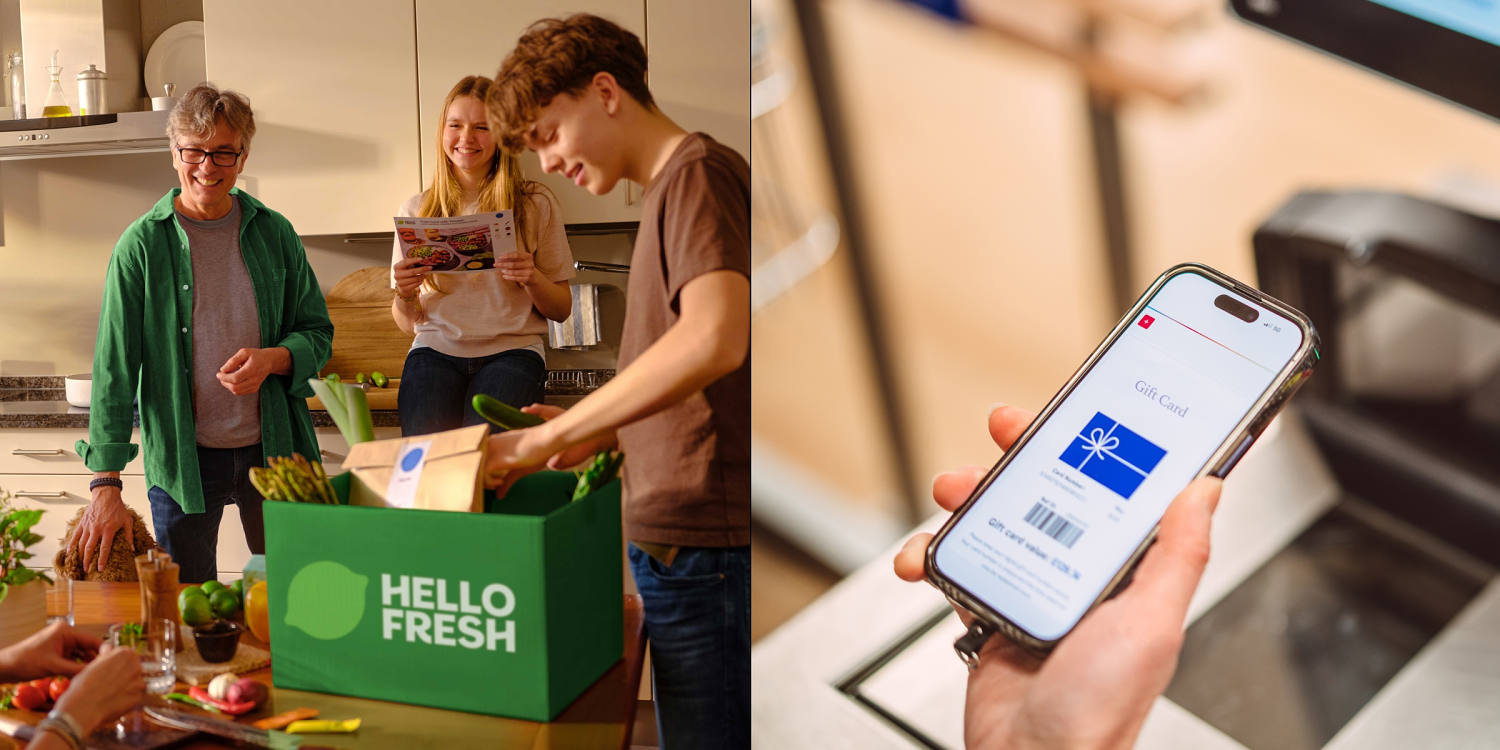
Consider a hypothetical scenario. Picture Sarah, a pediatric nurse working three twelve-hour shifts a week in Chicago. On December 25th, her brother hands her a heavy, beautifully wrapped box containing a high-end cast-iron Dutch oven. It is a magnificent piece of cookware. It is also another thing she has to scrub at 9:30 PM on a Tuesday while her feet throb and her pantry sits empty. Now imagine what happens if, instead of the iron pot, he hands her an envelope containing three months of HelloFresh or Factor meal deliveries.
Suddenly, the gift isn't an obligation. It is an exhale.
When we shift from buying objects to gifting services, we stop handing people chores disguised as generosity. We start handing them their lives back.
The Architecture of Relief
To understand why service gifts hit a deeper emotional nerve than physical goods, you have to look at the psychology of decision fatigue. Behavioral economists have spent years tracking how the human brain degrades under the weight of micro-choices. Every day, an adult makes roughly 35,000 decisions. What to wear, what to cook, which route to take, when to clean, how to decompress. By evening, our cognitive batteries are blinking red.
A physical gift, no matter how luxurious, almost always adds a variable to that equation. A sweater requires dry cleaning. A board game requires organizing four adults on a Friday night. A plant requires a watering schedule and sunlight tracking.
A service gift subtracts a variable.
Think about the sheer, visceral relief of outsourcing a recurring headache. If you want to give a gift that makes someone weep with gratitude in February—long after the tinsel is in the dumpster—you look at the friction points in their week.
Take the dreaded "What's for dinner?" standoff. Meal kit services have evolved far beyond the clunky, plastic-heavy boxes of a decade ago. Gifting a subscription to Blue Apron, Green Chef, or Sunbasket hands a busy parent pre-measured ingredients and twenty-minute recipes, bypassing the grocery store entirely. For the friend who refuses to touch a skillet after work, fully prepared meal deliveries like CookUnity—where actual independent chefs cook restaurant-grade dishes that simply need heating—are nothing short of miraculous. You aren't gifting food; you are gifting forty-five minutes of evening silence.
And what about the household chores that quietly erode a couple's weekend? We rarely talk about the emotional toll of a dirty house, yet studies consistently link domestic clutter to elevated cortisol levels. Gifting a deep clean through Handy or a local vetted cleaning service, or handing a new homeowner a seasonal pass for TaskRabbit to finally mount those floating shelves and assemble the patio furniture, is a radical act of empathy. You are stepping into their chaotic Tuesday and saying, Let me carry this for you.
Buying Back the Morning
I learned the true value of a service gift three winters ago during a particularly brutal stretch of freelance deadlines. My sleep was fractured, my posture resembled a question mark, and my idea of self-care was drinking cold coffee while staring at a spreadsheet. For my birthday, a close friend didn't buy me a book or a bottle of bourbon. She bought me ten credits on ClassPass.
At first, I was skeptical. Fitness apps felt like homework.
Then came a freezing Thursday morning when I used three credits to walk into a dimly lit, cedar-scented sauna and cold-plunge studio twenty minutes from my apartment. No contract. No gym membership guilt. Just forty-five minutes of uninterrupted heat and silence, followed by a shock of ice water that reset my nervous system. The next week, I used the remaining credits for a restorative yoga class and a boxing session.
That is the secret genius of flexible wellness services. When you buy someone a rigid gym membership, you risk projecting your own insecurities onto them—a subtle, unintended message that they need fixing. When you gift ClassPass, Mindbody, or a digital sanctuary like Headspace, Calm, or Peloton's app-only tier, you are offering a key with no lock attached. They get to choose whether they want to sweat, stretch, meditate, or simply lie on a mat in a quiet room while someone else guides their breathing.
For the person whose body is actively screaming for repair, you can go even further. A subscription to Zeel or Soothe brings a licensed massage therapist directly to their living room, table and sheets in hand. Imagine the luxury of rolling off a massage table and walking twelve feet straight into your own bed, bypassing traffic entirely. That isn't just pampering. It is medicinal.
The Antidote to Stagnation
There is a dangerous trap we fall into as we age: we stop being beginners.
Once we leave school and settle into careers, our days become optimized for competence. We do things we are already good at because failing feels embarrassing and learning takes energy. Over time, our worlds shrink to the size of our routines. The best service gifts break that spell. They give people permission to be terrible at something brand new, safely and joyfully.
Let's test this with another hypothetical character. Meet Arthur, a sixty-two-year-old retired accountant in Ohio. Arthur has enough flannel shirts to clothe a lumber camp and enough grilling spatulas to arm a small militia. What Arthur doesn't have is a reason to wake up curious on a Wednesday.
Now imagine his daughter gifts him six months of Pimsleur or Babbel, paired with a weekly one-on-one tutoring package on italki so he can finally learn conversational Italian before his autumn trip to Rome. Or perhaps she sets him up with MasterClass, where Martin Scorsese explains how to frame a shot and Gordon Ramsay yells affectionately about scrambled eggs. Suddenly, Arthur isn't just passing time. He is rewiring his brain. Neuroplasticity thrives on novelty, and learning a language or an instrument—through platforms like Fender Play for guitar or Flowkey for piano—acts like fertilizer for an aging mind.
If your recipient craves tactile creation rather than screen time, look toward physical skill-building:
- Local pottery or woodworking studio passes, which get hands dirty and force the brain out of digital abstractions.
- Skillshare or Domestika memberships, offering deep dives into watercolor painting, calligraphy, or documentary photography.
- America's Test Kitchen digital subscriptions, transforming a timid home cook into someone who understands the actual chemistry of braising and fermentation.
When you give someone an education in something they love, the gift doesn't depreciate. Every time they strum a clean G-chord or order an espresso in Milan without stumbling, they think of you.
The Architecture of Shared Memory
We need to talk about the elephant in the gift-wrapping room: how do you hand someone an intangible service without it feeling like an afterthought?
This is where most people hesitate. We worry that emailing a digital voucher on Christmas morning looks lazy, like we panicked at 11:00 PM on December 24th in our pajamas. It is a valid fear. Presentation matters because ritual matters. The human brain craves a physical anchor to mark an emotional moment.
If you are gifting a service, you have to build a small theater around it.
Don't just forward a confirmation email. If you are gifting Stitch Fix or Rent the Runway to a friend who just landed a massive promotion and needs a wardrobe refresh without the fluorescent-lit agony of mall shopping, wrap a single, gorgeous silk hanger in a massive box with the voucher tied to the hook. If you are buying your parents a year of Storyworth—a service that emails them a weekly prompt about their life history and binds their answers into a hardcover book at the end of the year—wrap an antique fountain pen alongside the welcome letter.
Think about the emotional weight of Storyworth or Remento for a second. Have you ever sat at a funeral and realized how many questions you forgot to ask? We spend thousands of dollars buying trinkets for our aging parents while their actual memories—the texture of their childhood, the mistakes they made at twenty-five, the way they fell in love—sit unrecorded. Gifting a storytelling service isn't just a present for them; it is a rescue mission for your entire family's history.
The same principle applies to everyday indulgences that feel too frivolous to buy for oneself:
- Audible or Libro.fm credits for the commuter stuck on the interstate forty-five minutes each way, turning gridlock into a private theater (with Libro.fm directly supporting independent local bookstores).
- MUBI or The Criterion Channel for the film buff tired of scrolling endlessly through algorithmic sludge on mainstream streaming platforms.
- Panera Unlimited Sip Club or a prepaid tab at a beloved neighborhood coffee shop, turning a dreary Tuesday morning errand into a free ritual.
- BarkBox or a Rover pet-sitting credit for the dog owner who hasn't taken a weekend trip in two years because boarding fees cost more than the hotel.
- Tintri or Shutterfly photo-book credits paired with a professional Shoott mini-session, finally getting the family photographer into the frame instead of behind the lens.
- Wine Awesomeness or Trade Coffee subscriptions, curated specifically to their palate so their morning cup or Friday glass becomes a miniature travelogue.
Notice the pattern here. None of these require shelf space. None of them gather dust.
The Courage to Give Nothing (That You Can Hold)
I still look at that bowing shelf in my hallway closet from time to time. Eventually, I will haul the unused air fryers down to the local donation center, where they will sit under fluorescent lights waiting for someone else to bring them home. It is a strange, exhausting cycle—mining resources from the earth, molding them into plastic and steel, shipping them across oceans, wrapping them in paper, and storing them in closets until we die.
We buy things because things are easy. Things let us swipe a credit card and check a name off a spreadsheet without having to look too closely at the person receiving them.
To give a service, you have to pay attention. You have to notice that your sister is exhausted, that your father is lonely, that your best friend misses playing the piano, or that your partner is drowning in errands. It requires an act of quiet observation. You have to step inside someone else's skin for five minutes and ask yourself what is hurting them, what is boring them, and what is stealing their time.
When you get it right, there is no cardboard to break down on December 26th. There is no receipt taped to the bottom of a box. There is only a Tuesday morning three months later, when the coffee is hot, the house is clean, the dinner is handled, and someone you love takes a deep, unhurried breath—feeling, for the first time in a long time, completely understood.