Silence in the Canadian wilderness has a physical weight. It presses against your eardrums until the crunch of gravel under your boots sounds like a gunshot, and the wind moving through the spruce trees feels like a warning.
When a woman disappears in a major city, she leaves behind a digital wake. Security cameras catch her shadow at the corner bodega. Subway turnstiles log her commute. Cell towers ping her pocket every few minutes, drawing a neat, glowing breadcrumb trail across a map for detectives to follow.
In rural British Columbia, the map simply goes blank.
Nearly two years ago, a mother of three named Jennifer vanished from a quiet, wooded stretch of the province, leaving behind an unmade bed, three children who still look toward the driveway every time a truck rumbles past, and a community trapped in a slow-motion nightmare. Standard news reports reduce her life to a grim bulleted timeline. Age. Last seen wearing. Date reported missing. File number. They treat her disappearance like a clerical anomaly, a cold equation waiting for a variable to drop from the sky.
They miss the real story. The real story isn't just about one woman walking into the trees and never coming back; it is about the terrifying architecture of rural isolation, the systemic blind spots that allow vulnerable people to evaporate without a trace, and the agonizing limbo inflicted on the families left holding the pieces.
The Anatomy of a Vanishing
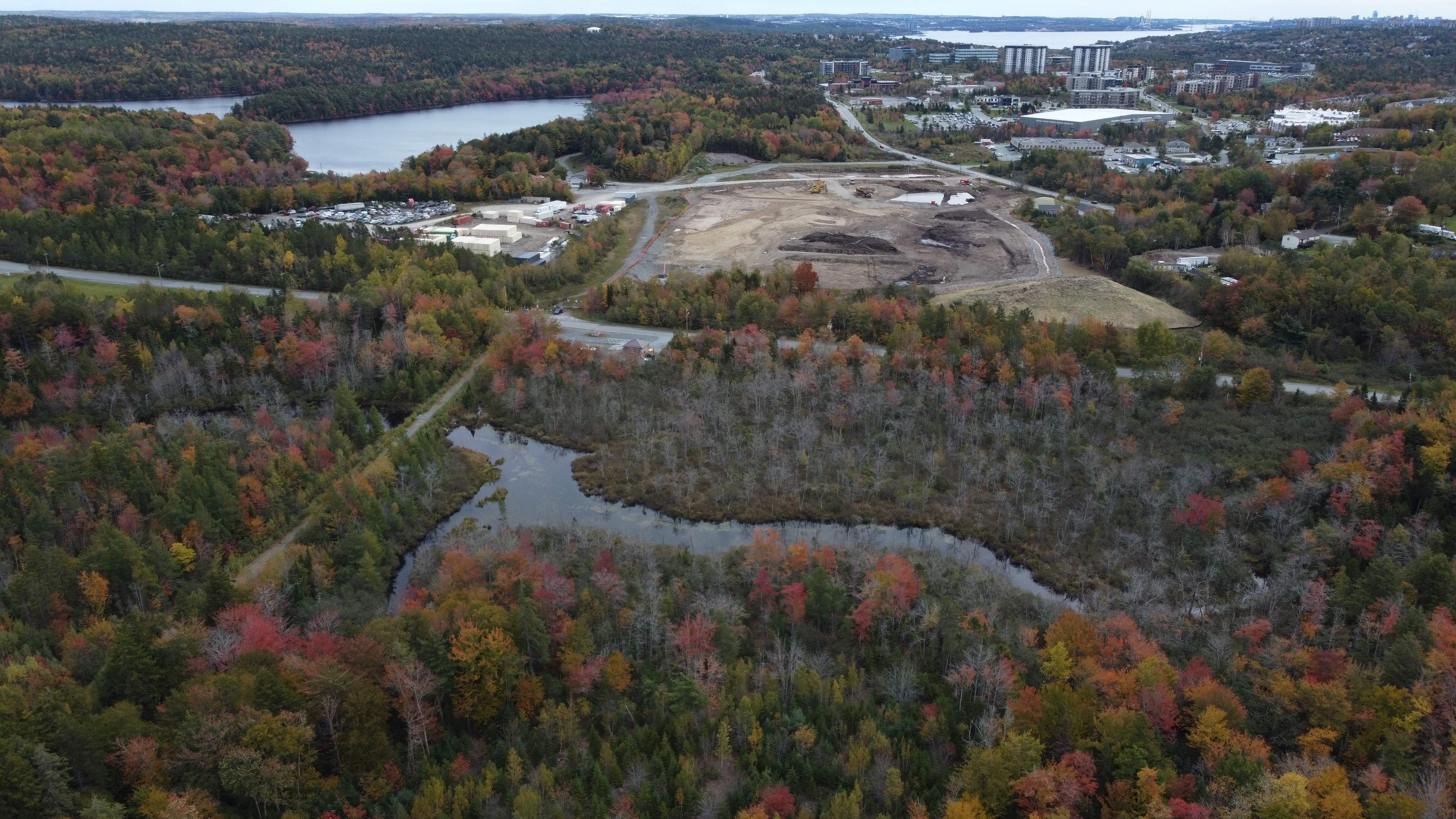
To understand how a mother of three can simply cease to exist in the twenty-first century, you have to understand the geography of the British Columbia interior. This is not the postcard version of the province with gleaming glass towers overlooking the Pacific. This is a vast, unforgiving expanse of logging roads, rushing glacial rivers, dense cedar forests, and towns separated by hours of empty highway where cell service drops out for fifty miles at a stretch.
Imagine, for a moment, a hypothetical Tuesday morning on one of these rural properties—a composite built from hundreds of real missing-person files across the region.
The coffee pot is still warm on the burner. A pair of muddy work boots sits by the back door, while the lighter sneakers are gone. The dog is barking at the edge of the treeline, agitated, staring into the brush where the shadows never quite lift even at noon. By the time a neighbor notices the quiet, by the time a spouse comes home from a shift at the mill and realizes the kids haven't been picked up from the bus stop, six hours have already evaporated.
In missing-person investigations, those first six hours are everything. Investigators call it the golden window, though in rural terrain, it feels more like a trapdoor. Without municipal surveillance, without witnesses on crowded sidewalks, the search doesn't start with a lead; it starts with a guess.
Did she walk down the forestry road to clear her head? Did she accept a ride from someone she trusted? Did she slip near the riverbank, where spring runoff moves fast enough to pull a grown adult under in seconds?
Every question branches into a dozen terrifying possibilities, and the terrain swallows the answers whole.
The Myth of the Clean Break
Whenever a mother disappears without an obvious crime scene, a subtle, insidious shift occurs in how the public talks about the case. Whispers start at the grocery store. Comments pile up on local community forums. People begin to float the comforting fiction that she simply walked away.
It is an easy story to tell yourself if you want to sleep at night. If she chose to leave, then the woods aren't dangerous, the neighbors aren't threats, and the world remains predictable. People point to the stress of raising three children in an economically squeezed rural town. They speculate about overwhelm, about burnout, about a woman snapping under the pressure of isolation and starting fresh somewhere far away.
Except the data—and the lived reality of mothers—tells a radically different story.
Mothers do not vanish into thin air without their wallets, without their identification, without a single goodbye to the children whose schedules they know down to the minute, and then maintain absolute radio silence for twenty-four months. Pulling off a complete, untraceable disappearance in the modern banking and digital era requires immense financial resources, fake documentation, and a coldness that directly contradicts everything known about Jennifer's devotion to her kids.
The "she just needed space" theory isn't an investigative hypothesis. It is a defense mechanism. Worse, it actively harms the search. When local chatter frames a disappearance as a voluntary walkaway, urgency curdles into apathy. Tips stop coming in. Posters fade on telephone poles and aren't replaced. The investigation shifts from an active rescue mission to a passive waiting game.
Living in the Hyphen
I have sat across kitchen tables from families living through this exact brand of purgatory, and there is no grief on earth quite like ambiguous loss.
When someone dies, the world gives you a script. There is a funeral, a casket, a death certificate, and a grave where you can lay flowers and weep. Friends bring casseroles for two weeks, and slowly, painfully, your brain begins the agonizing work of accepting a permanent absence.
When someone goes missing, the script is burned. You are trapped in the hyphen between life and death.
Every phone call after nine o'clock at night stops your heart. Every unidentified body found three provinces away triggers a wave of nausea while you wait for dental records to be matched. You cannot mourn her, because mourning feels like betrayal—an admission that you have stopped believing she is cold, scared, and waiting to be found. Yet you cannot live normally either, because her coat is still hanging in the mudroom, and her youngest child still asks if Mom will be back before their next birthday.
The financial and emotional toll on the surviving family is staggering, yet largely invisible in standard news coverage. Someone has to quit their job or cut their hours to care for three traumatized children. Someone has to become a full-time amateur detective, printing flyers at the local library, organizing volunteer grid searches through tick-infested brush, and begging overwhelmed RCMP detachments for updates that rarely come.
The exhaustion settles into the bones. Marriages fracture under the strain of unspoken blame. Children develop hyper-vigilance, terrified that if they take their eyes off their remaining parent for five minutes, that person will evaporate too.
The Blind Spots of Rural Justice
Why does this keep happening in rural stretches of Canada, and why do these cases so frequently stall out before the two-year mark?
Look at the resource math. A major metropolitan police force can deploy dozens of detectives, forensic specialists, digital analysts, and helicopters within hours of a suspicious disappearance. In a rural B.C. detachment, two or three officers might be responsible for patrolling an area the size of a small European country. On any given night, they are juggling domestic disputes, highway collisions, mental health crises, and property crimes.
When a missing-person file lands on that desk, the officers aren't indifferent—many of them live in these communities and feel the weight of the failure deeply—but they are drowning. Search and Rescue teams, composed largely of heroic volunteers with day jobs, can only comb so many square kilometers of dense timber before hypothermia, rugged terrain, and simple human exhaustion force them to stand down.
Then there is the jurisdictional friction. Rural roads connect easily to major transit corridors—highways that shoot south toward the Lower Mainland, east into Alberta, or north into the Yukon. Once a vehicle hits the highway, a local disappearance becomes a provincial or national needle-in-a-haystack problem. Without immediate, coordinated cross-jurisdictional alerts—the kind reserved almost exclusively for verified child abductions—crucial highway camera footage is automatically overwritten within days.
By the time investigators realize a disappearance isn't a simple case of someone getting turned around on a hiking trail, the digital and physical evidence has already dissolved.
What You Can Actually Do When the Trail Goes Cold
Reading about a two-year-old disappearance often leaves people feeling helpless, as if the only response is to shake your head, feel a pang of sadness, and scroll to the next headline. That passivity is precisely what keeps cold cases frozen.
Cold cases do not get solved by sudden strokes of cinematic genius in a lab. Almost universally, they break open because a regular person finally decides to say something they thought was too trivial to matter.
Think about how human memory works around rural communities. People notice things that look slightly out of place, then talk themselves out of reporting them. A white pickup truck parked at the end of a deactivated logging road at three in the morning. A neighbor suddenly burning piles of trash in the middle of a damp afternoon. A friend who suddenly stops talking about a trip they were planning, or who sells a car for far below market value the week after someone vanishes.
At the time, those details feel disconnected. You don't want to be the nosy neighbor. You don't want to ruin someone's life over a hunch. So you swallow the observation and move on.
Two years later, that single discarded detail is the exact puzzle piece detectives need to secure a search warrant.
If you live in or travel through the British Columbia interior, your eyes are the surveillance network the wilderness lacks. Pay attention to the vehicles on backroads. Keep dashcam footage if you drive remote stretches of highway. And if you know something—even if you are terrified of the social fallout in a small town where everyone knows everyone's last name—anonymous tip lines like Crime Stoppers exist specifically to strip away your identity before a single word reaches law enforcement.
The Light Left On
Two years is long enough for two winters to bury the forest floor in six feet of snow, and two springs to wash the soil down into the creeks. It is long enough for three children to outgrow two sets of winter coats, lose baby teeth, and learn how to navigate a world that suddenly stopped making sense.
Somewhere in rural British Columbia tonight, the sun is dropping behind the ridges, turning the timberline black against a bruised purple sky. Inside a quiet house, the porch light flicks on—not out of habit, and not because anyone expects a miracle before morning, but because turning it off would mean admitting the dark has won.