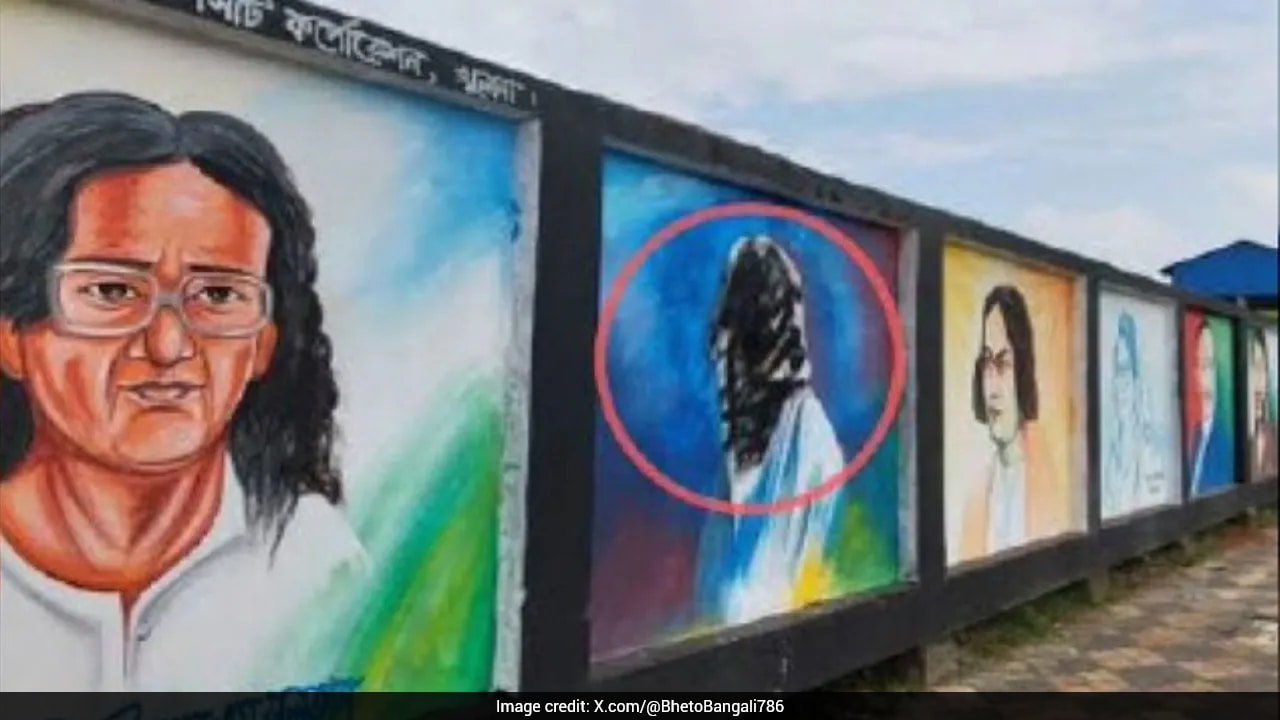
Black paint over a Nobel laureate's face isn't just vandalism. It's a flashpoint. When news broke that Rabindranath Tagore's portrait in Bangladesh was defaced again just days after a restoration effort, people across South Asia didn't just shake their heads and scroll past. They argued. They protested. They demanded answers about what kind of cultural future Bangladesh is actually building right now.
If you're trying to make sense of why a single mural or portrait keeps getting targeted, you have to look past the paint itself. The incident ties directly into ongoing political friction, shifting attitudes toward secular heritage, and the vulnerability of public art during periods of civic upheaval. Let's break down what actually happened, why Tagore remains such a polarizing yet essential symbol in Bangladesh, and what this repeated defacement tells us about the broader cultural climate.
What Actually Happened With the Tagore Portrait Defacement
Public monuments and murals don't exist in a vacuum. Following major political shifts in Bangladesh—most notably the student-led uprising in mid-2024 that upended the long-standing Awami League government—public spaces across Dhaka and other cities became battlegrounds of visual identity. Murals celebrating historical figures, secular poets, and independence leaders suddenly found themselves exposed to both street-level anger and organized ideological pushback.
In this specific case, a portrait of Rabindranath Tagore that had recently been cleaned and restored by local artists and cultural activists was targeted once again within days of the repair. Vandals smeared dark paint across the image, obscuring the poet's face and triggering immediate outrage from student groups, writers, and heritage advocates.
The sequence of events is what really got under people's skin:
- The initial defacement happened amid broader waves of monument vandalism where political frustration spilled over onto cultural landmarks.
- The community restoration saw volunteers and students step in with brushes and paint to reclaim the wall, treating the act as a defense of Bengali cultural identity.
- The second attack occurred almost immediately after the paint dried, sending a deliberate message that the erasure wasn't a random act of mischief.
That back-and-forth turns a wall into a scoreboard. Every brushstroke becomes a political statement, and every smear of black paint feels like a direct challenge to the people who showed up to fix it.
Why Rabindranath Tagore Is Such a Complex Symbol in Bangladesh
To anyone outside Bengal, targeting Tagore sounds bizarre. He's the first non-European to win the Nobel Prize in Literature (1913). He wrote Amar Shonar Bangla, which literally serves as Bangladesh's national anthem. Why on earth would anyone in Bangladesh deface his image?
Because history in South Asia is never simple.
Tagore belonged to a prominent Hindu zamindar (landowning) family from Kolkata, though his ancestral estates in places like Shilaidaha and Shahjadpur (now in Bangladesh) inspired much of his finest writing. During the 1905 Partition of Bengal and the decades leading up to 1947, Tagore's universalist philosophy clashed at times with hardline religious nationalism on both sides. While millions of Bengali Muslims revere him as the supreme voice of the Bengali language, certain Islamist factions and ultra-nationalist groups have long viewed him with suspicion, arguing that his prominence overshadows Muslim literary figures like Kazi Nazrul Islam.
Then there's the modern political layer. Over the past fifteen years, critics accused the former ruling party of monopolizing Bengali cultural symbols—including Tagore and the 1971 Liberation War—to silence political opposition. When a regime wraps itself in specific cultural icons for years, some angry crowds end up lashing out at the icons themselves once that regime falls.
It's messy. Honestly, it's frustrating to watch a poet who despised narrow nationalism get caught in the crossfire of partisan street politics.
The Pattern Behind Attacks on Cultural Heritage
This wasn't an isolated scrape on a forgotten alley wall. Over the past couple of years, Bangladesh has witnessed repeated incidents targeting sculptures, murals, and folk traditions. From the destruction of sculptures at the Mujibnagar memorial complex to pressure against traditional festivals like Pohela Boishakh, cultural spaces have repeatedly borne the brunt of political transitions.
When law enforcement is stretched thin or hesitant to intervene in ideologically charged disputes, fringe groups test the boundaries. They start with controversial political statues. When nobody stops them, they move on to poets, musicians, and historic murals.
Cultural heritage experts point out a predictable cycle in how these incidents unfold:
- Political vacuum or transition weakens local municipal oversight and policing around public art.
- Ideological framing labels secular or syncretic Bengali symbols as "anti-religious" or tied to a discredited political era.
- Rapid repeat targeting happens whenever civil society restores a site without formal protection or public accountability from authorities.
You can see why artists in Dhaka feel exhausted. Restoring a mural takes money, time, and physical risk when the people defacing it face zero legal consequences.
What Most Commentators Get Wrong About This Incident
Spend ten minutes reading social media threads about the Tagore portrait, and you'll notice two predictable—and equally flawed—takes dominating the conversation.
The first take claims that Bangladesh as a whole has turned against its Bengali roots. That's nonsense. The very reason we know the portrait was defaced again is because young Bangladeshi students and citizens cared enough to restore it the first time—and immediately protested the second attack. Millions of people in Bangladesh still sing Tagore's songs at weddings, funerals, and morning gatherings. Treating a handful of vandals as representative of 170 million people erases the very citizens fighting to protect their heritage.
The second take brushes the incident off as "just harmless political venting." That's equally dangerous. History shows that when societies normalize the defacement of poets and artists, censorship rarely stops at street walls. First you paint over a mural. Next you pull books from syllabi. Eventually, living writers start censoring themselves before they even put pen to paper.
Both extremes miss the real issue. This isn't a clash between all of Bangladesh and Tagore. It's a tug-of-war inside Bangladesh over whether its public square will remain pluralistic or get narrowed down to fit one rigid worldview.
How Cultural Activists and Citizens Respond When Public Art Is Targeted
When municipal authorities drag their feet, ordinary citizens have to decide how to respond without escalating street violence. Over the last decade across South Asia, heritage defenders and student collectives have learned a few hard lessons about protecting public art.
Documentation comes first. High-resolution photos, timestamps, and local witness accounts prevent officials from claiming an incident was "minor wear and tear" or an old photograph. Social media outrage fades in 48 hours unless it's backed by clear, verifiable records sent directly to cultural ministries, university bodies, and international heritage watchdogs.
Community ownership works better than solitary repairs. When three volunteers quietly repaint a wall at dawn, vandals see an easy target. When hundreds of students, local shopkeepers, and neighborhood elders gather publicly to host a music session or poetry reading around the restored artwork, the social cost of defacing it shoots up dramatically. Vandals thrive in anonymity and silence. They hate crowds.
Finally, legal pressure matters. Bangladesh has existing penal codes against willful damage to public property and cultural monuments. Pressing local police stations to log formal General Diaries (GDs) and First Information Reports (FIRs) creates a paper trail that forces local administrators onto the record.
If you're following cultural developments in South Asia, supporting journalism, or engaging with heritage preservation, don't fall for sensationalist headlines that flatten complex societies into simple villains and victims. Track credible local reporting from outlets like The Daily Star and Prothom Alo, amplify the voices of the Bangladeshi artists and students doing the actual restoration work on the ground, and keep public attention fixed on accountability rather than outrage alone.