Security alerts rarely start with sweeping intelligence briefings or cinematic wiretaps. Sometimes, they start because a local farmer notices three white vans parked in an unusually strange formation down a quiet country lane.
When British counterterrorism police detained five men near RAF Fairford—a crucial British-owned military base heavily utilized by the United States Air Force—it immediately triggered international alarm. Initial reports confirmed that the suspects were British nationals, raising difficult questions about homegrown security risks, foreign state proxies, and the vulnerability of joint military installations operating on home soil.
Behind the Gloucestershire Security Scare
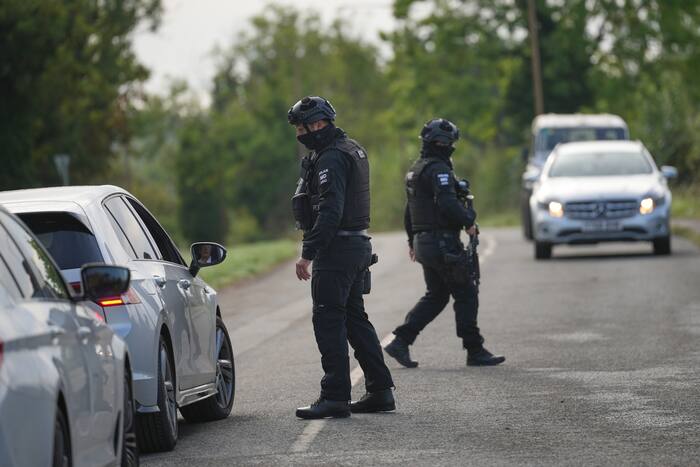
The incident unfolded in the dead of night near the Gloucestershire village of Whelford. Local law enforcement descended on the area after receiving emergency calls regarding suspicious vehicles parked close to the perimeter of the airfield. Bomb disposal units and military specialists were called in to secure the scene, forcing the temporary evacuation of dozens of nearby homes while investigators examined white vans for explosives.
While authorities later confirmed that no live explosives were located inside the immediate vehicles, the implications of the operation stretched far beyond a simple rural disturbance. The suspects—all British citizens ranging in age from their early to mid-twenties from various parts of London—were arrested on suspicion of preparing acts of terrorism.
The Foreign State Proxy Dimension
The real story behind the Fairford arrests points toward an increasingly aggressive shadow war playing out across Europe. Intelligence agencies have spent months tracking a sharp rise in hostile-state operations, particularly campaigns linked to Iran and its network of regional proxies.
British security officials have repeatedly warned that foreign actors are increasingly relying on local fixers, criminal freelancers, and disaffected individuals to carry out surveillance, arson, and sabotage. Instead of deploying trained intelligence operatives across borders, hostile states frequently outsource low-level reconnaissance or logistics to local nationals who can blend in effortlessly.
RAF Fairford has long been a focal point for geopolitical friction. As a primary staging ground for American heavy bombers operating in response to Middle Eastern conflicts, the base naturally sits on the radar of hostile governments. Following escalating threats, the United States military ultimately adjusted its footprint, temporarily redeploying assets away from the facility to mitigate exposure.
Public Vigilance Versus High-Tech Intelligence
There is a stark contrast in how high-profile security operations get reported versus how they actually get disrupted. Former U.S. leadership publicly credited high-level transnational intelligence tracking for keeping the base safe, boasting that authorities had the suspects under surveillance for an extended period. Yet, local reports and police timelines underscored a much more fragile reality: the immediate intervention was kickstarted by ordinary citizens paying attention to their surroundings.
This dynamic exposes a fundamental truth about modern defense infrastructure. No matter how advanced satellite surveillance or counterintelligence algorithms become, physical security often hinges on boots on the ground and ordinary people reporting anomalies. A local resident spotting masked individuals scattering from oddly parked vans did more to disrupt an active threat cycle in that moment than multi-million-dollar tech arrays.
The Broader Fallout for Defense Communities
For lawmakers representing rural constituencies near major strategic assets, the incident shattered any lingering sense of geographic isolation. Constituents living next door to high-value military targets are forced to reckon with the reality that local backroads can easily intersect with international flashpoints.
As subsequent investigations progressed, including subsequent charges brought under the National Security Act against individuals linked to the wider conspiracy, the message from Whitehall remained stern. Authorities have made it clear that domestic soil will not serve as a safe haven for foreign intimidation campaigns. Protecting critical allied infrastructure requires tightening the net around local recruitment networks before low-level surveillance turns into operational catastrophe.