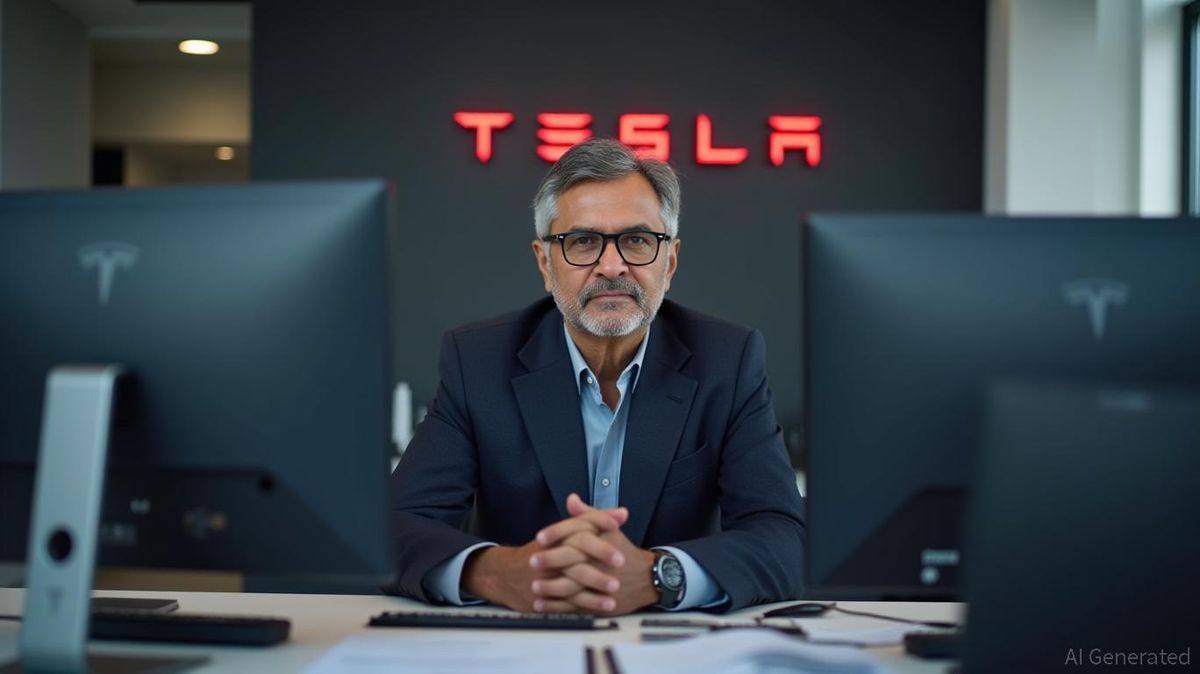
Tesla just lost one of its longest-serving pillars. Raj Jegannathan, a VP of Engineering who spent over 13 years at the company, has officially moved on. This isn't just another executive reshuffle in a spreadsheet. It's a massive shift in the institutional memory of the world's most valuable automaker. When someone stays at a company from the scrappy Model S launch days all the way through the Cybertruck era, they carry the "secret sauce" in their head. Now, that knowledge is walking out the door.
I’ve watched the EV industry for years. Usually, executive departures are noise. This one is a signal. Jegannathan wasn't a talking head or a PR front man. He was deep in the guts of the operation. Losing a veteran like this during a year where Elon Musk is pivoting the entire company toward AI and robotaxis creates a void that a new hire can't just fill in six months. In similar updates, we also covered: The Hollow Classroom and the Cost of a Digital Savior.
The quiet architect of Tesla infrastructure
Most people focus on the flashy hardware—the sleek lines of the Model 3 or the stainless steel of the Cybertruck. They forget about the digital spine that makes these cars work. Raj Jegannathan wasn't just "an engineer." He rose through the ranks to lead global infrastructure and platforms.
Think about what that actually means. It's the Supercharger network's backend. It's the data pipelines that feed Autopilot. It's the internal systems that allow Tesla to build cars faster than anyone else in the West. He was there in 2011. That was before the Model S even hit the streets. He saw the transition from a startup that could barely keep the lights on to a global titan. Mashable has analyzed this important topic in extensive detail.
When a 13-year veteran leaves, they take more than their skills. They take the "why" behind every weird legacy system. They know where the bodies are buried in the code. New engineers might be brilliant, but they don't have the context of the 2018 "production hell" or the 2021 chip shortage pivots. They lack the scar tissue.
Why the timing is brutal for Elon Musk
Tesla is currently in the middle of a massive identity crisis. Musk is betting the farm on FSD (Full Self-Driving) and the Optimus robot. He’s been slashing costs and thinning out the executive ranks for months. We saw the departure of Drew Baglino and Rohan Patel earlier this year. Now Jegannathan is gone too.
It looks like a house cleaning, but it might be a brain drain. If you're trying to build a global AI fleet, you need the world’s most stable infrastructure. Losing the guy who helped build that infrastructure for over a decade is a gamble. Musk wants a lean, "hardcore" team. But there’s a thin line between lean and fragile.
If you're an investor, this should make you pause. Not because the company is failing—it isn't—but because the "Old Guard" is almost entirely gone. The culture that built the EVs we drive today is being replaced by a culture focused purely on robotics and autonomy.
The hidden cost of executive churn
People underestimate the friction caused by high-level exits. When a VP leaves, their direct reports often start looking at the exit too. It's a ripple effect.
- Projects stall because the new lead wants to "audit" everything.
- Moral drops among the "lifers" who saw the VP as a mentor.
- Recruiting becomes harder when the pitch of "stay here for a decade and build a career" no longer rings true.
Jegannathan isn't just going to sit on a beach. He’s likely headed to a competitor or a well-funded startup. Imagine what a rival like Rivian or even a tech giant like Apple or Amazon could do with 13 years of Tesla infrastructure secrets. They aren't just buying a resume; they're buying a roadmap of what not to do.
What this means for the Tesla roadmap
Honestly, Tesla will keep moving. The company is a machine. But expect some friction in the rollout of the next-generation platform. Jegannathan’s expertise in scaling systems is exactly what Tesla needs to hit the 20-million-cars-a-year goal Musk keeps talking about.
If the backend systems start glitching or the Supercharger reliability dips even 1%, you'll know why. The people who knew how to fix those problems with a metaphorical piece of duct tape and a clever line of code aren't in the building anymore.
Tesla’s edge has always been its vertical integration. They don't just buy parts; they build the systems that manage the parts. When you lose the architect of those systems, you're relying on documentation that—let's be real—probably wasn't a priority during the "move fast and break things" years.
The move to autonomous systems
Musk is clearly prioritizing FSD over everything else. He wants software engineers, not just "infrastructure" guys. But you can't have FSD without a massive, reliable server backbone. You need petabytes of data moving smoothly every second.
Jegannathan’s departure suggests a fundamental shift. Maybe the infrastructure is "done" in Musk’s eyes. Or maybe the pressure of the new AI-first direction was too much for someone who had already given 13 years to the cause. Either way, the Tesla of 2026 looks nothing like the Tesla of 2021.
Keep an eye on these indicators
Don't just take the "official" word on these departures. Watch the LinkedIn profiles of the senior staff under Jegannathan. If you see a cluster of "Open to Work" badges or quiet jumps to startups in the next three months, Tesla has a retention problem that will eventually hit the stock price.
If you’re tracking the EV space, look for where Jegannathan lands next. That company just got a massive injection of Tesla DNA. Whether it’s a direct competitor or a battery tech firm, his move will likely dictate where the next big breakthrough in infrastructure management happens.
Tesla is entering its most volatile era yet. The cars are aging, the competition is catching up, and the veteran leadership is evaporated. It’s a bold strategy. Let’s see if it pays off or if they’ll miss the steady hands that got them here.