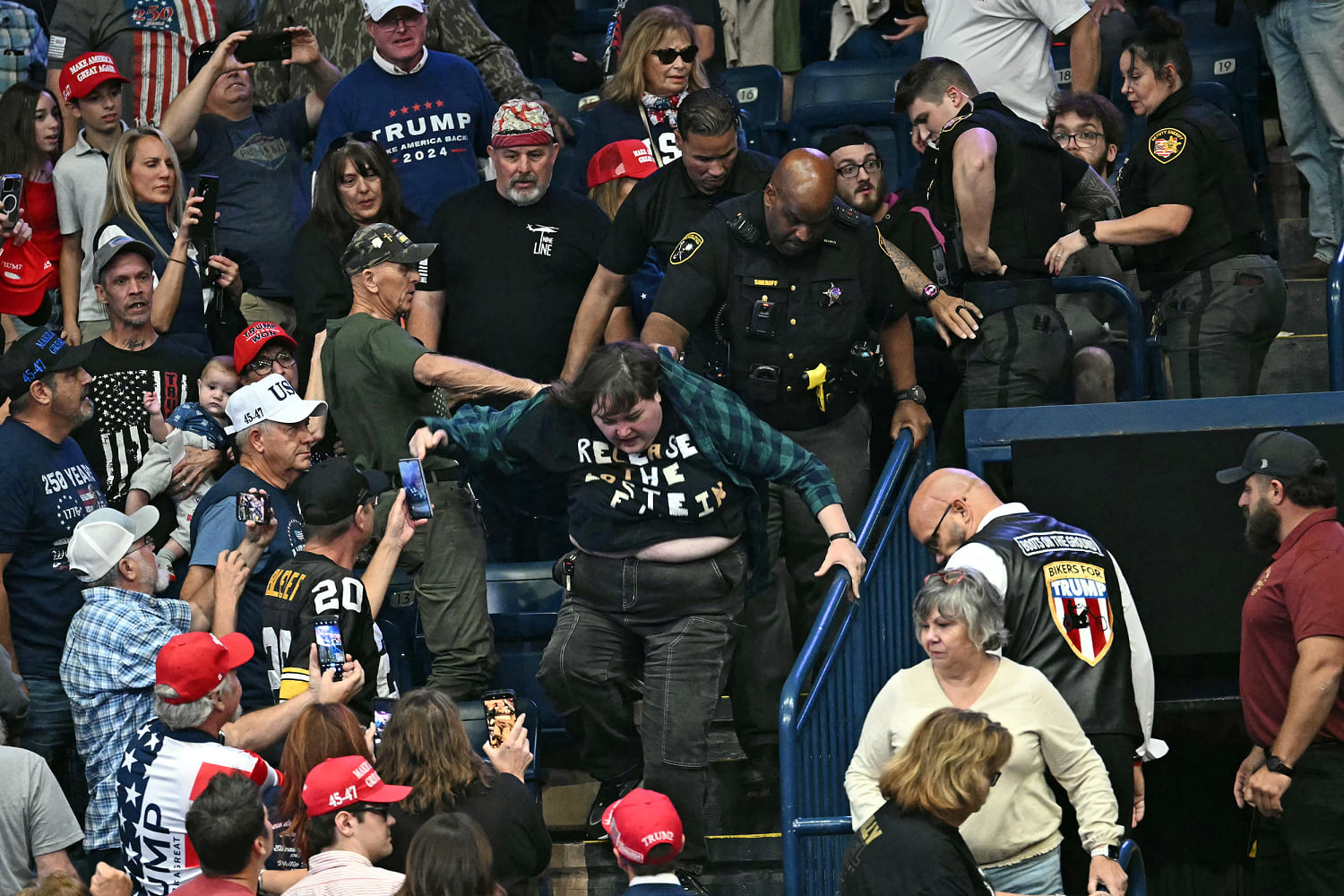
A woman wearing a shirt that read "Release the Epstein Files" stood up inside the Covelli Centre in Youngstown, Ohio, on October 12, 2026. Seconds later, she was on the receiving end of punches, hair-pulling, and a headlock from attendees at President Donald Trump's midterm campaign rally.
Youngstown Mayor Derrick McDowell called the confrontation "senseless" political violence that has no place in the community or the democratic process. Watching a crowd turn fists on a lone heckler while the speaker at the podium cracks jokes isn't a one-off freak accident anymore. It's a predictable flashpoint in modern American campaign politics, and honestly, it tells us a lot about how fragile civic norms have become.
When people search for what happened in Youngstown, they usually want two things right away. First, they want the straight facts about who got hit, how local officials responded, and whether anyone faced consequences. Second, they want to know why security and crowd dynamics keep breaking down at high-stakes political events.
What Actually Happened Inside the Covelli Centre
Video clips from the October 12 event showed at least two men confronting the female protester in the stands during a rally backing Republican candidates, including U.S. Sen. Jon Husted and gubernatorial candidate Vivek Ramaswamy. Footage circulated by local outlets like WKBN and verified photo agencies showed a man grabbing her hair, pulling her down, and hitting her before law enforcement stepped in to escort her out.
From the stage, Trump paused, accused protesters of being paid by "the lefties" without offering evidence, and mocked the protester's appearance and weight as she was removed. Some in the crowd chanted "USA," while reports indicated the person who threw blows remained in the venue rather than being led out alongside the protester.
"It must be emphatically stated that senseless (political) violence has absolutely NO place in our community or in our democratic process," Youngstown Mayor Derrick McDowell said in condemning the incident.
Right after the clash, confusion over jurisdiction and reporting slowed down accountability. McDowell noted that the Mahoning County Sheriff's Office and the Secret Service handled security for the event rather than Youngstown's own city police force working the floor. Police officials indicated they needed a formal report from the victim to launch a full investigation, and no immediate arrests were made at the scene, though the sheriff's office later opened an inquiry looking into three individuals involved in the altercation.
Why Political Violence and Crowd Clashes Keep Happening
If you've covered or studied live political events over the past decade, you've seen this movie before. Crowd aggression at partisan rallies isn't just random bad behavior by a couple of hotheads. It happens when high emotional arousal, us-versus-them framing, and ambiguous crowd cues collide in a tight space.
Political scientists and conflict researchers have pointed out for years that heated rhetoric primes audiences to view dissenters not as neighbors with a bad take, but as active threats or paid saboteurs. Once a speaker labels a heckler an enemy or a plant, some attendees feel justified—or even heroic—taking matters into their own hands instead of letting trained security handle a disruption.
Look at the typical mistakes organizers and crowds make when tension spikes:
- Treating heckling as combat: Shouting back or physically grabbing someone's sign, shirt, or body turns a vocal interruption into a physical brawl in seconds.
- Assuming security will immediately separate aggressor and protester: In chaotic stands, officers often rush to extract the disruptive person to clear the lane, which can leave an assailant blending back into the crowd.
- Letting viral rumors outrun verification: Within hours of the Youngstown clash, a fake image purporting to show the punch circulated online, forcing fact-checkers at Snopes to separate fabricated visuals from real video and Getty/Reuters photography.
That last point matters more than people realize. Fake photos and out-of-context clips make every real incident harder to verify and push partisans deeper into their corners.
The Gap Between Mayoral Condemnation and Real Consequences
Mayor McDowell's statement hit the right civic notes—calling out political violence and urging people to treat each other with dignity across political lines. Still, there's a big gap between a local mayor posting a condemnation on social media and actual legal consequences inside a crowded arena.
In real life, prosecuting misdemeanor or felony assault from a packed rally is messy. Witnesses scatter, video angles can be grainy or obstructed, multiple agency jurisdictions can overlap, and victims sometimes hesitate to come forward or file formal reports amid intense online attention.
Supporters of tough crowd control sometimes argue that disruptive protesters invite trouble by crashing partisan events in the first place. Critics counter that free speech and peaceful dissent—even annoying, loud dissent—never justify throwing a punch, and that leaders set the tone for whether crowd violence gets laughed off or shut down. Both sides have strong opinions, yet the law on physical assault doesn't bend just because someone was wearing a slogan T-shirt.
What You Can Do If You Attend or Cover Heated Events
Whether you're heading to a campaign rally, a town hall, or a street protest, staying safe comes down to preparation rather than bravado. Most people get caught off guard because they focus on their message and assume someone else is managing the room.
- Scout exits and sightlines first: Within two minutes of walking into any venue or plaza, spot the nearest exits, security posts, and clear lanes away from dense bottlenecks.
- Keep hands off people and property: Never grab a protester's clothes or sign, and don't physically shove someone trying to push past you. Escalating hands-on contact is how minor arguments turn into criminal charges.
- Document from a safe distance: If you record an incident for accountability or journalism, keep a wide buffer from active scuffles and save raw, unedited files rather than sharing unverified edits.
- Report incidents through official channels: If you or someone with you is assaulted or injured, get medical attention first and file a formal statement with the local police department handling jurisdiction so investigators have an official record to work from.
Democracy doesn't survive on polite applause alone, nor does it survive when disagreement turns into fists in the bleachers. Keep your cool, know where the exits are, and demand real accountability whenever political rallies cross the line into violence.
Youngstown rally altercation video coverage This video clip shows the aftermath and media coverage of the Youngstown rally incident where a protester was removed after the crowd clash.