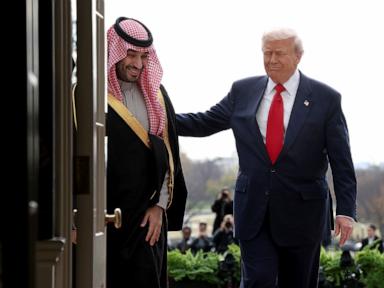
The newly minted civil nuclear agreement between Washington and Riyadh fundamentally alters the strategic calculus of the Middle East by establishing a legal pathway for domestic uranium enrichment. This pact, designed to expand American corporate contracts while satisfying Saudi Arabia's long-term energy diversification goals under Vision 2030, simultaneously discards decades of stringent non-proliferation standards. By bypassing traditional baseline restrictions, the agreement forces an urgent examination of how great power competition creates dangerous precedents in volatile regions.
The Mechanics of the Arrangement
Past diplomatic frameworks involving American nuclear assistance typically demanded adherence to the strict gold standard. This traditional benchmark explicitly prohibited partner nations from engaging in domestic uranium enrichment or spent-fuel reprocessing, effectively shutting down the dual-use pathways capable of producing weapons-grade material. Meanwhile, you can find other events here: Why The Red Sea Panic Is A Manufactured Distraction From Real Maritime Reality.
The current pact shifts away from this doctrine. Instead of imposing outright bans, it initiates a multi-year joint study to evaluate the feasibility of commercial enrichment on Saudi soil. American firms would construct and manage these facilities under tightly controlled parameters. Proponents argue that retaining operational control within Western corporate hands mitigates security risks. Critics counter that once the underlying technical infrastructure and centrifuge capabilities exist inside a sovereign territory, the physical barrier against weaponization becomes a matter of political will rather than technological impossibility.
Regional Pressures and the Iranian Paradox
Timing remains the most revealing element of this diplomatic maneuver. The agreement arrives on the heels of intense military campaigns targeting Iranian nuclear infrastructure. For years, Washington justified its aggressive posture toward Tehran by insisting that domestic enrichment rights pose an unacceptable threat to global stability. To explore the full picture, we recommend the recent report by Al Jazeera.
Allowing Riyadh to cultivate similar capabilities creates an immediate policy contradiction. If enrichment is treated as a severe security hazard in western Asia, extending a pathway for identical technology across the Persian Gulf undermines the moral and diplomatic consistency of counter-proliferation policy.
Saudi leadership has long maintained an explicit posture regarding regional parity. Crown Prince Mohammed bin Salman has stated publicly that if rival powers acquire nuclear weaponry, Riyadh will pursue matching arsenals. This dynamic transforms a commercial energy project into a high-stakes geopolitical contest. Neighboring states, including Israel, view the absence of rigid inspection protocols—such as the voluntary omission of the International Atomic Energy Agency's Additional Protocol—as an alarming departure from accepted safety norms.
The Abraham Accords Condition
Complicating matters further, executive pronouncements have tied final implementation directly to broader regional normalization efforts. Bringing Saudi Arabia into the Abraham Accords alongside Israel remains a primary foreign policy objective for the White House.
Yet, matching these diplomatic goals with a nuclear technology transfer creates a precarious diplomatic loop. Riyadh has consistently tied full diplomatic normalization with Israel to concrete, irreversible steps toward Palestinian statehood. Conditioning an already controversial nuclear pact on a volatile peace process leaves the agreement suspended in political uncertainty. Washington treats social media directives as absolute policy vectors, while Riyadh operates on strict diplomatic prerequisites.
Financial Realities and Corporate Stakes
Behind the geopolitical rhetoric lies an aggressive commercial scramble. Major American energy corporations stand to secure tens of billions of dollars in reactor construction contracts over the coming decades. Global energy markets face severe supply pressures, and expanding civil atomic infrastructure is pitched as an essential method to preserve domestic crude oil supplies for lucrative export markets rather than burning them for local power generation and water desalination.
Suppliers argue that if Western companies do not fill the vacuum, alternative global actors eagerly waiting in the wings will step forward, completely erasing any leverage Washington hopes to maintain over the kingdom's strategic trajectory. This pragmatic argument assumes that commercial competition justifies structural concessions on global security baselines.
The gamble relies entirely on the premise that corporate management of atomic facilities can permanently substitute for rigorous international legal restrictions. History suggests that technical safeguards often erode when regional tensions spike and political regimes shift.
The long-term fallout of this agreement will not be measured in corporate revenue sheets, but in the structural integrity of a non-proliferation regime that took three-quarters of a century to build. When the line between civilian energy and military capability is redrawn for political convenience, the margin for error narrows across the entire international system.