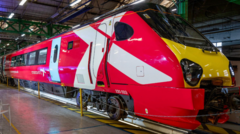
CrossCountry has officially been named Britain’s worst train operator. According to the comprehensive Rail Customer Experience Survey published by independent watchdog Transport Focus, the long-distance operator plummeted to the bottom of the national league table with an overall passenger satisfaction rating of just 79 per cent. While open-access operators like Hull Trains achieved 94 per cent satisfaction, CrossCountry floundered, plagued by chronic overcrowding, severe delay handling failures, and structural vulnerabilities inherited from its sweeping, cross-country network design.
Behind these numbers lies a deeper operational breakdown that a simple customer satisfaction score fails to capture. The true crisis of CrossCountry is not merely a failure of modern customer service, but a systemic design flaw born out of decades of flawed rolling stock decisions and a geography that dooms the operator to inherit the structural delays of every other railway line in Great Britain. You might also find this connected article interesting: The Macroeconomics of India Non Regional Trade Strategy Quantification of the EU FTA and Canada CEPA Pipelines.
The Structural Trap of the CrossCountry Network
To understand why CrossCountry consistently fails its passengers, one must first understand its geography. Unlike operators like LNER or Avanti West Coast, which run straight up and down dedicated arterial main lines, CrossCountry operates a sprawling web that intersects almost every major rail corridor in Great Britain. Its routes stretch from Aberdeen to Penzance, and from Cardiff to Stansted Airport, funneling through a central bottleneck at Birmingham New Street.
This unique footprint creates an operational nightmare. If a signal fails near Edinburgh, or a local stopping train suffers a mechanical fault outside Bristol, the knock-on effects ripple across the entire CrossCountry network within hours. The operator does not control the infrastructure it runs on, nor does it enjoy the luxury of a isolated, self-contained route. It is a tenant on a dozen different lines, frequently forced to yield priority to other operators' services at critical track junctions. As highlighted in latest coverage by CNBC, the effects are notable.
Consider a practical example. At major railway junctions like Coventry or York, air-conditioned long-distance trains must cross over multiple tracks to shift between regional routes and the main lines. When a CrossCountry service falls even five minutes behind schedule, network signallers are forced to make a choice. Do they delay four local commuter trains or a premium intercity service to let the delayed CrossCountry train cross the tracks, or do they force the cross-country service to wait by the side of the line? More often than not, the long-distance cross-country service loses that argument.
The data from the latest Transport Focus survey underlines this reality. Only 77 per cent of surveyed passengers were satisfied with the punctuality and reliability of their journey. Furthermore, in the three months leading up to the end of March, only 72 per cent of the operator’s station stops were achieved within three minutes of the scheduled time. A staggering 7 per cent of all planned services were cancelled outright.
The Ghost of Operation Princess and the Rolling Stock Deficit
Passengers who regularly board these services are familiar with the claustrophobic reality of the onboard environment. Luggage stacked in vestibules. Commuters sitting on floors outside toilet doors. It is an exhausting, uncomfortable experience that traces its ancestry back to a marketing strategy from the early 2000s known as Operation Princess.
Decades ago, the strategic decision was made to increase the frequency of cross-country services by replacing longer, locomotive-hauled trains with shorter, self-contained diesel Voyager units. The theory was simple. Passengers preferred a train every half an hour rather than a train every hour.
The theory collapsed under the weight of its own success. The increased frequency attracted vastly more passengers, but the trains themselves lacked the physical capacity to absorb them. Four-car and five-car diesel Voyager trains became the standard for journeys lasting up to eight hours. When passenger numbers surged over the subsequent decades, the Department for Transport repeatedly restricted the operator from acquiring additional carriages, citing complex funding frameworks and rolling stock allocation priorities.
The consequences of running short trains on cross-country routes are felt acutely every day. There is simply nowhere to put the luggage of a hundred passengers travelling from Southampton to Newcastle. The overhead racks are too shallow for modern suitcases, and the dedicated luggage pens are filled within minutes of the train departing its origin station.
This capacity deficit damages the travel experience for vulnerable passengers. The Transport Focus data revealed that disabled passengers reported an overall satisfaction score of 85 per cent across the industry, compared to 88 per cent for non-disabled passengers. On overcrowded, short-formation trains, the dedicated wheelchair spaces often become blocked by standing passengers or stray luggage, making travel an ordeal rather than a service.
The Catastrophic Failure of Disruption Management
Delays on a complex railway are sometimes inevitable, but how an operator manages those delays defines its relationship with the public. This is where CrossCountry truly failed its passenger base. The Transport Focus survey revealed that a abysmal 46 per cent of passengers were satisfied with how the company dealt with delays.
According to Transport Focus chief executive Alex Robertson, the difference between handling a delay well and handling it poorly is stark. More than nine in ten passengers will report a positive experience if a delay is communicated and managed effectively, even though their train is late. When the operator fails to communicate, that positive sentiment plummets to just one in four.
CrossCountry's onboard staff are frequently left just as uninformed as the passengers they serve. When a train is halted outside a station due to a track asset failure, the internal data feeds provided to train crews are often slow, contradictory, or completely absent. Passengers armed with smartphone apps frequently see cancellation notices before the conductor on board has been officially notified by control.
This information vacuum breeds intense frustration. A passenger sitting on a stationary train outside Sheffield does not just want to know that the train is delayed; they need to know if they will miss their connection at Birmingham, whether their ticket will be valid on an alternative route, and whether a replacement bus service is being organised. By scoring less than 50 per cent in this category, CrossCountry has demonstrated a systemic inability to manage the human element of railway disruption.
The financial performance of the operator further complicates the picture. Across the wider rail industry, only 49 per cent of commuters believe their train fare represents value for money. When a passenger pays premium long-distance fares for a ticket, only to find themselves standing in a corridor next to an overflowing toilet retention tank for three hours, the perception of value vanishes completely.
The Open Access Contrast
The failure of the current system becomes even more apparent when contrasted with the top performers in the same survey. Hull Trains secured the highest overall satisfaction rating at 94 per cent, with London North Eastern Railway (LNER) following closely at 93 per cent.
Hull Trains operates as an open-access provider. This means it does not rely on a traditional government-backed contract to run services; instead, it purchases specific track paths directly from Network Rail and takes full commercial risk for its operations. Because open-access operators rely entirely on passenger choices rather than a guaranteed state subsidy to survive, their incentives are entirely aligned with customer satisfaction. Their fleets are modern, their timetables are clean, and their routes do not suffer from the sprawling complexity that hobbles CrossCountry.
LNER, while state-owned, benefits from operating on the East Coast Main Line, a piece of infrastructure that has received significant investment and allows for long, nine-car Azuma trains to run at high speeds with minimal interaction with disruptive regional junctions. CrossCountry, by comparison, relies on an aging fleet of Voyagers and regional Turbostar trains, navigating infrastructure that has seen its investment delayed or scaled back over successive government rail reviews.
The Path to Great British Railways
The current operating model for CrossCountry is approaching its expiration date. The operator, currently managed by the Arriva Group, is scheduled to be brought into public ownership next year. This transition will mark the end of the private contract model for this specific network, absorbing its functions into Great British Railways, the new arms-length national body designed to integrate track and train management.
Nationalisation, however, is not a magic solution for structural failure. Changing the logo on the side of a train does not instantly create more track space at Birmingham New Street, nor does it automatically build new passenger carriages.
For Great British Railways to fix the crisis, a fundamental reassessment of how long-distance regional travel is funded and structured must occur. The new national body will have to address the fleet deficit directly. The short-formation four-car trains must be phased out of the longest routes, replaced by longer, high-capacity rolling stock that can accommodate both human beings and their luggage.
Furthermore, the national timetabling strategy must stop treating cross-country routes as secondary services that can be shunted aside whenever an intercity main line service runs a few minutes late. True integration means recognizing that a journey from Cardiff to Newcastle is just as vital to the national economy as a journey from London to Manchester.
The latest survey results are a clear warning that the status quo has broken down completely. Until the fundamental mismatches between train lengths, passenger volumes, and network geography are corrected by structural investment, CrossCountry will remain a frustrating bottleneck at the heart of the British railway system. The transition to public ownership offers an opportunity to rectify these historic errors, but only if the incoming management prioritises physical capacity and clear communication over cosmetic adjustments.