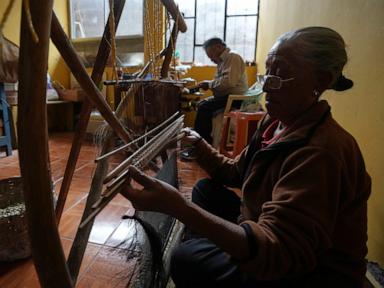
In the small village of Guangopolo, perched just east of Ecuador’s capital city of Quito, nine aging artisans sit with calloused fingers, weaving strands of horse’s tail into ultra-fine mesh. They are the last practitioners of a 200-year-old culinary technology: the production of the traditional cedazo, a kitchen sieve built with a rim of native Pumamaqui wood and a hand-knotted horsehair core. Fifty years ago, roughly 500 indigenous families in this single valley earned their living by supplying these strainers to kitchens across the Andes. Today, the entire industry rests on nine people. The youngest is 51. The oldest is 76.
The mainstream press routinely covers this decline as a simple, sentimental tragedy of generational indifference, suggesting that younger Ecuadorians merely lack the patience to learn the craft. That narrative is wrong. The collapse of the horsehair strainer industry is not a failure of cultural pride; it is an economic and environmental strangulation. The artisanal ecosystem has broken down completely under the weight of industrial farm automation, soaring raw material costs, and aggressive market displacement by cheap, mass-produced plastics.
The Agrarian Disruption of Raw Materials
To understand why the cedazo is disappearing, one must look past the weaving benches of Guangopolo and into the high-altitude agricultural fields of the Andes. Historically, the supply chain for horsehair was localized, steady, and virtually free. Horses were the primary economic engines for farming, transport, and daily labor across rural Ecuador. Tail and mane hair were readily harvested byproducts of a thriving equestrian lifestyle.
That lifestyle has vanished. Over the past few decades, smallholder farmers across South America have systematically swapped working horses for cheap Chinese-manufactured motorcycles and fuel-efficient tractors. This rapid mechanization decimated the domestic horse population in traditional agricultural corridors.
With no working horses left in the immediate region, Guangopolo’s weavers have been forced to look across international borders to source their primary industrial material.
Artisans must now purchase bulk shipments of horsehair from central Ecuador or import it directly from southern Colombia. Because the supply is scarce and controlled by intermediary distributors, the price of raw horsehair has reached a staggering $1,000 per 100 pounds. For a micro-enterprise operating out of a home workshop, this upfront capital requirement acts as a massive barrier to entry.
The Ecological Squeeze on Pumamaqui Wood
The raw material crisis is doubled when looking at the frame of the sieve. The traditional cedazo requires a thin, flexible, yet incredibly resilient wooden rim. For two centuries, this rim has been harvested from the Pumamaqui tree, a native Andean plant named for its leaf shape, which resembles a puma's paw.
Industrial logging, urban sprawl from Quito, and agricultural land clearing have devastated native Pumamaqui populations. The wood is now strictly regulated, heavily scarce, and physically difficult to harvest from the remaining high-altitude cloud forests. Without a steady supply of both affordable horsehair and legal Pumamaqui wood, the production process faces a structural bottleneck that no amount of artisanal passion can overcome.
The Deflationary Economics of the Modern Kitchen
A tool that was once an indispensable pillar of Andean cuisine has been reduced to an obsolete novelty by shifting consumer habits and industrial manufacturing.
+------------------------+-----------------------+-----------------------+
| Feature                | Traditional Cedazo    | Mass-Market Plastic   |
+------------------------+-----------------------+-----------------------+
| Production Time        | Hours of hand-knotting| Seconds via injection |
| Wholesale Price        | $6.00 to $30.00       | Less than $1.00       |
| Material Cost          | $1,000 per 100 lbs    | Fractions of a cent   |
| Weekly Unit Sales      | ~10 total per group   | Thousands globally    |
+------------------------+-----------------------+-----------------------+
Historically, the horsehair strainer was revered for its specific physical properties. The natural keratin fibers possess microscopic scales that naturally repel water absorption, allowing the sieve to dry almost instantly without warping or rotting. For sifting ultra-fine corn flours, traditional starches, and medicinal herbal infusions, the cedazo provided a level of precision that early metal meshes could not replicate without rusting.
The introduction of injection-molded plastic kitchenware in the mid-to-late 20th century shattered this market monopoly. A plastic strainer can be manufactured in a matter of seconds for a fraction of a cent and sold to consumers at local markets for a dollar. In contrast, the remaining weavers of Guangopolo must price their pieces between $6 and $30 just to cover basic material costs and meager hourly labor.
Fifty years ago, the village moved up to 600 strainers every single month. Today, at the El Cedacero craft center, the remaining collective struggles to sell more than ten units a week. The tool has lost its function as a household necessity. It has been demoted to a decorative artifact, bought almost exclusively by nostalgic collectors or the occasional passing tourist.
Why Technical Up-skilling Fails
Well-meaning cultural organizations and regional government agencies frequently launch training workshops aimed at teaching local youth how to clean, sort, and knot horsehair. These initiatives are built on the assumption that a lack of technical knowledge is what keeps the younger generation from entering the trade.
This diagnosis completely misses the point. The children of the current weavers are not refusing to weave because they do not know how; they are refusing because they can do basic math.
To create a single cedazo, an artisan sits cross-legged on a concrete floor for hours. They stretch individual, washed fibers onto a simple wooden frame called a guanga. Fingers move in a blur, sorting hair by length, selecting individual strands, and hand-tying hundreds of knot combinations to form a flawless, gauze-like mesh.
It is grueling, repetitive, and physically demanding work that causes severe eye strain and chronic joint pain over decades. When a young adult looks at the economic reality—spending a full day creating a piece that might sit on a shelf for three weeks before selling for $15—they choose university education or service-industry employment in nearby Quito instead.
Leonor Cuje, a 57-year-old weaver whose mother taught her the craft when she was six, sums up the situation clearly. Her children became professionals, moved away, and want nothing to do with the workshop floor. The opportunity cost of preserving this specific piece of heritage is simply too high for a family trying to achieve upward economic mobility.
The Myth of Tourism as a Savior
Cultural preservationists often point to tourism as the ultimate safety net for endangered crafts. The theory is simple: raise prices, brand the item as a luxury heritage good, and let wealthy international travelers subsidize the survival of the tradition.
This strategy works for textiles, jewelry, and high-end ceramics. It does not work for a utilitarian horsehair flour sieve.
A hand-woven poncho or a polished silver bracelet carries universal aesthetic value; a traveler can wear it or display it prominently. A kitchen strainer, even an intricately crafted one, possesses a stubborn, specific domestic identity. It is difficult to market a cedazo as an elite luxury item when its core design is inextricably linked to the historical processing of industrial baking flour.
Furthermore, the sheer volume of international foot traffic passing through Guangopolo is microscopic compared to major artisanal hubs like Otavalo. Without a massive, sustained influx of foreign capital, the craft center operates as a closed loop of dwindling returns. The nine remaining artisans are essentially running out the clock. When the current generation passes away, the supply chain, the technical knowledge of the guanga, and the sustainable management of the Pumamaqui wood source will disappear along with them.
Saving the horsehair strainer requires moving beyond well-meaning handicraft fairs and token cultural grants. If this Andean technology is to survive past the next decade, it must be completely decoupled from the tourist gift shop and integrated into specialized industrial applications. Premium culinary schools, high-end commercial bakeries, and international art conservation labs—which still use horsehair paste strainers to handle delicate historic documents without chemical contamination—represent the only viable, high-margin future for the craft. Without this radical shift in market positioning, the rhythmic clicking of the guanga frames in Guangopolo will fall silent before the decade is out.