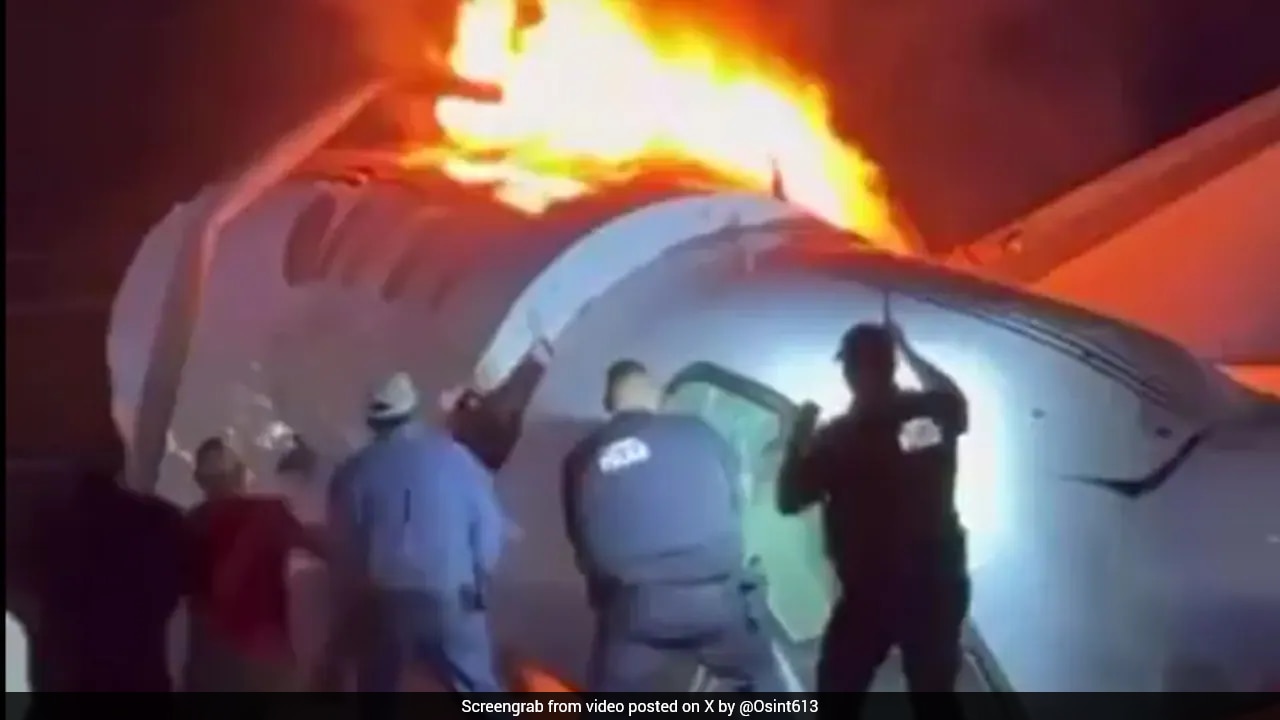
A small twin-engine aircraft carrying six people fell from the night sky onto Loop 20 in Laredo, Texas, striking a highway barrier and erupting into flames. One passenger died at the scene, while motorists abandoned their cars in a desperate, chaotic bid to smash the aircraft’s cockpit windows with improvised tools to free those trapped inside. While initial viral footage framed the June 16 incident as a miraculous civilian rescue, aviation data and infrastructure design paint a far more critical picture. Using public roads as emergency runways is becoming increasingly lethal due to modern infrastructure hazards, aircraft design realities, and a fundamental misunderstanding of aviation emergency procedures.
The Illusion of the Open Highway
Every student pilot is taught that if the engine goes quiet, a straight, wide highway is a gift from above. That old piece of airmanship wisdom is dying.
Modern highways are no longer empty stretches of asphalt. They are highly complex obstacle courses designed to control automobile traffic, not accommodate an aircraft with a sixty-foot wingspan. Concrete Jersey barriers, high-mast light poles, overhead electronic signage, and low-hanging utility wires turn a forced landing into a high-speed slalom.
In the Laredo crash, the aircraft did not simply glide to a stop. It struck a highway barrier, tripping the airframe, causing it to flip onto its side, rupture its fuel tanks, and ignite. This is the standard outcome when aluminum meets reinforced concrete at eighty miles per hour.
When an aircraft hits a fixed object on a highway, the kinetic energy must go somewhere. Decades ago, roads were lined with soft ditches and flexible wooden posts. Today, the infrastructure built to protect truck drivers from cross-median collisions is exactly what destroys an emergency-landing aircraft.
The Cockpit Trap
The viral video capturing bystanders frantically striking the windshield of the burning plane highlights a terrifying reality of modern aviation engineering. Aircraft windows are not designed to be broken from the outside.
Most light aircraft windows are made of stretched acrylic or polycarbonate materials like Lexan. These materials are chosen because they are incredibly strong, lightweight, and capable of bird-strike resistance at high speeds. They do not shatter like the tempered safety glass of a car window. Striking them with a tire iron or a hammer will often do little more than cause the tool to bounce back.
+-------------------------------------------------------------------+
|                     AIRCRAFT EXIT DYNAMICS                        |
+-------------------------------------------------------------------+
|  Component   |  Material             |  Failure Mode              |
+--------------+-----------------------+----------------------------+
|  Windshield  |  Stretched Acrylic    |  Flexes, resists blunt force|
|  Side Glass  |  Polycarbonate        |  Absorbs impact, will dent |
|  Cabin Door  |  Aluminum/Composite   |  Jams easily under torsion  |
+-------------------------------------------------------------------+
| *Emergency Note: Jammed doors usually require mechanical prying   |
|  rather than window breaching due to polycarbonate elasticity.   |
+-------------------------------------------------------------------+
When an airframe deforms during an impact against a highway barrier, the door frames twist. This structural torsion instantly jams the mechanical latches. Inside a cabin filling with smoke and burning aviation fuel, passengers find themselves sealed in a pressurized metal box.
Bystanders in Laredo managed to assist when a cabin door was finally forced open from the inside, allowing three teenagers and the pilot to stumble out into the road. One occupant remained unconscious inside and another lost their life. The frantic attempt to break the windows from the outside was a testament to human bravery, but it was structurally ineffective against aviation-grade materials.
The Flight Training Deficit
Aviation regulators are facing a quiet crisis regarding how pilots are prepared for off-field landings. Emergency procedures in flight training are largely practiced at altitude over open fields, under ideal, simulated conditions.
Pilots are trained to go through a checklist:
- Establish best glide speed to maximize time in the air.
- Select a landing site clear of obvious obstructions.
- Attempt an engine restart if altitude allows.
- Shut down fuel lines and electrical masters right before touchdown to minimize fire risks.
The reality of a night engine failure over an urban or suburban area completely obliterates this clinical sequence. At 10:00 PM, an unlit field looks identical to an unlit forest or a ravine. The glowing ribbon of a highway becomes an irresistible magnet.
The data suggests that choosing a highway frequently results in a secondary collision with vehicles or barriers. Air safety investigators have long argued that a controlled crash into vegetation or an unpopulated open space, even in total darkness, yields higher survival rates than trying to force a plane into active highway traffic.
The Hidden Threat of Kinetic Energy
Aviation fuel fires burn at temperatures exceeding 1,500 degrees Fahrenheit. When a plane lands on dirt or grass, the fuel often seeps into the ground, slowing the spread of the pool fire. On non-porous asphalt or concrete highways, the fuel flows rapidly across the lanes, creating a moving river of fire that engulfs the wreckage and blocks escape routes within seconds.
The National Transportation Safety Board will spend months analyzing the wreckage from Laredo to determine why the engines quit. They will look at fuel logs, maintenance records, and air traffic control transcripts.
The broader lesson is already clear. The American highway system has evolved into an environment hostile to aviation. For pilots, treating the interstate as a backup runway is a calculation that needs to be permanently re-evaluated. For the public, the instinct to run toward a burning airframe with a tire iron is heroic, but the engineering of the aircraft means the odds are stacked against them from the start.