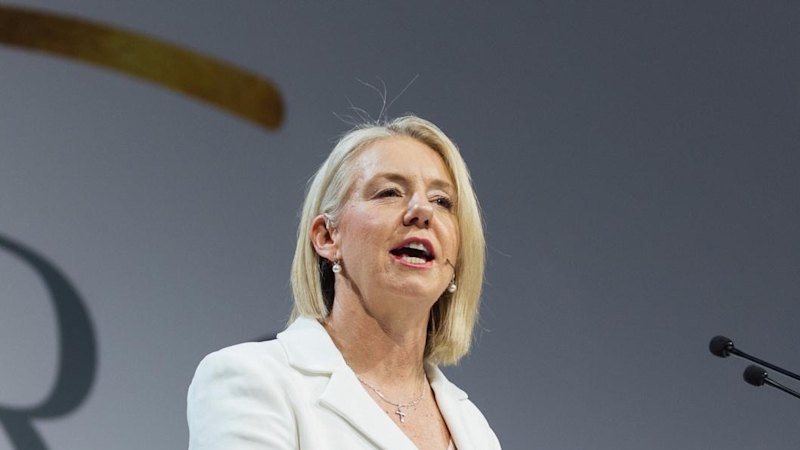
The Funding Cudgel
The modern public university exists in a state of permanent financial vulnerability, making it an easy target for political theater. When political figures like Senator Bridget McKenzie demand financial penalties for institutions accused of teaching concepts like white guilt, they are not merely engaging in a cultural grievance campaign. They are testing a mechanism of financial leverage designed to dictate curriculum from capital cities. The strategy relies on a simple premise: if you control the bank account, you control the classroom.
This approach shifts the debate from academic freedom to fiscal survival. For decades, higher education institutions operated under a model of relative autonomy, protected by block grants and research funding that remained insulated from the daily fluctuations of partisan politics. That insulation is melting away. By threatening to pull public money over specific ideological grievances, lawmakers are attempting to transform public funding from a baseline public good into a conditional reward for ideological compliance.
The immediate casualty of this strategy is the administrative stability of the universities themselves. Faced with the prospect of losing millions in government support, university administrators rarely mount principled defenses of academic inquiry. Instead, they manage risk. The mere threat of a funding cut acts as a form of preemptive censorship, forcing departments to audit their own course offerings and alter syllabi before a single piece of legislation is ever voted on.
The Economics of Academic Censorship
To understand how this pressure works, look at the structural financial model of modern higher education. Government funding has dropped steadily as a percentage of total university revenue over the last thirty years. This decline has not made universities independent. Instead, it has made them hyper-reactive to any further threats to their remaining public revenue streams.
+-------------------------------------------------------+
|              TYPICAL PUBLIC UNIVERSITY RUN-RATE       |
+-------------------------------------------------------+
|  [Tuition Revenue] -> Highly Volatile / Market Driven |
|  [International Fees] -> Exposed to Border/Visa Shifts|
|  [State/Federal Grants] -> The Core Operational Floor | <--- THE CHOKEPOINT
+-------------------------------------------------------+
When a politician proposes cutting funds over a specific curriculum topic, they are aiming directly at the operational floor of the institution. A university cannot simply absorb a five percent reduction in core grants without cutting staff, closing campuses, or raising student fees.
The mechanism of enforcement is purposefully vague. Legislation targeting concepts like white guilt or divisive concepts rarely defines those terms with legal precision. This vagueness is a feature, not a bug. If a law clearly states what is banned, an institution can adapt and find compliance. When the definitions are loose, the university must over-correct to ensure it stays safe. A history lecture on institutional housing policies or colonial trade routes might suddenly be flagged by a cautious dean as a liability.
The economic reality means that controversial ideas become expensive risks. Academic departments that focus on the humanities or sociology operate on thin margins to begin with. If their work threatens the financial health of the wider institution, the internal pressure to defund or restructure those departments becomes overwhelming. This is how curriculum change happens under fiscal threat: not through a grand debate on ideas, but through quiet committee meetings where budgets are balanced against political exposure.
The Precedent of Political Defunding
Using the public purse to police speech has a long history, but the current coordination between legislative bodies and cultural campaigns marks a structural shift. In previous eras, political interference in universities usually took the form of individual targeting. Dissident professors were fired, or specific student organizations were banned.
The strategy has now shifted toward systemic financial coercion. By threatening the institutional architecture rather than the individual, political campaigns avoid creating specific martyrs while achieving broader compliance.
+---------------------------------------------------------+
|             EVOLUTION OF UNIVERSITY INTERFERENCE         |
+---------------------------------------------------------+
| PAST: Target Individual Academic -> High Resistance     |
| PRESENT: Target Institutional Grant -> Systemic Freeze   |
+---------------------------------------------------------+
This structural shift alters the relationship between the state and higher education. Public universities were designed to serve the public interest, a concept historically understood to include independent critique and rigorous research. When funding is tied to the elimination of specific ideas, the university is repositioned as an arm of the current governing party.
The long-term impact extends beyond the humanities. While the political rhetoric focuses on cultural issues, the financial mechanisms used to penalize universities can be deployed against any field of study that produces inconvenient data. An administration that successfully pulls funds over a history curriculum establishes the precedent needed to target environmental science departments, economic research units, or medical schools whose findings conflict with legislative agendas.
The Corporate University Counterweight
Universities have attempted to shield themselves from political interference by acting more like private corporations. They have built large endowments, expanded international student recruitment, and pursued commercial research partnerships. This shift was intended to provide financial security, but it has created a different set of vulnerabilities.
A university that relies heavily on corporate partnerships and high-fee international students becomes risk-averse in a different way. It becomes sensitive to brand damage.
| Funding Source | Vulnerability | Operational Impact |
|---|---|---|
| Government Grants | Legislative Whim | Preemptive curriculum changes, loss of regional campuses |
| Corporate Research | Commercial Viability | Defunding of basic research, focus on short-term applications |
| International Tuition | Geopolitical Shifts | Sudden revenue drops, curriculum sanitized for foreign markets |
When politicians launch public attacks on a university's curriculum, they are not just threatening public grants. They are actively damaging the institution's commercial brand.
For an institution trying to attract global talent or secure private investment, being dragged into a highly publicized political dispute is a financial disaster. The threat of a funding penalty acts as a signal to private donors and corporate partners that the university is unstable. This dual pressure creates a pincer movement. The government threatens to withdraw public money from above, while the resulting controversy threatens to drive away private revenue from the side.
The Illusion of Alternative Funding
Some critics argue that if public universities cannot handle political oversight, they should fully privatize. This argument ignores the baseline economics of higher education. Outside of a few elite institutions with massive historical endowments, no university can survive on tuition fees and private donations alone without drastically reducing its size and scope.
Privatization changes what a university is. A completely private higher education sector focuses resources almost exclusively on high-return, professional degrees like corporate law, finance, and data engineering. The fields of study that do not offer an immediate commercial return, such as pure mathematics, historical preservation, and social research, disappear.
The political push to penalize public universities over curriculum content is a choice to shrink the public sector's intellectual infrastructure. When lawmakers demand that universities drop certain frameworks or face financial ruin, they are offering an ultimatum that assumes the university has an alternative way to pay its bills. It does not. The choice being forced upon these institutions is simple: accept direct political management of your classrooms, or prepare for institutional contraction.


