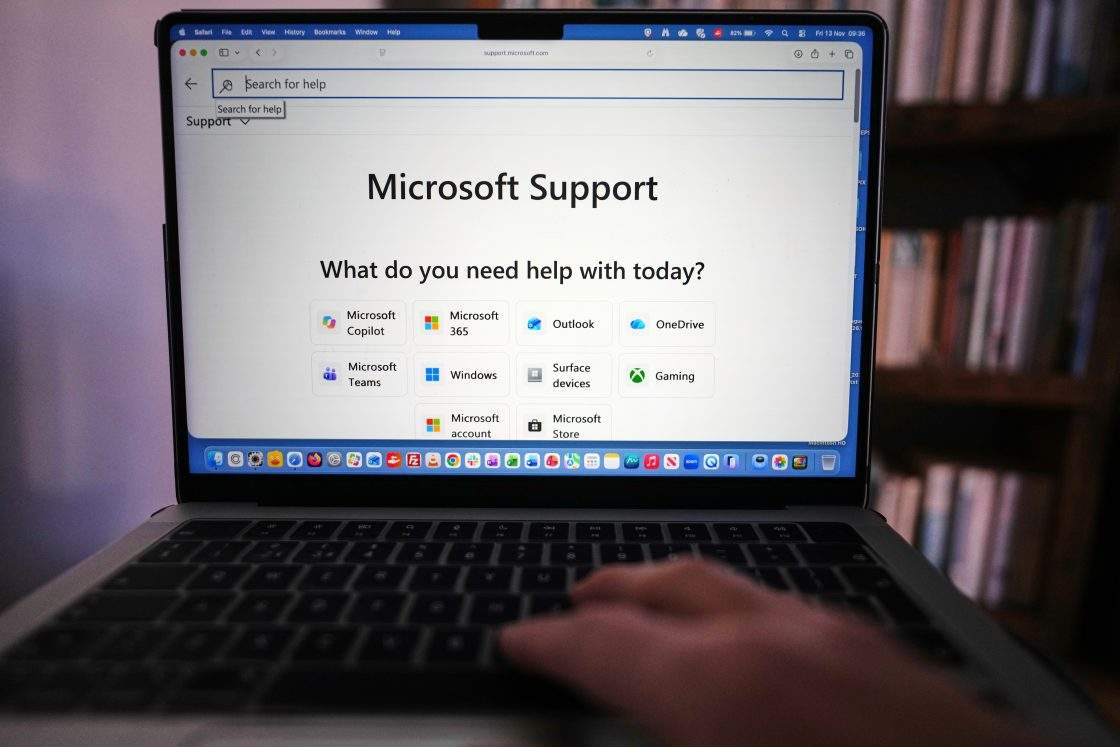
When a single software update or cloud configuration error at Microsoft goes sideways, the modern economy stops moving. Flights sit grounded on tarmacs, hospital operating rooms cancel elective surgeries, emergency dispatch centers lose their screens, and financial trading desks go dark. This cascading failure is not a freak accident of bad coding; it is the direct consequence of corporate monoculture. Over the past two decades, businesses, governments, and critical infrastructure operators consolidated their entire digital foundations onto one vendor's operating systems, identity management tools, and cloud servers, creating an interconnected single point of failure where one company's mistake instantly becomes everyone's catastrophe.
The prevailing reaction after every major disruption is predictable. Executives express shock, politicians demand hearings, and IT directors lament their helplessness while waiting for a patch from Redmond. Yet this helplessness is entirely self-inflicted. Organizations traded operational resilience for procurement convenience, bundling their operating systems, productivity suites, email servers, and security software under single enterprise licensing agreements.
The Architecture of Fragility
To understand how an outage at one technology vendor brings down an airline or a bank, you have to look at how enterprise IT is built. Modern corporate networks do not operate as isolated islands. They are deeply intertwined ecosystems where one software layer authenticates and authorizes the next.
At the center of this web sits identity management. Tools like Microsoft Entra ID (formerly Azure Active Directory) act as the digital bouncer for millions of organizations. When an employee logs into their laptop, accesses a third-party human resources portal, opens a customer database, or checks a hospital patient chart, that request often passes through Microsoft’s authentication servers. If that identity layer stalls, even software made by completely different companies becomes inaccessible. You might have your data stored on an entirely separate cloud provider, yet your staff cannot reach it because the keys to the front door are locked inside Microsoft's infrastructure.
Then there is the operating system layer. Windows remains the dominant desktop environment for enterprise workplaces, point-of-sale terminals, airport check-in kiosks, and medical devices. Unlike consumer phones that update gradually, corporate Windows machines are managed centrally through automated deployment pipelines. System administrators push updates simultaneously across tens of thousands of endpoints to close security vulnerabilities quickly.
Speed creates systemic risk. When an update contains a flaw—or when a third-party security tool with deep kernel-level access pushes a corrupted configuration file to Windows machines, as seen during the massive July 2024 CrowdStrike incident—the failure propagates at machine speed. Millions of screens turn blue within minutes. Because the machines crash before they can connect to the network to receive a fix, automated recovery becomes impossible. Human technicians must physically walk up to every single computer, reboot it into safe mode, and manually delete the offending file.
Kernel Access and the Illusion of Security
The 2024 global outage exposed a technical vulnerability that industry veterans have warned about for years. Security vendors demand access to the Windows kernel, the core of the operating system that has unrestricted control over hardware and memory. They argue this deep access is necessary to spot sophisticated malware before it can hide.
Microsoft granted this access under pressure from European antitrust regulators in 2009, who argued that Microsoft had an unfair advantage if only its own security tools could operate at the kernel level. That regulatory mandate, designed to promote competition, inadvertently created a structural hazard. By allowing external software vendors to run unverified code inside the most sensitive part of the operating system, every Windows machine became vulnerable to a single bad update from any approved security partner. Apple took the opposite approach on macOS, gradually locking down kernel extensions and forcing developers into user-space frameworks where a crash kills only the app, not the entire computer. Windows kept the door open, prioritizing backward compatibility and third-party integration over system isolation.
Why Enterprise Buyers Created a Monoculture
Blaming Microsoft for its market dominance misses half the story. Tech monopolies do not form in a vacuum; they are built by corporate buyers who consistently choose consolidation over diversity.
Consider a hypothetical Fortune 500 manufacturing company. Twenty years ago, that company might have run Linux servers for its databases, used Novell for directory services, relied on Cisco for networking, bought Symantec for antivirus, and used Lotus Notes for email. Managing that environment required specialized teams, complex integration work, and constant finger-pointing between vendors whenever something broke.
When cloud computing matured, Microsoft offered a compelling alternative to that chaos. By bundling Azure cloud hosting, Office 365 productivity tools, Teams communications, and Defender security into unified Enterprise Agreements, Microsoft made it financially irrational for a Chief Information Officer to buy best-of-breed tools from separate competitors. If you are already paying for an E5 license, deploying Microsoft's built-in security and identity tools feels "free," even if it concentrates all your operational risk in one place.
Procurement departments love single-vendor contracts. Legal teams prefer negotiating one master services agreement instead of fifty. Boards of directors like predictable annual software spend. Every corporate incentive pushes organizations toward uniformity. Diversity, by contrast, looks expensive on a spreadsheet. Running parallel systems, maintaining multi-cloud architectures, and training staff on multiple operating systems requires redundant headcount and complex engineering. Until the servers go dark, redundancy looks like waste.
The Regulatory Blind Spot
Antitrust regulators spent decades focused on consumer harm, primarily measuring monopoly power through price increases. Because Microsoft often lowers the effective per-seat cost through aggressive bundling, traditional antitrust frameworks struggled to intervene. Regulators failed to recognize that in critical infrastructure, concentration risk is far more dangerous than higher prices.
Banking regulators eventually learned this lesson after the 2008 financial crisis. They realized that when a few massive institutions become deeply interconnected, the failure of one threatens the entire global economy. They introduced stress tests, capital reserve requirements, and strict rules on third-party vendor concentration.
Technology infrastructure has no equivalent guardrail. Airlines, hospitals, telecommunications carriers, and government agencies have been allowed to build their core operations on identical software stacks without demonstrating how they will function when that stack fails. When an outage hits, executives claim they were helpless, yet their own risk management committees signed off on architectures with zero failover capability.
The Myth of the Easy Fix
Whenever a major Microsoft outage makes front-page news, commentators immediately demand that companies "diversify their tech stack" or "adopt multi-cloud strategies." In practice, genuine diversification is brutally difficult and carries its own severe risks.
Splitting an enterprise across multiple cloud providers—say, running half your workloads on Microsoft Azure and half on Amazon Web Services—sounds smart in a boardroom presentation. In reality, it doubles your attack surface. Security teams must now master two completely different permission models, two sets of networking rules, and two logging architectures. Misconfigurations are the leading cause of cloud data breaches, and forcing engineers to manage unfamiliar platforms increases the likelihood of human error.
Furthermore, true active-active failover across different cloud providers is prohibitively expensive for most businesses. Data transfer fees between clouds—known as egress fees—punish companies for moving large datasets across platforms. Proprietary database services do not translate cleanly from one vendor to another without rewriting core application code. Most companies that claim to be "multi-cloud" actually just use AWS for one department and Azure for another. If Azure goes down, the applications hosted there still fail; they do not magically migrate to Amazon.
The same reality applies to desktop operating systems. Switching a 50,000-person workforce from Windows to Linux or macOS is not a weekend project. Legacy internal software, specialized accounting macros, and proprietary industry hardware drivers are often hardcoded to run exclusively on Windows. Forcing a migration breaks workflows that have functioned reliably for decades.
How Organizations Actually Build Resilience
Accepting that you cannot easily rip out Microsoft does not mean accepting total helplessness. Organizations that survive major vendor outages without halting operations rely on specific, disciplined engineering practices rather than wishful thinking.
First, resilient companies isolate their control planes from their data planes. If your cloud provider's management dashboard goes offline, your existing applications should continue running uninterrupted as long as you do not need to make changes. Outages become catastrophic when routine operations—like authenticating a user or routing a customer call—depend on real-time API calls back to the vendor's central servers.
Second, smart IT leaders enforce staggered update rings. Pushing any software update or security configuration change to 100 percent of your machines simultaneously is operational negligence. Mature organizations divide their fleet into concentric rings:
- Ring 0 (Canary): A small group of IT test machines and non-critical systems that receive updates immediately.
- Ring 1 (Early Adopters): Volunteer power users across different departments who get the update 24 to 48 hours later.
- Ring 2 (Broad Deployment): The general workforce, updated only after Ring 1 proves stable over several days.
- Ring 3 (Critical Infrastructure): Hospital bedside terminals, factory floor controllers, and airline dispatch systems, updated last and only after rigorous verification.
Had affected airlines and hospitals enforced strict update rings with manual pause switches, a corrupted update would have crashed a few dozen test laptops instead of grounding thousands of flights.
Third, critical facilities must maintain offline fallback procedures. Digital transformation encouraged hospitals, retailers, and logistics hubs to eliminate paper forms, local backups, and manual overrides. When the cloud disconnects, staff stand frozen because they no longer know how to process a transaction or admit a patient without a live screen. Resilience requires regular drills where teams practice operating entirely offline—using local cached databases, manual intake logs, and physical payment imprinters—until connectivity returns.
The Structural Reckoning Ahead
The technology industry has spent twenty years optimizing for efficiency, speed, and centralized control. Those exact traits are what turn localized software bugs into global economic paralysis. Microsoft is not uniquely incompetent; Google, Amazon, and Cloudflare have all suffered massive outages that took down huge swaths of the internet. Microsoft simply sits deeper inside the foundational plumbing of traditional enterprises, making its failures far more visible in the physical world.
Regulators in Europe and North America are finally beginning to treat cloud providers and dominant software vendors as systemically important infrastructure. New frameworks like the European Union's Digital Operational Resilience Act (DORA) force financial institutions to map their third-party dependencies, test their exit strategies, and prove they can withstand severe vendor disruptions. Similar mandates will inevitably expand to healthcare, aviation, and energy.
Until those rules force structural changes, corporate boards must stop treating IT outages as unpredictable weather events. Relying on a single vendor for your operating system, identity verification, cloud hosting, and security monitoring is a calculated gamble. Every enterprise leader has to decide how much money they are willing to save today in exchange for explaining to customers, regulators, and shareholders why their entire business stopped working tomorrow.