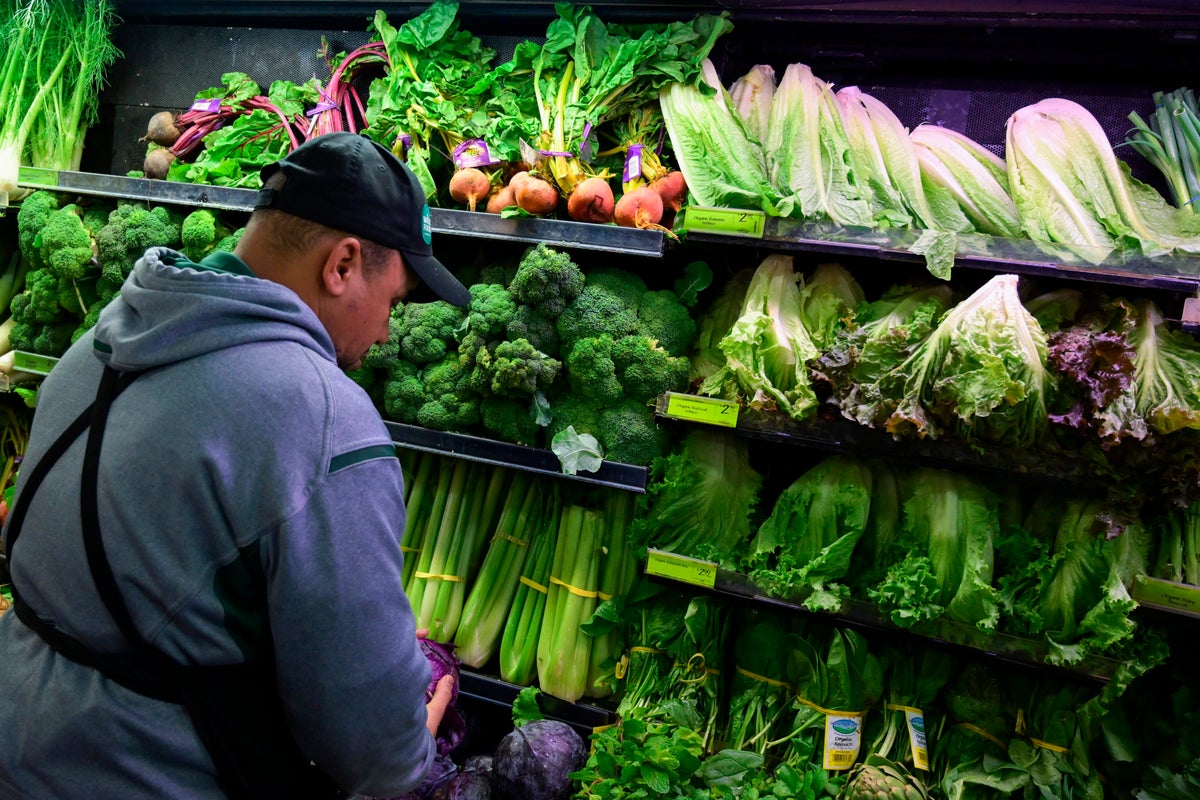
You have likely seen the sensational headlines warning of a mystery bug causing explosive diarrhea spreading across the United States. It reads like standard summer clickbait, but the threat is entirely real and deeply embedded in our food system. The culprit is a microscopic parasite called Cyclospora cayetanensis. Currently, this pathogen is driving a massive surge of cyclosporiasis infections across 18 states, with New York, Michigan, Texas, and Illinois bearing the brunt of the outbreak. Health officials will advise you to wash your hands and be careful with raw food. That advice completely misses the actual problem.
The reality of this outbreak is not a failure of personal hygiene. It is a fundamental vulnerability in the American fresh produce supply chain. Over 400 cases have been confirmed by federal agencies this summer, but epidemiologists know this number represents only a fraction of the actual infections. The parasite is actively evading standard food safety protocols, surviving industrial chemical washes, and slipping through the cracks of a strained public health tracking system.
To understand why this parasite is winning, you have to look past the grocery store displays and examine the gritty mechanics of modern agriculture.
The Biology of an Invisible Saboteur
Most people assume food poisoning is bacterial. They think of Salmonella or E. coli multiplying rapidly on a piece of warm chicken. Cyclospora operates under entirely different biological rules. It is a protozoan parasite, and it requires a human host to complete its life cycle.
When an infected person sheds the parasite in their feces, the organism is entirely harmless. It is encased in an unsporulated oocyst. At this stage, you could ingest it and nothing would happen. It requires days, sometimes weeks, in the open environment to sporulate and become infectious. This biological quirk means you do not catch cyclosporiasis directly from another person. You cannot catch it from someone preparing your food with unwashed hands.
You catch it because somewhere in the world, days or weeks earlier, human waste contaminated the soil or water used to grow your food.
Once you ingest a sporulated oocyst on a piece of raw produce, your stomach acid fails to destroy it. Instead, the gastrointestinal environment triggers the oocyst to break open, releasing sporozoites. These microscopic invaders burrow deeply into the epithelial cells lining your small intestine. They multiply rapidly, destroying the cells and completely ruining your intestine's ability to absorb fluids and nutrients.
The resulting symptoms are severe. The body triggers a violent, prolonged purge. Patients experience days and often weeks of crippling, watery diarrhea. Severe abdominal cramping, profound fatigue, nausea, and a complete loss of appetite follow. It is not uncommon for victims to lose ten to fifteen pounds during the ordeal.
It is an exhausting illness. And worst of all, it rarely resolves overnight.
The Illusion of Washed Produce
If you buy a plastic clamshell of mixed greens labeled "Triple Washed," you naturally assume it is clean. You trust the industrial processing facilities to remove dirt, insects, and pathogens before the food reaches your local supermarket.
This is where the system completely breaks down.
We have engineered a food network designed for extreme efficiency. When delicate greens like basil, cilantro, spinach, or berries are harvested, they are loaded into massive bins and trucked to centralized processing centers. Thousands of pounds of produce from dozens of different farms converge on a single factory floor.
To clean this massive volume of food, processing plants use giant water flumes. The greens are dumped into a rushing river of water heavily dosed with chlorine and other sanitizing chemicals. For bacteria, this chemical bath is highly lethal.
Cyclospora ignores it entirely.
The parasite is protected by a highly resistant biological shell that makes it virtually immune to standard agricultural chlorine washes. The sanitizing bath does not kill the parasite. Instead, the massive water flume merely dislodges the oocysts from one contaminated leaf and allows them to float freely until they attach to another.
A single contaminated batch of cilantro can enter the flume and effectively cross-contaminate the entire day's production run. The processing equipment, designed to protect the consumer, inadvertently acts as a distribution mechanism for the parasite. The contaminated herbs and berries are then chopped, bagged, loaded onto refrigerated trucks, and shipped to supermarkets and restaurants across the country.
This is the uncomfortable truth the agricultural industry knows but rarely discusses. Chemical washing is practically useless against this specific threat.
An Impossible Traceback Investigation
When an outbreak of this scale hits, the public expects the Centers for Disease Control and Prevention and the Food and Drug Administration to quickly identify the tainted product and issue a recall. They expect a swift resolution.
With Cyclospora, a swift resolution is mathematically and logically impossible.
The main hurdle is the parasite's incredibly long incubation period. After you swallow the pathogen, you will not feel sick the next day. The parasite takes anywhere from two to fourteen days to multiply enough to trigger symptoms.
Consider a hypothetical scenario to understand this investigative nightmare. A man in Chicago eats a fish taco garnished with fresh cilantro on a Friday night. He feels perfectly fine for over a week. Twelve days later, he wakes up violently ill. He waits a few days, hoping it will pass. When it doesn't, he goes to a clinic. The doctor orders tests. A few days later, the results confirm Cyclospora.
By the time the local health department contacts this man, it has been nearly three weeks since he ate the taco.
The epidemiologist has to ask him to recount every single raw fruit, vegetable, and herb he consumed over a two-week period. He will likely forget the small sprinkle of cilantro on a taco he ate twenty days ago.
Even if he miraculously remembers the exact meal, the trail is already cold. The health department visits the restaurant. The restaurant buys its produce from a regional distributor. That distributor purchases herbs from five different packaging plants. Those plants source their greens from thirty different farms stretching from Texas to Mexico.
Furthermore, fresh produce is frequently blended. A single plastic container of pre-packaged salad might contain leaves from four different agricultural regions. Tracing the contamination back to a specific field, or a specific tainted irrigation line, is like trying to un-bake a cake to find out which farm the eggs came from.
A Strained Federal Defense
This impossible traceback scenario is currently playing out on a massive scale. Federal and state investigators are staring down hundreds of confirmed cases, and they know the real number of sick Americans is vastly higher.
Many people infected with the parasite never get tested. They assume they have a terrible stomach virus and simply suffer through it at home. Even when patients do seek medical care, doctors often prescribe generic broad-spectrum antibiotics or recommend rest, assuming a standard bacterial infection.
Unless a physician specifically orders a gastrointestinal pathogen panel that tests for parasites, the Cyclospora infection goes entirely unrecorded.
For the cases that do get reported, the geographic spread is alarming. New York has logged well over a hundred cases. Michigan, a state that normally sees around 50 cases of cyclosporiasis annually, experienced an explosive spike of over 300 cases in a matter of weeks. The sheer volume of data pouring into state health departments is overwhelming.
Federal agencies are attempting to map these clusters. They are looking for common denominators among the sick. Did a cluster of patients in Illinois all eat at the same restaurant chain? Did a group of victims in Texas all purchase the same brand of berries from a specific grocery store?
The CDC has publicly stated there is no evidence linking all the reported cases to a single, nationwide source. Instead, they are likely dealing with multiple, concurrent outbreaks involving different types of produce.
This highly fragmented crisis is hitting public health agencies exactly when they are most vulnerable. Tracking foodborne illness requires massive manpower. It requires agents making phone calls, auditing restaurant invoices, and physically inspecting processing plants. With federal health workforces stretched thin and budgets constantly under pressure, the agencies simply do not have the boots on the ground to chase down every lead before the perishable evidence rots away in a landfill.
We see this seasonal surge every single year. The official outbreak window runs from May to August, aligning perfectly with the peak consumption of fresh summer produce. We know it is coming, yet the system consistently fails to catch the contamination before it reaches the consumer.
Surviving the Produce Aisle
If the agricultural supply chain cannot stop the parasite, and the federal government cannot track it fast enough to issue warnings, the burden of safety falls entirely on you.
You cannot eliminate the risk entirely unless you decide to stop eating fresh, raw produce. But you can drastically reduce your exposure by changing how you handle food in your own kitchen.
First, abandon the idea that a quick rinse under the kitchen faucet will make your salad safe. Water alone will not dislodge the parasite.
Chemical vegetable washes sold at premium grocery stores are equally useless against the biological armor of an oocyst.
Your best defense is mechanical friction. The parasite must be physically scrubbed away. If you are eating firm produce like melons or cucumbers, use a stiff vegetable brush and scrub the surface vigorously under running water before you slice into it.
The real danger lies in the delicate items. You cannot aggressively scrub a raspberry. You cannot brush a leaf of baby spinach or a sprig of cilantro without destroying it. When you consume these items raw, you are accepting a baseline level of risk inherent in the modern agricultural system.
The only guaranteed method to destroy Cyclospora is heat. Cooking your vegetables kills the parasite instantly. If you are deeply concerned about the current outbreak, transitioning away from raw salads and focusing on cooked vegetables for the remainder of the summer season is a highly effective mitigation strategy.
If you do fall ill, and you experience the distinct, prolonged, watery symptoms associated with this bug, you must advocate for yourself at the doctor's office. Do not accept a generic diagnosis of gastroenteritis if the symptoms persist past a few days. Explicitly ask your healthcare provider to test for parasites.
If the test returns positive, the treatment is straightforward. A specific combination antibiotic, usually trimethoprim-sulfamethoxazole, is highly effective at clearing the infection and stopping the relentless purge.
The next time you open a plastic clamshell of pre-washed summer berries, understand exactly what you are holding. It is a marvel of agricultural logistics. It is a nutritional staple. And it is, fundamentally, an act of blind faith.