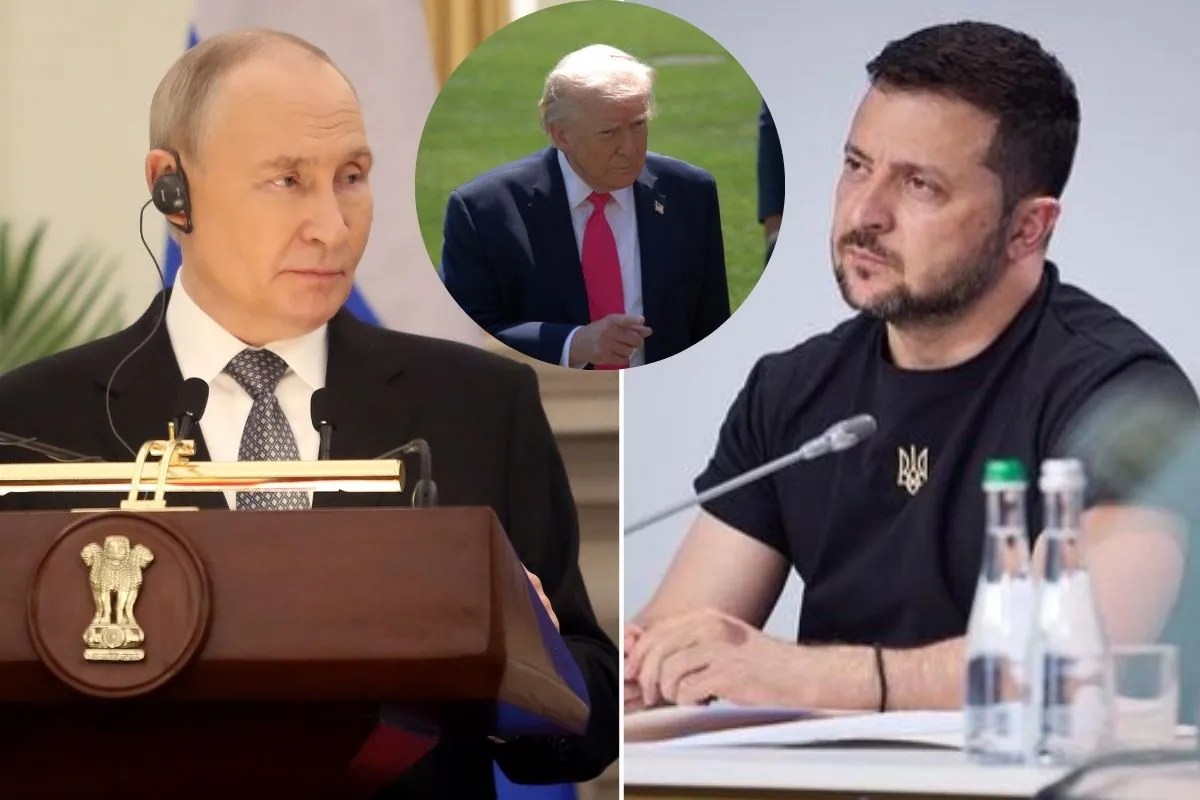
President Donald Trump’s unilateral announcement on October 11, 2026, of an immediate "energy ceasefire" between Russia and Ukraine was less a diplomatic breakthrough than an emergency attempt to rescue domestic fuel prices ahead of the November midterm elections. Paired with a controversial October 9 sanctions waiver allowing the import of Russian diesel, the deal unraveled within hours. Ukrainian President Volodymyr Zelenskyy told reporters the agreement was news to him, Russian missiles continued striking Ukrainian power plants that same evening, and data later confirmed that while Russian diesel exports doubled, not a single drop reached American ports.
To understand why a social media post pleading "Do not break it!" failed to halt a four-year war of attrition, you have to look beyond Eastern Europe. The real story sits in the Strait of Hormuz, the U.S. Treasury Department, and the brutal math of global refining capacity.
The Hormuz Shock and Midterm Panic
The White House framed the October energy diplomacy as a direct response to Ukrainian drone strikes on Russian oil refineries, with Trump repeatedly blaming Kyiv for driving up global diesel costs. Energy economists and market analysts point to a far larger culprit.
In February 2026, the U.S.-led war with Iran triggered severe blockades across the Strait of Hormuz, a maritime chokepoint that previously handled roughly one-fifth of the world's petroleum supply. By September 22, AAA data showed average U.S. diesel prices hitting a peak of $6.53 per gallon, up from $3.67 a year earlier. For an administration facing voters on November 3, high freight, farming, and trucking costs posed an immediate political threat.
Desperate for supply relief, the administration pivoted toward Moscow. Following a phone call with Vladimir Putin, Trump announced on October 9 that Russia had agreed to supply global markets with over 4.8 million metric tons of diesel—starting with 300,000 tons immediately, 500,000 tons in November, and millions more to follow.
The catch was obvious. Russia could not export millions of tons of refined fuel if Ukrainian long-range drones kept blowing up its distillation towers. According to reporting from the Associated Press, Ukrainian strikes had already knocked out significant portions of Russia’s refining capacity, pushing Russian diesel and gasoil exports in September down to just under 600,000 metric tons, a ten-year low. The "energy ceasefire" was designed to protect the exact Russian infrastructure needed to fulfill Trump's supply promise.
A Ceasefire Negotiated Without Kyiv
When Trump posted on Truth Social on October 11 that both parties had agreed to halt strikes on energy infrastructure effective immediately, the diplomatic machinery behind the scenes appeared nonexistent.
Zelenskyy’s immediate reaction to Axios and on Telegram exposed the disconnect. While stating that Kyiv supported the concept of mutual de-escalation, the Ukrainian leader noted he had received no prior details from Washington. Hours after Trump's post, Russian forces struck a power plant in Kharkiv alongside glide bomb attacks across eastern Ukraine.
"Ukraine wants peace. The question is whether Russia does," Zelenskyy said on October 11, noting that Ukrainian forces had been given orders to hold fire on Russian refineries while waiting for concrete guarantees from Washington and Moscow.
Rather than condemning Moscow for violating the truce hours after it was announced, Trump deflected. Speaking to reporters on October 13, he declined to accuse the Kremlin of breaking the ceasefire, pointing out that Ukraine had struck Russian sites days earlier. Just days prior, Trump had publicly suggested Ukraine needed a new president who could "make a deal"—a remark that drew swift pushback from European allies and Canadian Prime Minister Mark Carney, who warned that the U.S.-Russia diesel arrangement actively undermined European security.
Analysts at the Institute for the Study of War noted that Putin used his October phone call with Trump to blame Kyiv for stalled negotiations while maintaining maximalist demands for Ukraine's capitulation. By trading unilateral U.S. concessions for an unverified verbal commitment, Washington gave the Kremlin breathing room to repair its refineries without forcing a pause in Russian bombardments of Ukraine’s power grid.
Legal Roadblocks and Treasury Loopholes
To make the diesel deal function on paper, the U.S. Treasury Department’s Office of Foreign Assets Control issued General License No. 135 on October 9. The six-month authorization temporarily permitted transactions involving the purchase, delivery, and import of Russian diesel through April 2027. A week later, on October 16, Trump signed an executive order waiving secondary tariff provisions under the Lindsey O. Graham Sanctioning Russia and Iran Act of 2026, which he had signed into law less than a month earlier.
The administration’s legal maneuvering immediately ran into a statutory wall.
The 2022 Statutory Ban
In April 2022, Congress passed the Ending Importation of Russian Oil Act, a bipartisan statute explicitly banning Russian energy imports into the United States. Legal scholars and state officials quickly pointed out that a Treasury general license overrides executive branch sanctions—not an act of Congress.
New Jersey Governor Mikie Sherrill formally challenged the move on November 2, warning port and terminal operators across her state that unloading Russian fuel would expose them to federal civil and criminal liability. Faced with legal jeopardy, compliance risks, and insurance hurdles, American importers refused to touch the cargoes.
Where the Fuel Actually Went
By mid-November, shipping and trade data reported by the Times of India revealed the practical outcome of General License No. 135. With Ukrainian drone strikes temporarily paused under pressure from Washington and U.S. sanctions enforcement relaxed, Russian diesel exports surged by 100 percent.
Not a single tanker delivered Russian diesel to the United States. Instead, those barrels flowed into secondary global markets in Asia, Africa, and Latin America, generating billions in fresh revenue for the Russian state while leaving U.S. ports untouched.
Why Global Supply Math Failed American Drivers
White House officials defended the policy to the Financial Times by arguing that oil and refined products operate in a fungible global pool—meaning extra Russian barrels anywhere in the world would naturally pull down prices at American pumps.
In theory, global commodity markets balance out over time. In practice, physical refining bottlenecks and maritime chokepoints dictate regional prices. Michael Noel, an economics professor at Texas Tech University, explained to TIME that the supply shock from the Strait of Hormuz blockade was simply too massive to be offset by incremental Russian exports. Even with General License No. 135 in effect, global diesel prices remained tethered to Middle Eastern military developments rather than Black Sea tanker loadings.
The strategic cost, meanwhile, fell squarely on Kyiv and Washington's credibility. Throughout 2026, deep-strike drone operations against Russian oil infrastructure had served as Ukraine's most effective asymmetric lever—a way to impose real economic pain on Moscow without relying solely on stalled front-line offensives. By pressuring Kyiv to halt those strikes while failing to enforce reciprocal restraint on Russian missile attacks against Ukrainian power plants, the truce stripped Ukraine of leverage.
As winter temperatures drop across Eastern Europe and Ukraine’s damaged electrical grid faces renewed Russian bombardments, the October energy ceasefire stands as a stark lesson in transactional diplomacy. You cannot decree a truce over social media when one side holds all the incentives to keep shooting and the other is told to put down its best weapon.