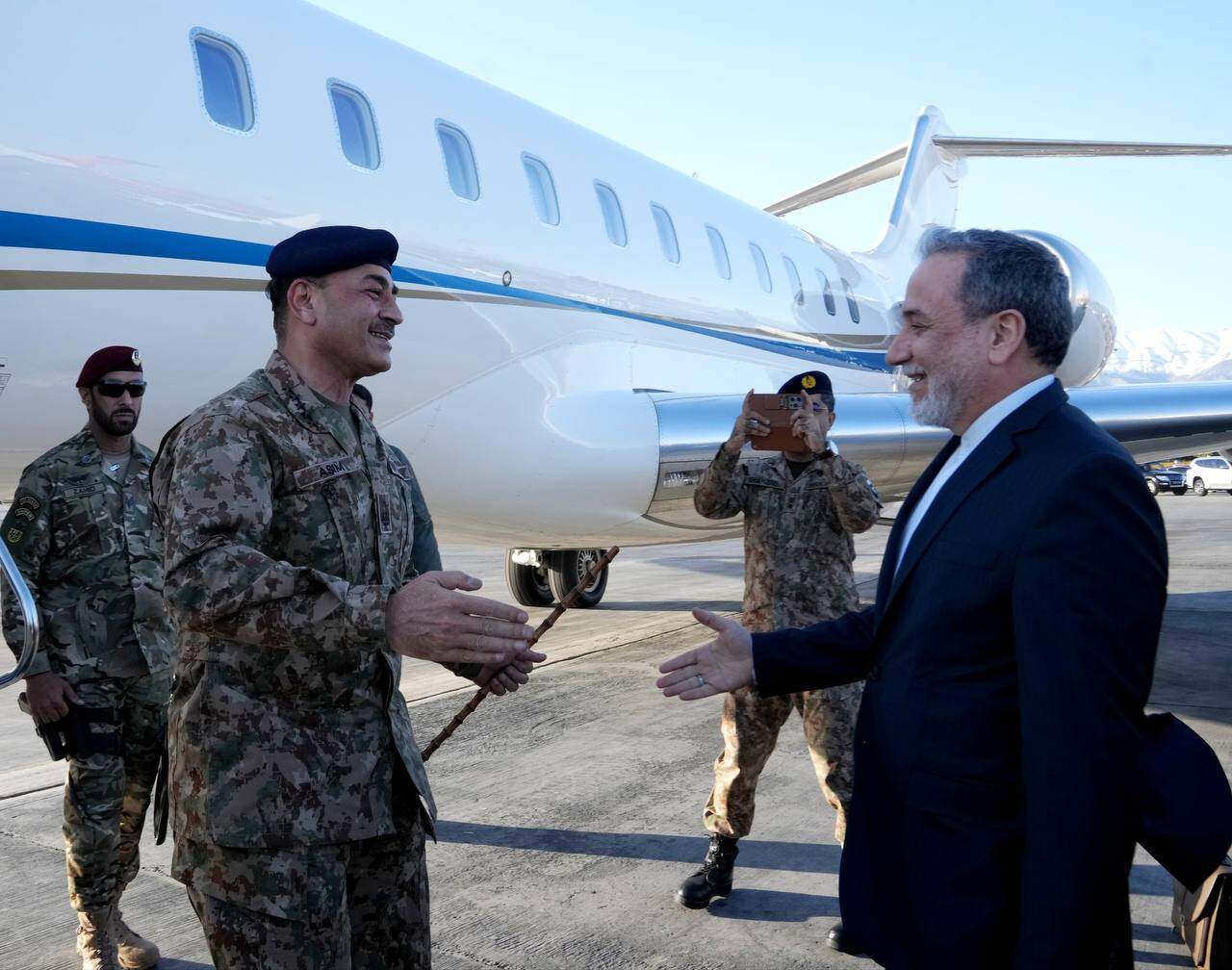
Pakistan’s army chief, Field Marshal Asim Munir, arrived in Tehran this Thursday with a mission that has little to do with traditional military cooperation and everything to do with preventing a regional collapse. He is currently the only high-level conduit between a Trump-led White House and an Iranian leadership backed into a corner by a grueling seven-week war and a suffocating naval blockade. By serving as the primary intermediary in these last-ditch negotiations, Pakistan is attempting to secure a permanent ceasefire and resolve a nuclear deadlock that has pushed global oil prices to breaking point.
The Messenger in Uniform
It is no coincidence that a general, rather than a diplomat, is carrying the weight of these talks. In the current geopolitical climate, the "Islamabad Track" has become the preferred channel for both Washington and Tehran because it bypasses the public posturing of traditional state departments. Munir’s presence in Tehran follows a marathon session in Islamabad last week where he hosted U.S. Vice President J.D. Vance. If you enjoyed this piece, you should read: this related article.
The White House is demanding a total freeze on Iranian nuclear enrichment and the immediate reopening of the Strait of Hormuz. In exchange, the U.S. has signaled a potential lifting of the naval blockade that has paralyzed Iranian ports since early April. However, the "in-principle agreement" currently on the table is incredibly fragile. Tehran is hesitant to sign any deal that mirrors the failed JCPOA, particularly when dealing with an administration that previously walked away from it.
The Nuclear Sticking Points
The core of the dispute remains the 440 kilograms of highly enriched uranium Iran currently holds. Sources close to the mediation efforts suggest that three distinct options are being debated behind closed doors: For another angle on this event, see the latest coverage from The Washington Post.
- The Transfer Model: Moving the entire stockpile to a third country (likely Russia or China) under international supervision.
- The Blending Strategy: Reducing the enrichment levels to civilian-grade under 24-hour surveillance.
- The Freeze: A long-term halt on all enrichment activities, with the U.S. pushing for a 20-year commitment while Iran refuses to go beyond five.
While the nuclear issue gets the headlines, the immediate crisis is the Strait of Hormuz. Iran’s military advisers to the Supreme Leader have publicly threatened to halt all regional trade if the U.S. blockade continues. For the U.S., any peace deal is a non-starter unless the flow of oil through the Strait is guaranteed and the naval blockade—an act of war by any international standard—is dismantled.
Pakistan’s High-Stakes Gamble
Why is Islamabad risking its own diplomatic capital on such a volatile dispute? The answer is purely pragmatic. Pakistan shares a 900-kilometer border with Iran, and any total collapse of the Iranian state would trigger an influx of refugees and insurgent activity into Balochistan that the Pakistani economy simply cannot handle.
Furthermore, millions of Pakistani citizens working in the Gulf states are currently in the crossfire. If Iran follows through on threats to target regional energy infrastructure in Saudi Arabia or the UAE, the resulting economic shock would devastate South Asia. For Field Marshal Munir, this isn't about global prestige; it is about domestic survival.
The Blockade and the Brink
The current ceasefire is a ghost of a peace deal. While airstrikes have largely paused, the U.S. naval blockade remains in force, and Iran continues to use "dark transits" to move oil to Asian markets. This shadow economy is the only thing keeping the Iranian rial from total evaporation, but it also provides the hard currency that funds regional proxies.
Donald Trump’s administration appears to believe that maximum pressure, combined with the recent strikes on Iranian nuclear sites, has finally brought Tehran to its knees. But history suggests that the more the Iranian regime is isolated, the more it leans into its "red line" issues. The failure of the first round of Islamabad talks last weekend, which ended in a stalemate over wartime reparations, proves that Tehran is not yet ready for a total surrender.
The Path to a Second Round
Munir is expected to fly directly to Washington following his meetings in Tehran. His goal is to secure a second round of direct talks in Islamabad before the current ceasefire expires next week. If he fails, the transition from "economic warfare" back to "kinetic warfare" is almost certain.
The markets have already reacted to the hope of a breakthrough, with U.S. stocks hitting record highs on Wednesday. But for those on the ground in Tehran and Islamabad, the mood is far more somber. They know that a peace deal brokered by a military chief is often the last stop before the diplomats are permanently replaced by the generals.