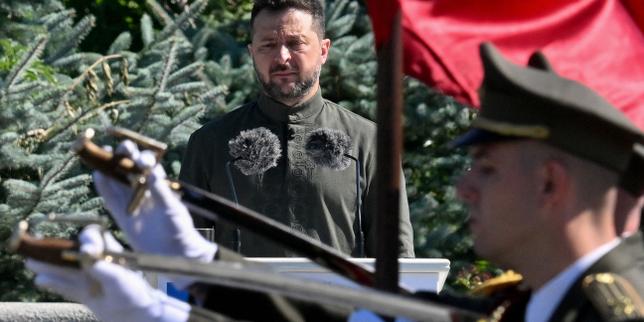
The paradox of democracy under artillery fire exposes a fundamental tension within modern statecraft. When a nation faces existential threat, the mechanics of popular choice often clash with the raw survival of institutions. Officials in Kyiv have repeatedly confronted this stark reality, noting that the logistical nightmare of casting ballots while under missile bombardment creates massive vulnerabilities.
Critics abroad often misinterpret this hesitation as political maneuvering. They ignore the physical impossibility of holding a nationwide vote when millions of citizens live abroad as refugees, frontlines shift daily, and polling stations double as military targets. The architecture required for a transparent franchise simply fractures under total war. Read more on a related subject: this related article.
Consider a hypothetical country where twenty percent of the population has been displaced and key population centers lack stable power grids. Setting up secure voting booths becomes an invitation for catastrophe. Enemy forces routinely target concentrated civilian gatherings. A national vote under such conditions risks mass casualties and immediate charges of illegitimacy due to forced disenfranchisement.
Beyond physical danger lies the administrative vacuum. Voter registries are routinely scrambled by internal displacement. Electoral boards cannot function in occupied territories. Financing security measures diverts critical resources away from active defense logistics. More reporting by Al Jazeera delves into similar views on this issue.
Yet, external partners continue to press for standard democratic milestones, assuming that procedural continuity matters more than physical survival. This disconnect highlights a profound divergence between theoretical constitutional purity and the messy reality of total mobilization. Nations fighting for survival must weigh the symbolic value of a vote against the catastrophic risk of structural collapse.
The debate over wartime governance will likely persist as long as the conflict endures. History shows that states under siege frequently suspend ordinary political cycles to preserve the ultimate sovereignty required to hold elections later. Ukraine remains caught in this precise crucible, balancing democratic aspirations against the grim calculus of self-preservation.