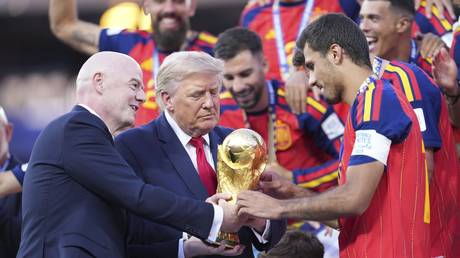
The circus has packed up its tents, leaving behind empty stadiums, torn-up turf, and a stack of unpaid bills that American taxpayers will be sorting through for the next decade. For a month, the United States played host to the biggest sporting event on earth, under the promise that the tournament would ignite a permanent soccer revolution and pump billions into local economies. Instead, the country is waking up to a brutal financial reality. The promised economic windfall was an illusion, and the domestic soccer infrastructure is completely unequipped to capture whatever fleeting interest remains.
This is not a story about fans feeling a bit melancholic now that the matches have ended. This is an investigation into a systemic corporate extraction masquerading as a sporting festival.
The Myth of the Multi Million Dollar Windfall
Before the first whistle blew, local organizing committees across the country blasted press releases boasting about the massive financial injections their cities would receive. Estimates routinely floated figures like $400 million to $600 million in economic impact per host city. Hotel rooms would be booked solid, restaurants would overflow, and tax coffers would swell.
The reality on the ground told a completely different story.
Independent economists have known for decades that mega-events do not create new economic activity so much as they displace existing wealth. During the tournament, regular business travelers, convention-goers, and regional tourists stayed away from major hubs like New York, Los Angeles, and Atlanta to avoid the crowds and inflated prices. Hotels in several host cities certainly raised their rates, but occupancy levels in surrounding districts actually plummeted compared to historical summer averages.
A restaurant owner located just three blocks from a major stadium venue, speaking on the condition of anonymity due to non-disclosure agreements signed with local tourism boards, explained the dynamic clearly. Regular lunch crowds disappeared completely because local corporate offices mandated remote work to avoid transportation gridlock. The visiting international fans spent their money inside the strict security perimeter established by football's governing body, where only official corporate partners were permitted to sell merchandise, food, and beverages. Local businesses were effectively locked out of the cash flow.
The money did not circulate within the community. It pooled directly into the accounts of international sponsors and sports executives, who packed it up and flew out of the country the moment the final trophy was hoisted.
The Public Subsidy Trap
To understand the scale of this hangover, one must look at the ledger of public expenditures. American cities entered a bidding war that forced them to surrender immense regulatory and financial concessions.
Municipalities used public funds to upgrade transit lines, deploy thousands of law enforcement officers for overtime security details, and modify stadiums that were already considered state-of-the-art by NFL standards. Because the international governing body mandates natural grass fields with highly specific drainage and root systems, venues with artificial turf spent millions tearing up their surfaces, installing temporary sod, and then ripping it out again afterward.
Tax Exemptions and Special Privileges
The true insult to local taxpayers lies in the tax exemptions demanded by the organizers. Host cities routinely granted waivers on sales tax for tournament tickets, merchandise, and corporate hospitality packages.
- Local governments absorbed the cost of extra trash collection, transit wear-and-tear, and emergency services.
- The international organizing body retained 100 percent of the ticket revenue.
- Sponsorship deals and broadcasting rights remained entirely untaxed by local jurisdictions.
This is a recurring pattern in modern sports capitalism. A private entity uses public infrastructure to generate billions in revenue, shields that revenue from local taxation, and leaves the municipality to manage the long-term maintenance costs of the upgrades.
The Major League Soccer Illusion
For years, executives at Major League Soccer pointed toward this summer as the ultimate catalyst for the sport's domestic growth. The theory was simple: expose millions of casual American sports fans to the highest level of international competition, and they would naturally migrate to their local clubs once the tournament concluded.
That assumption ignores the fundamental gap in quality and culture between elite international football and the domestic American league.
The fans who filled American gridiron stadiums to watch global superpowers play were looking for spectacle, star power, and historical prestige. They were not paying premium prices because they suddenly developed a deep passion for the tactical intricacies of the sport. Expecting a fan who just watched the finest athletes in Madrid, London, and Buenos Aires to immediately buy a season ticket for a mid-week domestic match in Ohio is a profound misunderstanding of consumer behavior.
Domestic clubs are already seeing television ratings settle back down to their pre-tournament baselines. The core problem is that the American soccer market remains deeply fragmented. Millions of soccer fans living in the United States already watch the sport religiously every weekend; they just watch the English Premier League, Liga MX, or the UEFA Champions League. The tournament did not magically bridge the gap between those established, high-quality foreign products and the local domestic offerings. It merely highlighted how far behind the domestic product remains in terms of prestige and star power.
The Infrastructure Left Behind
What remains are the physical relics of a one-month party. Several cities built massive fan zones and temporary training facilities that now sit idle, requiring ongoing maintenance costs without any clear strategy for future utilization.
In some metro areas, transit authorities accelerated major rail and bus projects to meet tournament deadlines. While these transportation improvements do offer genuine long-term utility for residents, the accelerated timelines forced cities to pay massive premiums for rushed labor and materials, ballooning municipal debt loads at a time when local interest rates were already punishingly high.
The long-term fiscal impact will manifest in city budgets for years. When a city spends $80 million on overtime security and specialized stadium retrofits for a four-week event, that money is pulled directly from municipal pools that could have funded school renovations, road repairs, or affordable housing initiatives. The trade-off is direct, measurable, and permanent.
The tournament left behind a mountain of debt, a collection of corporate sponsors who extracted every dime of available profit, and a domestic soccer league that is realizing a month of hype cannot fix a fundamentally flawed business model. American cities bought into the promise of a global celebration, but they are the ones left cleaning up the wreckage after the guests have gone home.