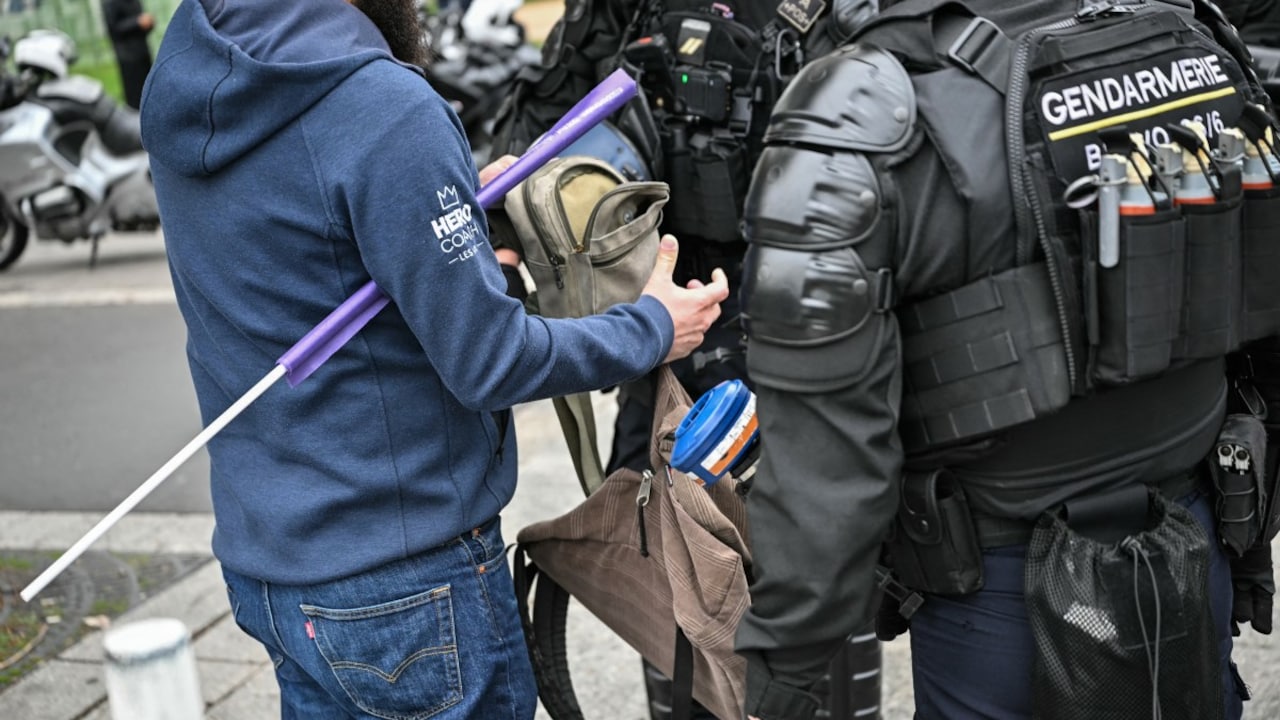
A samurai sword in the middle of a French street protest sounds like a bad movie script, doesn't it? Yet that's exactly what French police reported pulling off the streets during a wave of civil unrest that saw 135 people arrested across the country.
When headlines flash dramatic details like "katana among weapons seized," most readers stop at the shock value. They share the link, drop an angry comment, and miss the actual story happening underneath. If you want to understand why French demonstrations routinely escalate into mass arrests and bizarre weapon seizures, you have to look past the viral detail and examine how policing, protest tactics, and public frustration collide on French streets. Learn more on a related topic: this related article.
The Reality Behind the 135 Arrests in France
Let's clear up the biggest misconception right away. When French authorities announce 135 arrests during a day or night of protests, it rarely means a single massive riot in one Parisian square.
French demonstrations almost always operate on a decentralized model. Major unions, student groups, or grassroots movements organize simultaneous marches in Paris, Lyon, Marseille, Nantes, Rennes, and Toulouse. Police prefectures then tally nationwide figures every few hours and release them through the Ministry of the Interior. More analysis by NPR highlights comparable views on this issue.
That nationwide counting method changes how you should read the numbers. 135 arrests spread across a dozen major cities looks very different from 135 arrests on a single street corner. Still, even by French standards—where street mobilization is practically a national pastime—a triple-digit arrest tally paired with bladed weapon seizures signals that preventative policing was running at full throttle.
Why Preventative Searches Drive Up Arrest Numbers
If you've ever watched a French protest unfold on the ground, you know the police don't wait for bricks to fly before stepping in. Under French criminal procedure, public prosecutors routinely issue special requisitions ahead of major demonstrations. These legal orders allow riot police—specifically the Compagnies Républicaines de Sécurité (CRS) and the Brigades de Recherche et d'Intervention (BRI)—to stop and search bags, vehicles, and individuals within designated security perimeters.
Here's what happens during those sweeps:
- Officers set up checkpoints at major train stations and metro exits hours before a march even begins.
- Anyone carrying items that could function as a weapon—from heavy tools to pyrotechnics—gets detained immediately for "participation in a group formed with a view to committing violence."
- Pre-emptive detentions get folded directly into the final arrest count announced by the Interior Ministry.
That's how a katana ends up in a police evidence log before someone ever swings it in a crowd. Most of these seizures happen at transit hubs or perimeter checkpoints, not in the middle of a peaceful union march.
Why Weapons Like a Katana Show Up at French Protests
It sounds absurd. Why would anyone bring a Japanese sword to a political demonstration?
Honestly, anyone who has covered European street movements for long enough isn't entirely surprised. Fringe elements—often referred to in French media as casseurs (rioters) or radicalized black bloc factions—regularly piggyback on legitimate demonstrations. They don't show up to chant slogans or hold cardboard signs. They show up looking for confrontation with riot police, or worse, clashes with rival political groups.
When police conduct sweeps around high-tension protests, the inventory of confiscated items usually reads like a hardware store mixed with a medieval armory. Alongside standard protest gear like gas masks and swimming goggles (used to counter tear gas), officers routinely seize:
- Mortar fireworks and improvised incendiary devices
- Hammers, crowbars, and paving stones pried loose ahead of time
- Brass knuckles, telescopic batons, and hunting knives
- Occasional bizarre outliers like machetes, axes, or a katana
Does one person carrying a sword represent the hundreds of thousands of ordinary citizens marching over wages, pensions, or government policy? Of course not. Treating a fringe weapon seizure as proof that an entire protest movement is violent is lazy analysis. At the same time, pretending those violent subgroups don't exist ignores why riot police deploy in such heavy numbers.
How French Riot Policing Differs From the Rest of Europe
You can't understand these arrest figures without understanding the uniquely French approach to crowd control. France maintains dedicated, heavily armored mobile police units whose entire job is managing public disorder.
Unlike police forces in the UK or Germany that often rely heavily on de-escalation dialogues and liaison officers walking alongside crowds, French doctrine historically leans on containment, tear gas, and rapid snatch squads. When tensions spike, specialized motorcycle units known as BRAV-M (Brigades de Répression de l'Action Violente Motorisées) move through side streets at high speed to break up splinter groups and make targeted arrests.
This approach creates a predictable cycle. Heavy police presence deters large-scale looting, which reassures business owners and conservative voters. Yet aggressive kettling tactics and tear gas canisters fired into dense crowds often radicalize moderate protesters who just wanted to march peacefully.
The Legal Aftermath for Those 135 Detainees
Getting arrested at a French protest doesn't automatically mean a prison sentence, though the legal system moves surprisingly fast. Once detained, suspects are placed in garde à vue—police custody that typically lasts 24 to 48 hours while investigators review bodycam footage, CCTV, and seized items.
From there, cases generally split into three tracks:
- Immediate appearance (comparution immédiate): People caught red-handed with dangerous weapons like a katana or explosives often face a judge within 48 hours of their custody ending. Convictions for carrying prohibited Category D weapons (which includes swords, daggers, and batons) carry up to a year in prison and a €15,000 fine.
- Deferred court dates: Individuals accused of minor offenses like refusing to disperse or covering their faces during a riot usually get released with a summons to appear in court months later.
- Dismissals without charge: A significant percentage of preventative arrests—sometimes 30% to 40% in major protest waves—end with the prosecutor dropping the case due to lack of individualized evidence.
Human rights watchdogs, including Amnesty International and France's own Défenseur des Droits (Defender of Rights), have repeatedly criticized these mass preventative arrests. They argue that sweeping up dozens of people near a protest zone blurs the line between criminal intent and the constitutional right to demonstrate.
What Most Media Coverage Gets Wrong About French Unrest
If you're reading international coverage of French protests from abroad, it's easy to get the impression that the entire country is perpetually on the brink of revolution. Television cameras love burning trash cans, clouds of tear gas, and sensational details like a confiscated katana.
What cameras rarely capture is the boring reality two blocks away. While 200 individuals clash with riot police at the head of a march, 50,000 teachers, nurses, rail workers, and retirees are usually walking calmly down the boulevard behind them, sharing sandwiches and listening to brass bands.
Media outlets focus on the 135 arrests because conflict drives clicks. Nobody writes a viral headline saying "99% of Protesters Walked Home Peacefully at 6 PM." Yet if you want an accurate read on French politics, you have to hold both truths in your head at the same time. The street violence and bizarre weapon seizures are real, and so is the massive, peaceful civic participation that gets overshadowed every single time.
How to Verify Breaking News From French Protests
The next time a viral headline drops about mass arrests or strange weapons seized in France, don't just take the first social media post at face value. A few quick checks will give you the real picture in under two minutes:
- Check the Interior Ministry vs. union numbers: French police and protest organizers always publish wildly different turnout numbers, though arrest figures come exclusively from the Ministère de l'Intérieur and local police prefectures (Préfecture de Police).
- Look for the exact location of the seizures: Reputable French outlets like Le Monde, Libération, or AFP (Agence France-Presse) specify whether weapons were found inside a march or during pre-protest searches at train stations.
- Watch the 48-hour follow-up: The real measure of how serious an incident was isn't the initial arrest count—it's how many people actually get referred to a prosecutor once garde à vue ends.
Sensational details like a katana make great headlines, but understanding how French streets, policing, and courts actually work keeps you from falling for half the story.


