Independent journalism in Egypt doesn't die with a single dramatic raid. It gets bled dry through courtrooms, licensing traps, and endless bureaucratic warfare.
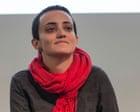
When Egyptian authorities fined Lina Attalah, the co-founder and editor-in-chief of Mada Masr, and moved to shut down the outlet's operations, casual observers saw just another press freedom headline. They missed the real story. This wasn't a sudden outburst of censorship. It was the culmination of a decade-long legal siege designed to make independent reporting financially and operationally impossible without ever needing to pass an explicit ban on journalism.
If you've followed Middle Eastern media over the last ten years, you know Mada Masr isn't just another website. Founded in 2013 after the closure of the English-language Egypt Independent, the Cairo-based newsroom became the single most reliable source for investigative reporting in the country. They broke stories on state corruption, military economics, and regional diplomacy that state-aligned outlets wouldn't touch with a ten-foot pole.
And that's exactly why the legal noose tightened around Lina Attalah.
The Licensing Trap Behind the Mada Masr Shutdown
Most people assume governments censor news simply by throwing reporters in jail or pulling plugs on servers. Egypt does plenty of both—the state has blocked Mada Masr's main domain inside the country since May 2017—but the sharpest weapon in Cairo's arsenal is actually administrative law.
Under Egypt's 2018 Press and Media Regulation Law (Law No. 180), every digital news outlet must obtain a license from the Supreme Council for Media Regulation (SCMR). Sounds standard on paper. In practice, it's a Catch-22 built specifically to strangle independent outlets.
Here is how the trap works:
- You apply for a license and pay hefty fees.
- The Supreme Council sits on your application for years without issuing an approval or a formal rejection.
- While you wait in legal limbo, the same council accuses you of operating a website without a license.
- Prosecutors then charge your editor-in-chief with running an unlicensed media platform and publishing false news.
Mada Masr played by the state's rules. They submitted their paperwork. They met the capital requirements. They waited. Instead of a license, Lina Attalah received summonses from state security prosecutors.
When a court fines Attalah and orders the shutdown of Mada Masr's website, it isn't enforcing neutral media standards. It's weaponizing a regulatory process that the government itself refuses to complete.
Why Lina Attalah Remains the Target
Lina Attalah isn't an anonymous blogger operating from exile in London or Istanbul. She's in Cairo. She shows up to court hearings. She puts her name on the masthead and takes direct legal responsibility for what her reporters publish.
That presence makes her uniquely threatening to an information apparatus built on intimidation. Over the years, Attalah has faced multiple arrests, interrogations, and criminal referrals. In 2020, police detained her outside Tora Prison while she was interviewing the mother of jailed activist Alaa Abd El-Fattah. Later, in 2022, prosecutors interrogated her and three Mada Masr journalists over a report detailing corruption allegations involving members of the Nation's Future Party, a political faction closely aligned with President Abdel Fattah el-Sisi.
Each case follows a predictable rhythm. A sensitive investigative piece drops. State-aligned media personalities launch coordinated smear campaigns on evening talk shows. Within days, the Public Prosecution opens an investigation into "spreading false news" or "harming national security."
By slapping Attalah with steep financial penalties and targeting the outlet's legal existence, authorities aim to raise the personal and financial cost of truth-telling until the newsroom simply collapses under its own weight.
How Mada Masr Survived Seven Years of Digital Blockades
You can't talk about this crackdown without understanding how Mada Masr stayed alive after 2017. When Egyptian telecom providers blocked their primary URL, traffic from inside Egypt didn't vanish. It adapted.
The newsroom pivoted hard into distributed journalism. If readers couldn't reach the main site without a VPN, Mada Masr brought the reporting directly to them. They built mirror sites that changed domains faster than censors could blacklist them. They turned email newsletters into full-length editorial products. They pushed complete articles onto Telegram channels, WhatsApp broadcasts, and social media threads.
Honestly, it changed how readers in the region consumed investigative news. People didn't browse a homepage anymore; they waited for the daily bulletin to land in their inbox.
That resilience embarrassed the censors. A blocked website is easy to ignore, yet Mada Masr's investigations into Gaza border politics, Sinai security operations, and Egypt's currency crisis continued to set the news agenda both inside Cairo and among foreign diplomats. When technical blocks failed to silence the newsroom, regulators escalated to direct judicial shutdowns and personal fines against Attalah.
What Press Freedom Groups Get Right and Wrong About This Case
Organizations like the Committee to Protect Journalists (CPJ), Reporters Without Borders (RSF), and Amnesty International routinely rank Egypt among the world's worst jailers of journalists. Their documentation of the charges against Attalah and the harassment of Mada Masr staff is rock-solid.
Where international coverage often falls short, though, is treating these incidents as isolated human rights abuses rather than an economic and political strategy.
Look at the broader Egyptian media ecosystem today. Over the past decade, entities linked to the state's intelligence apparatus—most notably United Media Services—have bought up almost every major private television network, newspaper, and radio station in the country. Independent voices weren't just silenced; they were replaced by a monolithic state-controlled conglomerate.
Mada Masr stood out because it refused to sell, refused to self-censor on red-line topics, and refused to shut down voluntarily.
At the same time, it's worth acknowledging the narrow tightrope the outlet walks. Critics from both sides occasionally clash with Mada Masr's editorial choices. Hardline state loyalists accuse the outlet of serving foreign agendas because it receives international media grants—a standard funding model for nonprofit journalism globally, though heavily stigmatized in Egyptian nationalist discourse. Meanwhile, some exiled opposition figures have argued the outlet sometimes pulls punches to protect staff still living in Cairo.
Both critiques miss the reality of operating a physical newsroom under authoritarian rule. Every single paragraph published by Mada Masr goes through rigorous legal and editorial vetting specifically because the reporters live under the jurisdiction of the courts fining them.
The Ripple Effect on Egyptian Journalism and Foreign Coverage
If you think the targeting of Lina Attalah only affects a small circle of Cairo intellectuals, look at how international newsrooms operate in the Middle East.
Foreign correspondents from The New York Times, Reuters, The Guardian, and the BBC rely heavily on local reporting to verify facts on the ground. Without Mada Masr's deep sourcing inside Egyptian ministries, courts, and border regions, international coverage of Egypt—and by extension, regional crises involving Gaza, Sudan, and the Red Sea—becomes thinner, slower, and far more reliant on official government press releases.
Inside Egypt, the message to young reporters is unmistakable. If the country's most respected, internationally recognized editor can be fined and have her outlet shuttered over licensing technicalities, what chance does a freelance journalist in Alexandria or Aswan have? Self-censorship becomes the default survival instinct.
How to Follow and Support Independent Reporting from Egypt
Censorship only succeeds when audiences stop looking for the work. Even with ongoing legal pressure and domain blocks inside Egypt, Mada Masr's journalism remains accessible to global readers and anyone using basic circumvention tools.
If you want to keep tracking accurate reporting out of Cairo without relying on state-approved narratives, take three concrete steps right now:
- Subscribe directly to off-platform channels. Follow Mada Masr's official Telegram channel and sign up for their Arabic or English email newsletters. Domain blocks break web links, whereas direct inbox delivery bypasses ISP filtering entirely.
- Verify mirror domains before sharing. Because censors constantly block active URLs, bookmark Mada Masr's verified social media accounts on X and Facebook, where editors post updated mirror links whenever a domain goes dark.
- Support press freedom legal defense funds. Organizations like the Committee to Protect Journalists and Media Defence provide direct legal representation and emergency grants to editors facing retaliatory fines and licensing prosecutions.
Read the investigations, share the primary reporting, and pay close attention whenever a government uses administrative paperwork to erase a newsroom.