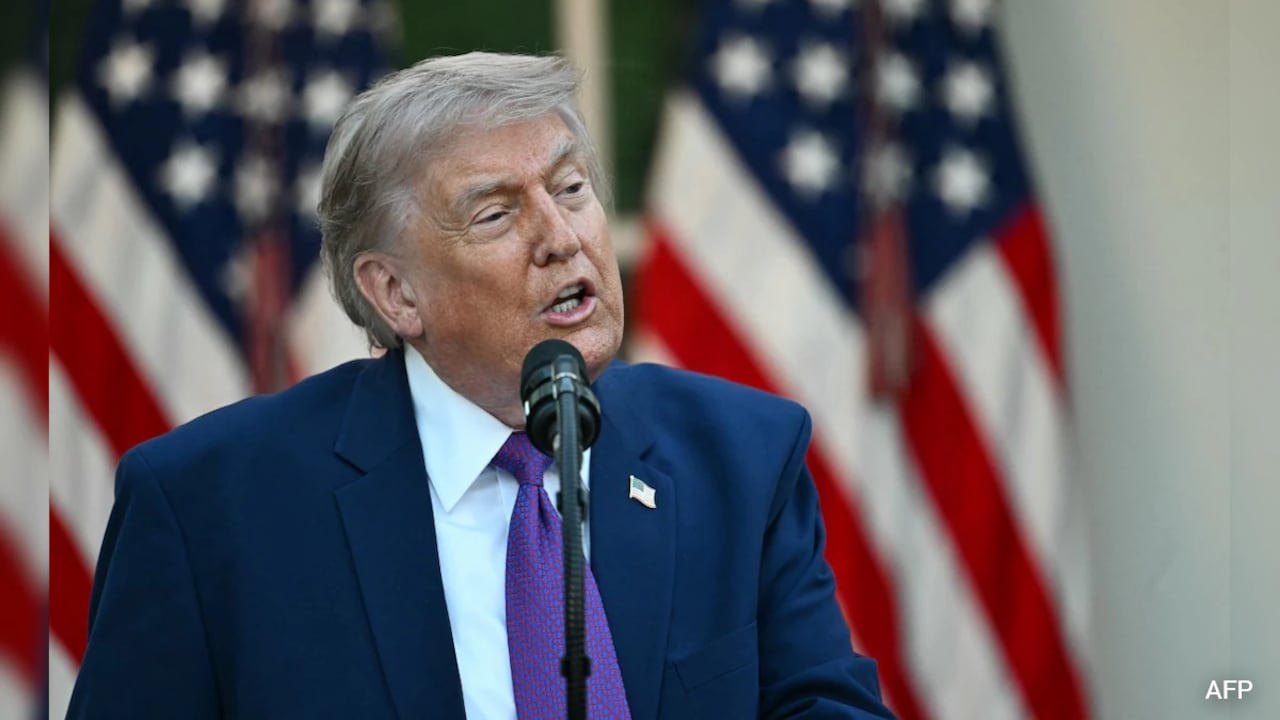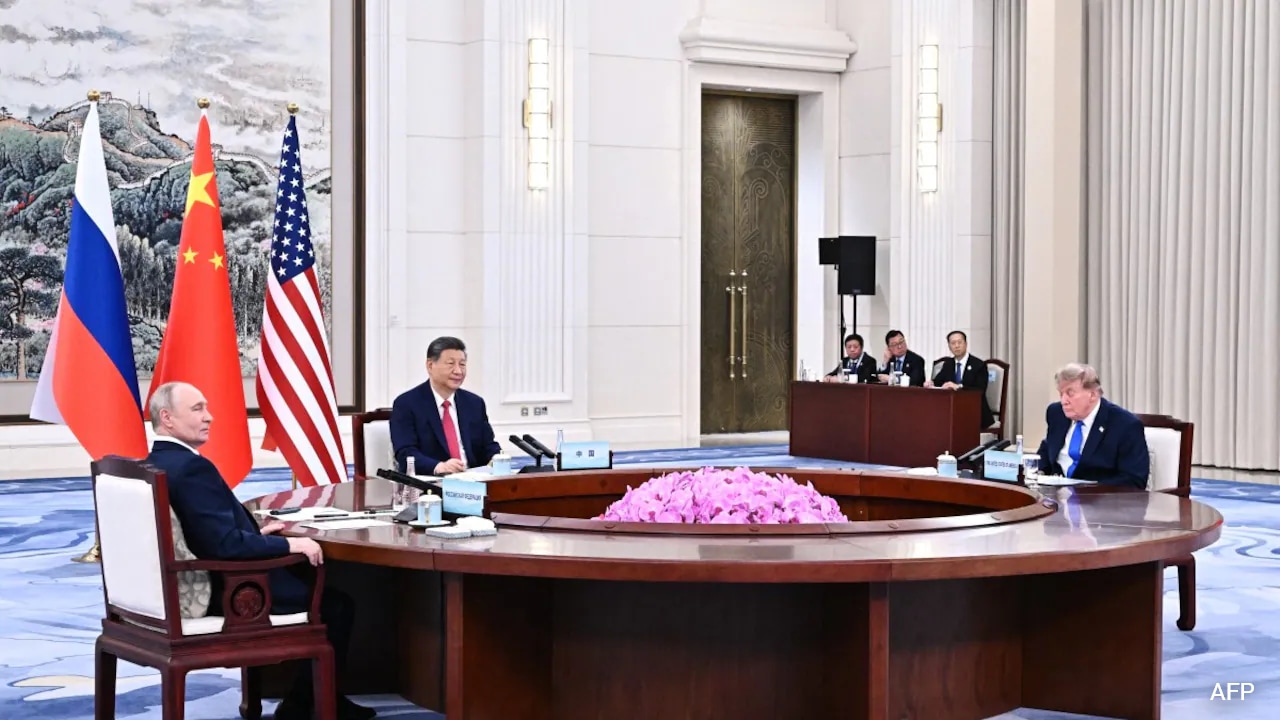
Coverage of a hypothetical or historic summit between Xi Jinping, Donald Trump, and Vladimir Putin debating the meaning of democracy often defaults to a familiar binary. Media narratives frequently frame such a gathering as a straightforward clash between Western liberal traditions and Eastern authoritarian models, or as a dramatic ideological showdown over the future of global governance. According to international relations scholars and political theorists, however, focusing strictly on the headline theater misses the deeper structural and semantic mechanics driving how these three leaders actually define and deploy the word "democracy."
In modern geopolitics, "democracy" is no longer a single, agreed-upon benchmark. Instead, political scientists observe that the term functions as a contested concept—a label that different systems claim to legitimize their authority, project stability, and critique rivals. Examining how Beijing, Washington, and Moscow approach the concept reveals distinct political philosophies, institutional incentives, and historical grievances that go far beyond a simple debate over ballot boxes.
The Semantic Battle Over a Contested Word
To understand why three leaders with vastly different governing systems would debate democracy, one must first look at how political theorists classify the term. In 1956, philosopher W.B. Gallie introduced the concept of "essentially contested concepts"—ideas like art, social justice, and democracy whose proper use inevitably involves endless disputes about their core definitions.
According to comparative politics researchers, the traditional Western model emphasizes procedural democracy. Rooted in Enlightenment liberalism and thinkers like Robert Dahl, this framework defines democracy through institutional mechanisms: free and fair multiparty elections, the rule of law, an independent judiciary, freedom of the press, and the protection of minority rights. In this view, the legitimacy of a government rests on the fairness of the process rather than any guaranteed policy outcome.
Conversely, political analysts note that non-Western and illiberal systems increasingly rely on substantive or output-based definitions of democracy. Rather than focusing on electoral competition, these models argue that a government is democratic if it delivers material prosperity, social stability, national security, and alignment with perceived popular will. When leaders from Washington, Beijing, and Moscow sit at the same table, they are often not debating the rules of the same game; they are arguing over which definition of the game is valid.
Beijing’s Framework of "Whole-Process People's Democracy"
In official state communications and white papers published by China’s State Council Information Office, the Chinese Communist Party (CCP) does not reject the label of democracy. Instead, it explicitly claims to practice a superior form of it, termed "whole-process people's democracy."
According to CCP policy documents and Chinese political theorists, Western electoral systems suffer from structural flaws: they reduce citizen participation to a single moment at the ballot box every few years, foster partisan gridlock, and allow wealthy interest groups to dominate campaign finance. Beijing’s counter-argument rests on several core pillars:
- Meritocratic Governance and Long-Term Planning: Chinese officials argue that selecting leaders through decades of administrative evaluation within the party produces competent technocrats capable of executing multi-decade infrastructure and poverty-alleviation plans without interruption from election cycles.
- Consultative Mechanisms: State media and official white papers highlight grassroots consultative bodies, public policy hearings, and the Chinese People's Political Consultative Conference (CPPCC) as avenues through which citizen feedback is integrated into governance.
- Outcome Legitimacy: Drawing on historical traditions and modern economic performance, Beijing asserts that lifting hundreds of millions of citizens out of poverty and maintaining domestic stability represent the ultimate fulfillment of the people's interests.
Critics, including Western diplomats and human rights organizations such as Freedom House, strongly dispute this characterization. They point out that without opposition parties, independent courts, freedom of speech, or competitive national elections, citizens cannot peacefully remove the ruling party from power. To these critics, calling a single-party state a democracy stretches the definition beyond recognition. Yet in diplomatic forums, Beijing continues to promote its model to developing nations as an alternative path to modernization that avoids Western political polarization.
Moscow’s Doctrine of "Sovereign Democracy"
Vladimir Putin’s approach to the concept of democracy is shaped by Russia’s post-Soviet trajectory during the 1990s—a decade associated in Russian public memory with economic collapse, oligarchic capture of state assets, and geopolitical weakness. During the mid-2000s, Kremlin strategist Vladislav Surkov formalized the Russian state's ideological response under the banner of "sovereign democracy."
According to analysts at institutions such as the Carnegie Endowment for International Peace and Chatham House, Moscow’s framework rests on two foundational arguments:
- National Sovereignty Precedes Liberal Institutions: Russian officials argue that a nation cannot be truly democratic if its domestic policies, media, or civil society are influenced by foreign powers or international non-governmental organizations. From the Kremlin’s perspective, Western promotion of democracy and support for color revolutions in post-Soviet states are instruments of geopolitical containment rather than genuine efforts to empower local populations.
- Centralized Authority as a Guarantor of Order: Putin has repeatedly stated in public addresses that Russia must develop democratic institutions suited to its own historical traditions and vast geography, rather than importing Western templates. In practice, this has meant prioritizing a strong executive branch—often referred to as the "power vertical"—to prevent state fragmentation and contain domestic political rivals.
Western political scientists classify Russia’s current system as competitive authoritarianism, a term coined by Steven Levitsky and Lucan Way to describe regimes where formal democratic institutions such as elections exist, but the playing field is heavily tilted in favor of incumbents through state media control, legal restrictions on opposition candidates, and administrative resources. In a summit setting, Putin’s rhetorical strategy typically involves highlighting perceived hypocrisies in Western democracies—pointing to domestic unrest, foreign military interventions, or legal battles involving political figures—to argue that no country holds a monopoly on moral authority.
Donald Trump and the Populist Challenge Within Western Democracy
Donald Trump brings a third, distinct perspective to the conversation—one that operates inside the American constitutional framework while challenging many of its established norms and institutions. Political scientists categorize Trump’s political style as right-wing populism, a movement that frames politics as a fundamental struggle between "the pure people" and "a corrupt elite."
According to scholars of populism such as Cas Mudde and Jan-Werner Müller, populist leaders within democracies view themselves as the sole authentic voice of the ordinary citizen. This perspective shapes how Trump approaches both domestic governance and foreign leaders:
- Skepticism of Institutional Gatekeepers: Trump has frequently criticized traditional pillars of liberal democracy—including legacy news organizations, career civil servants (often labeled the "deep state"), the judiciary, and intelligence agencies—arguing that unelected elites use these institutions to subvert the will of voters.
- Majoritarianism Over Pluralism: Populist governance emphasizes direct connection with supporters through mass rallies and social media, prioritizing decisive executive action and nationalist policies ("America First") over multilateral consensus and bureaucratic checks and balances.
- Transactional Diplomacy: Unlike traditional post-Cold War U.S. presidents who placed democracy promotion at the center of foreign policy, Trump has often expressed pragmatism regarding foreign authoritarian leaders, evaluating bilateral relationships primarily through trade balances, security burden-sharing, and personal rapport rather than ideological alignment.
Critics, including constitutional scholars and political opponents, warn that questioning electoral integrity, attacking judicial independence, and undermining trust in democratic institutions erode the guardrails that keep American democracy functioning. Supporters, however, argue that Trump’s movement represents a necessary democratic correction—returning power to working-class voters who felt ignored by a bipartisan establishment in Washington.
Comparing the Three Frameworks
When examining how these three leaders conceptualize governance, the differences extend across legitimacy, institutional design, and the role of the individual citizen.
| Dimension | Western Liberal / Populist (U.S. Context) | Whole-Process People's Democracy (China) | Sovereign Democracy (Russia) |
|---|---|---|---|
| Primary Source of Legitimacy | Competitive elections and popular mandate (with populist tension against institutional elites). | Economic performance, social stability, and party-led consultation. | State sovereignty, national security, and strong centralized leadership. |
| Role of Elections | Central mechanism for peaceful transfer of power. | Limited to local levels; national leadership selected via internal party meritocracy. | Regular national elections held, though heavily shaped by state media and incumbent advantages. |
| View of Checks and Balances | Constitutional separation of powers (though contested in populist rhetoric). | Viewed as inefficient obstacles that cause partisan paralysis. | Subordinated to executive unity to prevent state weakness. |
| Approach to Foreign Policy | Shifting between institutional alliances and bilateral, transactional nationalism. | Non-interference in internal affairs; promotion of multipolarity. | Resistance to Western hegemony; assertion of regional spheres of influence. |
Why the Debate Matters Beyond the Summit Room
A meeting between the leaders of the United States, China, and Russia to discuss democracy is not merely an academic exercise; it reflects a broader struggle over international norms in the twenty-first century.
For decades following the end of the Cold War, Francis Fukuyama’s thesis of the "end of history"—the idea that Western liberal democracy represented the final form of human government—dominated international thinking. Today, organizations such as the V-Dem Institute and Freedom House report nearly two decades of global democratic backsliding, alongside the rising economic and diplomatic influence of non-democratic powers.
In the Global South, governments facing pressing challenges related to infrastructure, poverty, and climate adaptation closely observe this ideological competition. When Beijing offers rapid infrastructure financing without political conditions, or when Moscow frames its foreign policy as resistance to Western interventionism, those messages resonate with leaders who view Western democracy promotion as inconsistent or intrusive. Meanwhile, internal polarization within the United States and Europe tests the resilience of traditional democratic institutions, making the debate over how democracies govern themselves just as urgent at home as it is abroad.
Ultimately, when Xi Jinping, Donald Trump, and Vladimir Putin discuss what democracy means, they are engaging in a struggle over political vocabulary. By redefining the term to fit their respective systems—whether as administrative competence, sovereign strength, or populist anti-elitism—each leader seeks to claim the moral authority that the word still carries worldwide, even as their governing models move further apart.