The air inside the secure briefing room smelled of stale coffee, ozone from secure terminals, and the quiet panic of people who believed they were holding the world together with duct tape and memoranda.
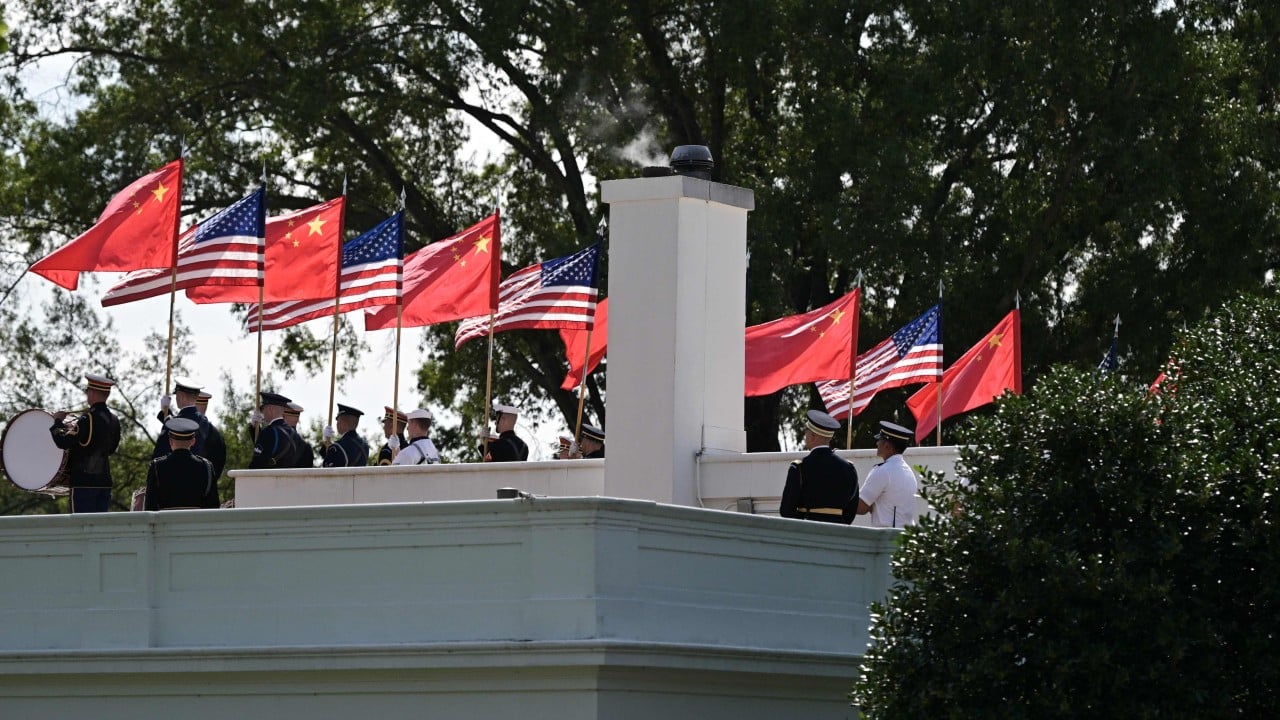
Arthur adjusted his glasses, staring down at a heavy stock invitation card embossed with gold foil. It bore the seal of the United States, and beneath it, details of a welcome ceremony designed to dazzle. State dinners, military honors, a thunderous twenty-one-gun salute, and the full architectural majesty of Washington deployed to greet a man whom Arthur and his ideological peers spent their waking hours characterizing as an existential threat.
Across the mahogany table, another strategist—a mid-level policy director whose desk was stacked with congressional reports on semiconductor supply chains—slammed a pen down.
"It is Stockholm syndrome with a red carpet," she muttered, her voice tight with disbelief. "After everything? After the trade wars, the intellectual property theft, the posturing in the South China Sea? We are rolling out the military bands."
This is the eternal theater of modern statecraft. When raw geopolitical rivalry collides with the personalist style of presidential diplomacy, friction is inevitable. To the architects of permanent confrontation—the ideological hawks whose worldview is forged in the fires of zero-sum competition—every velvet rope and state banquet looks like an unforced error. To them, diplomacy is not an art of persuasion, but a contest of wills where showing warmth is interpreted as spiritual disarmament.
Yet, beneath the grumbling of Capitol Hill corridors and the stern op-eds penned by former national security officials lies a deeper, more uncomfortable truth about power. Grand statecraft has never been about purity. It is a messy, transactional dance between adversaries who must look each other in the eye while holding knives behind their backs.
The Anatomy of the Iron Wall
To understand why a lavish welcome triggers such visceral anxiety among Washington insiders, one must first understand the mindset of the hawk.
In the classic geopolitical framework, nations do not have friends; they have interests. For decades, the consensus across both American political parties hardened into a singular conviction: the rise of an economically dominant, authoritarian competitor posed the single greatest structural challenge to the global order. To the hawks, the relationship was clear and unambiguous. It was a race for technological supremacy, military dominance, and ideological legitimacy. Every concession, every diplomatic nicety, and every public display of hospitality risked signaling fatigue.
Consider the historical precedent. For generations, Washington operated on the assumption that economic engagement would inevitably lead to political liberalization. When that hypothesis collapsed under the weight of tighter internal controls and assertive foreign policy shifts, the pendulum swung violently in the opposite direction. The new orthodoxy demanded unyielding pressure, export controls, diplomatic isolation, and a rhetorical posture that left zero room for ambiguity.
So when a sitting administration plans an opulent state visit—complete with all the pomp and circumstance that historic capitals reserve for their closest allies—it feels to these hardliners like a betrayal of the script. To them, optics are not merely superficial window dressing; they are the currency of global prestige. If a foreign leader is photographed walking down a colonnade alongside an American president smiling under a canopy of flags, millions of observers across the globe draw immediate conclusions about strength and weakness.
The hawks fear that the aesthetic of friendship masks a substantive retreat. They worry that the banquet table becomes a site of compromise where tariffs are quietly softened, human rights concerns are buried beneath polite toasts, and the sharp edge of American resolve is blunted by the warmth of personal flattery.
The Logic of the Showman
Yet, the perspective from the Oval Office operates on an entirely different frequency.
Personalist diplomacy views international relations not through the cold lens of institutional bureaucracy, but through the mechanics of interpersonal chemistry. Leaders who pride themselves on being master negotiators believe that protocol is malleable, and that formal structures often obstruct genuine breakthroughs.
In this worldview, a lavish welcome is not a sign of submission; it is a display of sovereign confidence. Only a superpower secure in its own might can afford to host an adversary with magnificent pageantry. It is an assertion of dominance wrapped in hospitality. By overwhelming a visiting dignitary with unmatched displays of wealth, military precision, and institutional grandeur, the host projects an aura of inescapable power.
Furthermore, this approach relies on the belief that personal relationships can alter calculations in moments of crisis. When two leaders have dined together, exchanged toasts, and navigated the delicate choreography of a state visit, a psychological anchor is established. That anchor does not eliminate rivalry, but it can introduce a measure of predictability. It creates a direct channel that bypasses the sluggish machinery of embassies and intelligence reports.
Critics argue that this is dangerously naive—that charismatic autocrats are immune to flattery and view hospitality merely as a tactical vulnerability to be exploited. But proponents counter that cold, unyielding hostility has its own limits. When two nuclear-armed leviathans stare each other down across a permanent ice shelf of suspicion, the risk of miscalculation skyrockets. Sometimes, stepping into the ballroom is the only way to avoid stumbling into the battlefield.
The Whispers in the West Wing
Behind the closed doors of the West Wing, the tension between these two philosophies creates a unique brand of institutional warfare.
Aides leak their misgivings to journalists. Speeches are meticulously parsed for any softening of phrasing. Every adjective in a joint communique becomes a battlefield where hawks fight to insert language regarding maritime security or economic coercion, while pragmatists push for cooperative phrasing on climate or trade stability.
Imagine the late-night drafting sessions. A thirty-year-old speechwriter, steeped in the sobering literature of grand strategy, deletes a line about "enduring friendship" and replaces it with "constructive competition." Down the hall, a senior advisor focused on short-term diplomatic leverage crosses it out and writes back: "mutual respect."
This tug-of-war is invisible to the public, yet it dictates the rhythm of global superpowers. It is a silent civil war fought with red ink and tracked changes in Microsoft Word. The hawks see themselves as the last guardians of strategic clarity, standing firm against the seductive pull of diplomatic pageantry. The diplomats see the hawks as rigid ideologues incapable of recognizing that strength without communication is just a recipe for catastrophe.
The irony is that both sides are usually half-right.
History shows that charm offensives rarely alter the foundational ambitions of a rising revisionist power. Beijing does not abandon its long-term strategic trajectory because of a well-cooked beef tenderloin at a state dinner. Territorial claims in the South China Sea are not redrawn because of a toast offered under crystal chandeliers. The structural competition is far too deep, driven by foundational differences in governance, economics, and national destiny.
At the same time, history also shows that diplomacy conducted entirely through megaphone denunciations and punitive tariffs tends to narrow the aperture of policy until war becomes the only remaining option.
The Unspoken Gamble
When the motorcade finally rolls down Pennsylvania Avenue, past the silent protests on one side and the carefully choreographed security cordons on the other, the real debate is not about the quality of the dinner or the grandeur of the military band.
It is a gamble on the nature of influence itself.
The administration rolling out the red carpet is betting that by treating an adversary as an honored guest, they alter the psychological dynamics of the encounter. They are betting that dignity can sometimes elicit restraint, and that engagement provides a platform for hard conversations that cannot happen via diplomatic cables.
The hawks watching from the gallery are betting on something darker, yet historically consistent: that power respects only power, and that every smile exchanged under the television cameras is a chip surrendered in a high-stakes poker game where the future of the century is being decided.
The motorcade stops. The door opens. Two men step out into the crisp Washington air, surrounded by flashing lights, glittering brass instruments, and the heavy weight of history looking over their shoulders.
In that single, fleeting moment before the handshakes begin and the speeches are read, the grand strategies of superpowers are reduced to something agonizingly human. Two individuals, burdened by the expectations of billions, face each other across a chasm of mutual distrust.
The cameras flash. The band strikes up a march. And across the globe, millions hold their breath, waiting to see which version of reality will win the day.


