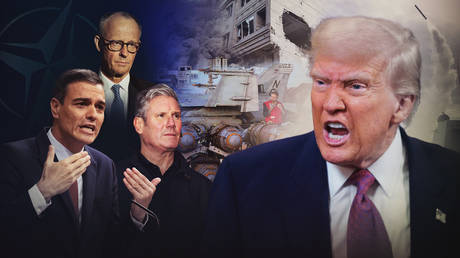
The air in the Situation Room doesn't move. It is a recycled, clinical chill that smells faintly of ozone and expensive stationery. On the screens, the Persian Gulf looks like a sheet of hammered turquoise, beautiful and deceptive. But thousands of miles away, in a rally hall filled with the electric hum of a crowd, Donald Trump is not looking at a map. He is looking at a microphone. He is looking at a legacy. When he speaks of Iran, he isn't just reciting a briefing memo; he is drawing a line in the dirt with the heel of a heavy boot.
The words are familiar. They are jagged. They carry the weight of "obliteration" and "total destruction." To a casual observer, it sounds like the usual high-stakes theater of international relations. To a family in a brick-and-mortar apartment in Tehran, or a young sailor on a destroyer in the Strait of Hormuz, those words are the sound of a clock ticking.
Modern diplomacy used to be a game of whispers. It was conducted in mahogany-paneled rooms by men in charcoal suits who weighed every syllable on a jeweler’s scale. That world is dead. In its place is a digital arena where a single statement can sent the price of crude oil into a fever dream and cause generals to reach for their secure lines before the applause has even faded. Trump’s latest threats against the Islamic Republic represent more than just a change in policy. They are a fundamental shift in how the world handles the threat of fire.
The Ghost in the Machine
Think of the relationship between Washington and Tehran as a pressure cooker with a rusted valve. For decades, the strategy was to let out just enough steam to prevent an explosion. You apply sanctions. You negotiate a deal. You watch the centrifuges spin through the grainy lens of a satellite. But Trump’s approach is different. He doesn't want to manage the steam. He wants to turn the heat so high that the metal itself begins to warp.
The core facts are blunt. Trump has made it clear that any move by Iran against American interests—whether it’s a proxy strike in Iraq or a technological leap toward a nuclear warhead—will be met with a response that isn't proportional. It will be absolute. This isn't the "strategic patience" of the past. It is a doctrine of overwhelming consequence.
But what does that look like on the ground? Consider a hypothetical shopkeeper in Isfahan named Abbas. He doesn't care about the intricacies of the JCPOA or the ballistic trajectories of a Fattah-1 missile. He cares that the price of eggs has tripled because the world is afraid to trade with his country. He cares that when he hears a loud noise in the street, his first instinct is no longer to check the traffic, but to look at the sky.
The human element is often lost in the "Standard Content" of news cycles. We talk about "assets" and "capabilities." We rarely talk about the collective breath held by eighty million people who are living inside a metaphorical target zone.
The Architecture of a Threat
Why now? The timing of these threats isn't accidental. Geopolitics is a game of perceived strength. When the United States signals that it is willing to bypass the traditional escalatory ladder and go straight to the top rung, it creates a vacuum of uncertainty.
Iran’s military strategy has long relied on the "gray zone." They use proxies. They use cyberattacks. They operate in the shadows where it’s hard to pin a smoking gun on a specific government official. By threatening total retaliation, Trump is attempting to illuminate those shadows. He is telling the leadership in Tehran that the "gray zone" has been painted red. If a drone hits a base, the response won't just hit the drone factory. It might hit the capital.
This is a gamble of staggering proportions.
The logic of deterrence relies on the other person believing you are crazy enough to follow through, but sane enough to be talked out of it. If the threats become too frequent, they turn into background noise. If they become too extreme, they leave the opponent with nothing to lose. When a cornered animal realizes there is no path of retreat, it stops looking for an exit and starts looking for a throat.
The Invisible Stakes
There is a quiet room in Virginia where analysts spend sixteen hours a day staring at heat signatures. They see the world in infrared. They see the movement of trucks, the fueling of ships, and the subtle shifts in the earth that suggest a new tunnel is being dug. For these people, a threat from the podium isn't a headline. It's a change in the data.
When the rhetoric ramps up, the "noise" in the Middle East changes. Communications go dark. Signal intelligence spikes. The invisible stakes are the thousands of tiny decisions made by mid-level commanders on both sides.
A nervous radar operator sees a flock of birds. Is it a drone?
A merchant ship veers slightly off course. Is it a kidnapping attempt?
In a world of "total destruction" threats, the margin for error vanishes. We aren't just talking about a war between two governments. We are talking about the potential for a mechanical failure or a human misunderstanding to trigger a sequence of events that no one—not even the man at the microphone—can stop.
The economic reality is the second front of this war. The "Maximum Pressure" campaign isn't just about stopping missiles. It’s about the slow, grinding halt of a nation’s heart.
- The rial collapses.
- The hospitals run out of specialized medicine.
- The middle class evaporates into the ether of poverty.
When we read that "Trump makes new threats," we should see the faces of the people who will pay the bill if those threats are realized. War is rarely a lightning strike. It is more often a slow-moving storm that everyone sees coming but no one knows how to outrun.
The Language of the Ultimatum
Language is a weapon. In the hands of a master of branding, it is used to devalue the enemy's currency of fear. By using words like "obliterate," Trump is attempting to make the Iranian leadership feel small. He is treating a regional superpower like a nuisance that can be swatted away.
But there is a historical ghost haunting this narrative.
Every leader who has ever threatened a total, final solution to a geopolitical problem has found that the "final" part is a lie. History is a messy, looping script. You can destroy a city, but you cannot destroy a grievance. You can sink a navy, but you cannot sink an ideology.
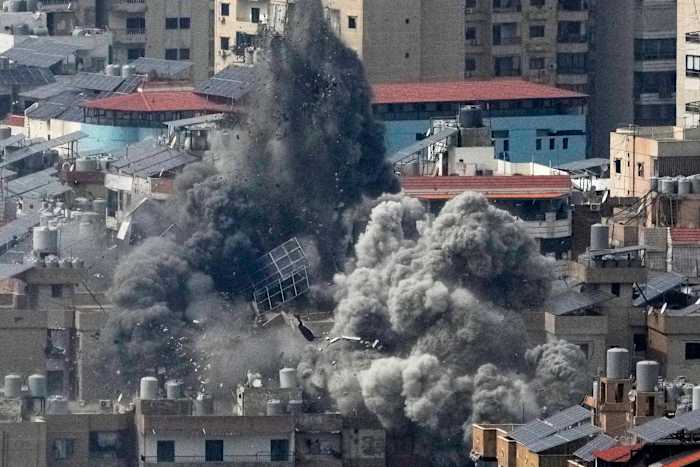
The danger of the new rhetoric is that it ignores the lessons of the last twenty years. We learned in Iraq that the "shock and awe" of the beginning is nothing compared to the "grind and bleed" of the aftermath. Iran is not Iraq. It is larger, more mountainous, and deeply integrated into the survival of its neighbors. A conflict there wouldn't be a fire in a room; it would be a fire in a forest.
The Echo in the Halls
Behind the headlines, there is a fracture in the global alliance. The world is watching the United States not just to see what it does, but to see if it still cares what anyone else thinks. Traditional allies in Europe hear these threats and feel a cold shiver. They are the ones within range. They are the ones who will deal with the refugee waves. They are the ones who still believe in the jeweler’s scale of diplomacy.
Trump’s threats are a message to them, too. He is signaling that the era of consensus is over. The "America First" doctrine means the commander-in-chief is the only one who gets to decide where the red lines are drawn.
It is a lonely way to lead.
It assumes that the world will always blink first. But what happens if the other side decides to close their eyes and charge?
The Persian Gulf remains still, for now. The turquoise water reflects the sun, hiding the mines and the submarines and the secrets beneath. The crowd at the rally cheers, the microphone is turned off, and the motorcade speeds away. But the words remain, hanging in the hot air of the desert, waiting for someone to make a move.
We live in a time where the distance between a sentence and a catastrophe is shorter than it has ever been. We are all passengers on a ship where the captain is daring the iceberg to get out of the way.
The sandstorm is coming. You can feel the grit in the air long before you see the wall of dust on the horizon.