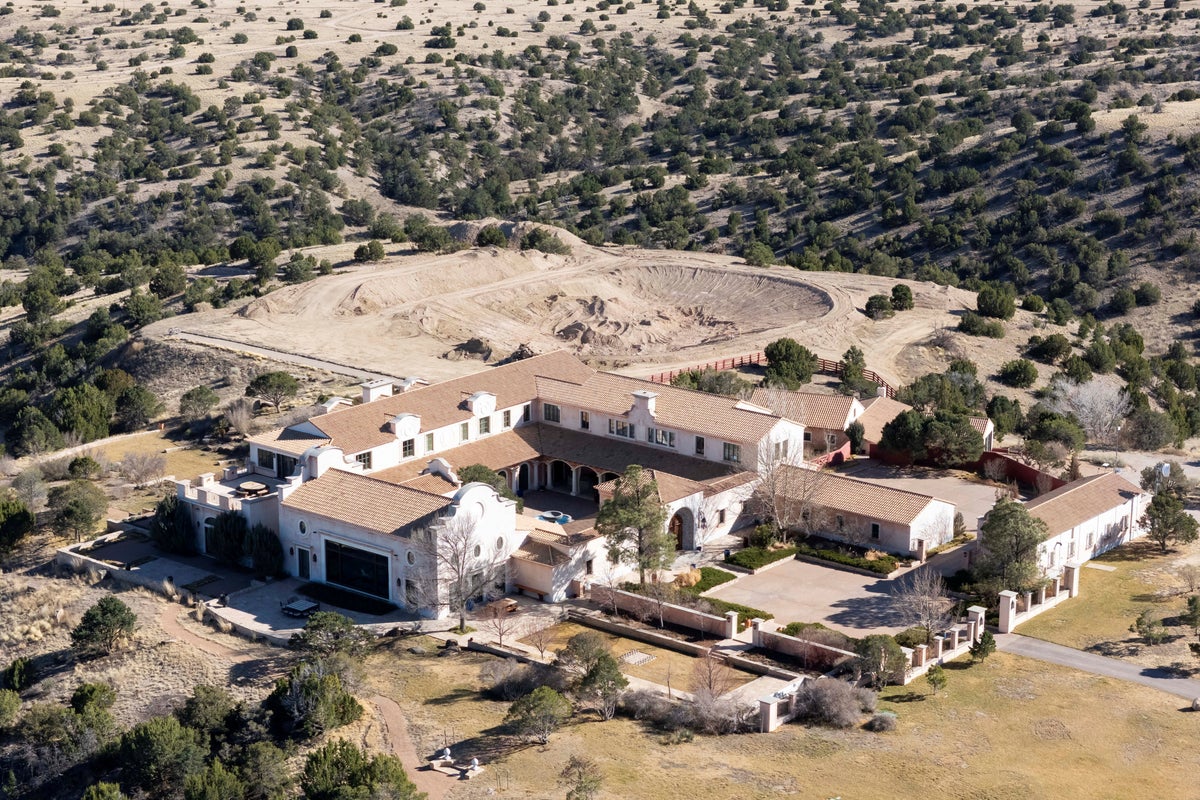
The high desert of New Mexico possesses a cruel kind of beauty. Under a vast, unblinking sky, the earth stretches out in variations of dust and stone, baking under a sun that exposes everything. Everything, that is, except what lies beneath the surface.
Thirty miles southeast of Santa Fe sits Zorro Ranch, a sprawling, luxury compound once owned by Jeffrey Epstein. For years, locals watched the private planes descend. They whispered about the high-profile guests—the politicians, the corporate titans, the cultural elite. And they wondered about the girls. They wondered what happened behind those heavy gates, out where the desert swallows sound whole.
Today, those whispers have turned into a legal war. New Mexico is trying to unearth the truth of what happened on its soil. But as the state’s attorney general, Raúl Torrez, reaches out for the evidence required to build a case, he finds himself staring at a different kind of barrier. Not a locked ranch gate, but a wall of black ink.
The United States Department of Justice is holding the keys, and right now, they are refusing to turn them.
The Phantom Investigation
To understand why a state attorney general is ready to sue the federal government, you have to look back to 2019. Imagine a local detective finding a footprints leading to a crime scene, only for a federal agent to step in, tap them on the shoulder, and say, "We’ve got this from here. Step aside."
That is precisely what happened to New Mexico’s former Attorney General, Hector Balderas.
When the Epstein scandal blew wide open, New Mexico moved to investigate the horrors allegedly committed at Zorro Ranch. But federal authorities intervened. They asked the state to pause its work, promising that the federal government would take the lead and coordinate the effort. Balderas, trusting the institutional weight of the FBI and federal prosecutors, stood down.
The feds never searched Zorro Ranch.
They abandoned the case without telling New Mexico. Internal FBI emails later revealed that some agents were deeply alarmed by the lack of a search warrant, yet leadership claimed they lacked probable cause—a claim Balderas later called "early signs of a cover-up." The federal government effectively put the state's justice system into a deep freeze, allowing time to pass, evidence to sit, and memories to fade.
Now, Raúl Torrez is trying to thaw the case. He inherited a stalled machine and a mountain of unanswered questions. But when he asked the Trump administration's Department of Justice for the unredacted files from that aborted federal investigation, he was met with a deafening, bureaucratic silence.
More than 130 days have passed since the state's initial request. Verbal promises of cooperation were made, but no actual records have arrived. Instead, Torrez has been handed heavily redacted documents—pages where names, dates, and crucial details are aggressively obscured by heavy black bars.
The DOJ insists it stands ready to assist. Torrez says that is a lie.
The Human Cost of Delay
This isn't an abstract battle over federalism or political grandstanding. The stakes are flesh and blood.
Consider a hypothetical survivor. Let’s call her Sarah. Sarah was teenagers when she was brought to Zorro Ranch. For years, she buried the trauma, trying to build a normal life while looking over her shoulder. When the state reopened its investigation, Sarah felt a terrifying spark of hope. Maybe, finally, someone would be held accountable. Maybe the powerful men who looked the other way—or participated—would face a courtroom.
But justice requires data. It requires names, flight logs, unredacted interviews, and internal memos.
"Every day that the USDOJ withholds these records, the foundation upon which a New Mexico prosecution could be built erodes," Torrez wrote in a blistering letter to the Justice Department.
Think about what happens as the clock ticks. Witnesses move away. They change their numbers. They become unreachable. Memories, already fragmented and strained by years of severe trauma, begin to lose their sharp edges. Physical evidence degrades. The documentary trail grows cold.
By stonewalling the state, the federal government isn’t just delaying a legal process; they are actively eroding the possibility of justice. They are telling the survivors that their trauma is secondary to bureaucratic self-preservation or political convenience.
The tension is amplified by the political context in Washington. President Trump signed the Epstein Files Transparency Act, which supposedly mandated the release of these records with minimal redactions. Yet, his own Department of Justice is ignoring the spirit—and arguably the letter—of that law when a local prosecutor comes knocking. The hypocrisy is a heavy, suffocating blanket over the entire investigation.
Breaking the Silence
New Mexico refuses to be gaslit.
The state’s lawmakers have formed a bipartisan "Epstein Truth Commission" to bypass the federal roadblocks. They are wielding subpoena power. They are looking into the network of powerful political figures who frequented the ranch, determined to name names regardless of party affiliation.
Simultaneously, the New Mexico Department of Justice is investigating horrifying allegations that go far beyond what has been previously reported, including claims that victims were killed and buried on public lands leased near the ranch.
Torrez has set a deadline: July 31. If the unredacted files are not handed over by then, the state is prepared to take the federal government to court.
It is an extraordinary standoff. A single state, standing on behalf of victims who have been ignored for decades, demanding that the most powerful law enforcement agency in the world stop hiding behind a sharpie.
The desert eventually uncovers what is buried. The wind shifts the sand. The sun cracks the earth. New Mexico is betting everything that the truth can survive the black ink of a federal cover-up, even if they have to tear it out of the hands of the Department of Justice itself.