The FDA’s Office of Prescription Drug Promotion (OPDP) operates as a high-friction filter against the asymmetric information present in pharmaceutical marketing, and its recent Untitled Letter to Novo Nordisk regarding the television advertisement for Rybelsus (oral semaglutide) exposes a systemic failure in risk-benefit communication. When a pharmaceutical entity decouples the presentation of efficacy from its required safety disclosures, it creates a "cognitive bypass" for the consumer. This regulatory friction is not merely a legal hurdle; it is a mechanism designed to prevent the market from mispricing the risk profile of high-demand metabolic interventions.
The Triad of Regulatory Non-Compliance
The FDA's critique of the "Sweet Success" advertisement rests on three structural failures in the presentation of drug information. Each failure represents a breach of the "Fair Balance" doctrine, which mandates that the risks of a drug be presented with comparable prominence, detail, and effectiveness as its benefits.
1. The Hierarchy of Risk Obfuscation
The advertisement utilized a visual and auditory hierarchy that prioritized lifestyle imagery—syncopated music and active patients—while relegating life-threatening risks to a fast-paced, background audio track. In clinical terms, semaglutide carries a Boxed Warning regarding thyroid C-cell tumors. This is the most serious warning a drug can carry. By overlaying this information with distracting visual stimuli, the advertisement engaged in "signal-to-noise" manipulation. The viewer's attention is a finite resource; by saturating the visual channel with positive outcomes, the cognitive load required to process the auditory risk warnings becomes prohibitively high.
2. Omission of Material Facts
Beyond the Boxed Warning, the FDA identified the omission of "Common Adverse Reactions." In the clinical trials for Rybelsus, gastrointestinal events were the primary driver of treatment discontinuation. Excluding these facts does more than mislead the consumer; it creates a false expectation of the "patient journey." When a patient is not primed for the high probability of nausea or vomiting, the likelihood of non-adherence increases, which in turn leads to poor clinical outcomes and wasted healthcare spend.
3. Misleading Claims of Efficacy
The advertisement's narrative arc suggested a level of "success" that exceeded the data reflected in the Prescribing Information (PI). In pharmaceutical communication, "efficacy" is a precisely defined statistical measure. When marketing materials use qualitative descriptors that outpace the quantitative p-values established in Phase III trials, they violate the scientific integrity of the drug’s approval.
The Economic and Clinical Consequences of Information Asymmetry
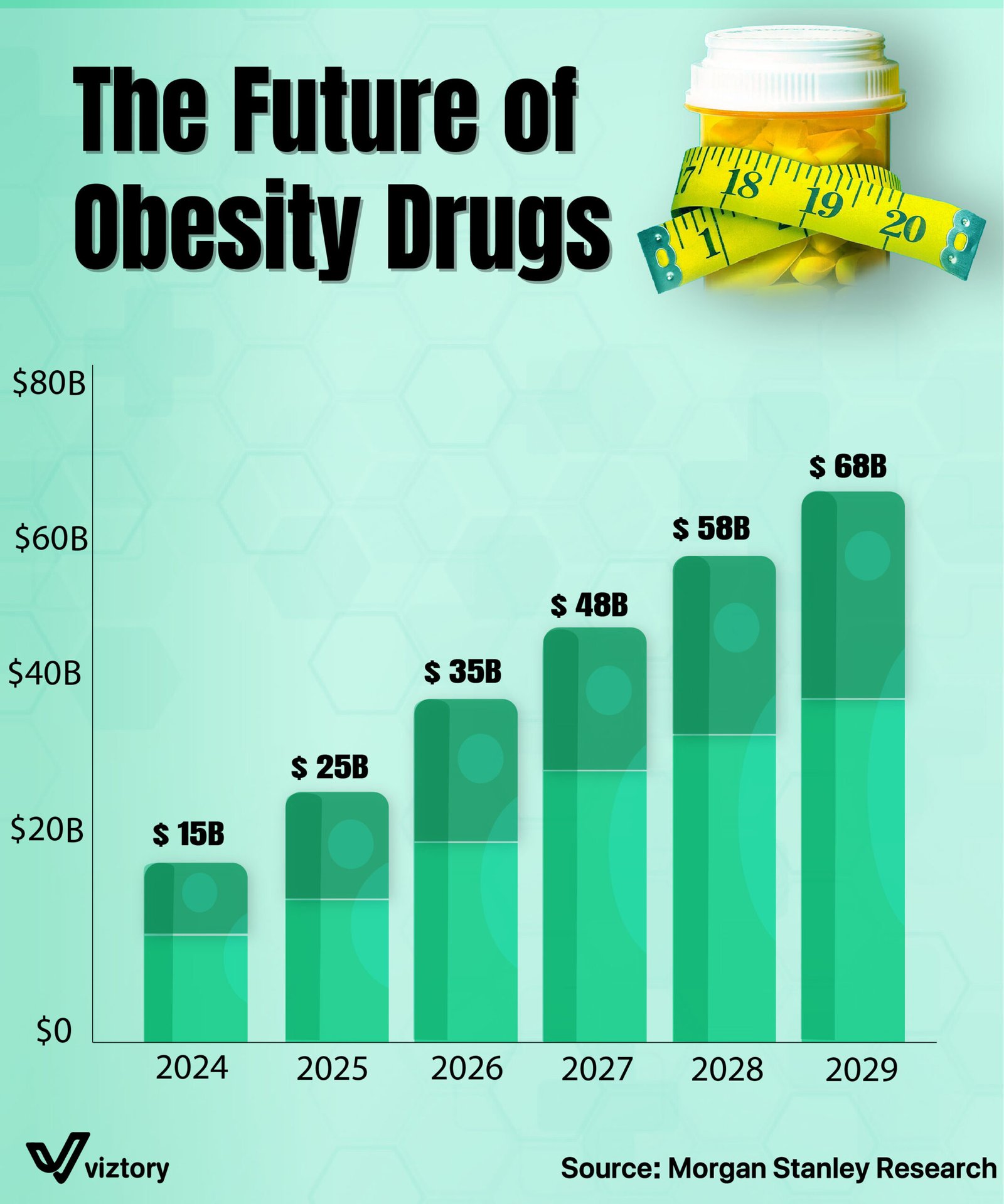
The GLP-1 (Glucagon-like peptide-1) receptor agonist market is currently defined by extreme demand elasticity and supply constraints. In such an environment, marketing serves as a primary driver of patient "pull-through." When that marketing is flawed, several downstream systemic shocks occur.
The Diagnostic Bottleneck
Misleading advertisements drive "self-diagnosis" where patients demand a specific brand name rather than a therapeutic class. This puts immense pressure on primary care physicians to act as gatekeepers. If the patient has been conditioned by an advertisement to ignore the risks of medullary thyroid carcinoma (MTC) or pancreatitis, the physician must spend a disproportionate amount of the consultation time "de-marketing" the drug to provide a realistic assessment.
Risk-Adjusted Value Erosion
The value of a therapeutic is calculated as the net benefit over the total cost, where "cost" includes the probability and severity of adverse events.
- Direct Costs: The price of the acquisition of the drug.
- Indirect Costs: Management of side effects, loss of productivity due to GI distress, and long-term monitoring for rare complications.
- Systemic Risk: The potential for a "black swan" event where a previously downplayed risk manifests in a large population, leading to mass litigation and regulatory withdrawal.
By minimizing the risk components of this equation in a 60-second spot, the manufacturer artificially inflates the perceived value of the product.
Structural Constraints of Oral Semaglutide Delivery
Understanding why Novo Nordisk might be aggressive in its marketing requires an analysis of the delivery mechanism of Rybelsus. Unlike its subcutaneous counterpart (Wegovy or Ozempic), Rybelsus is an oral tablet. This involves a complex co-formulation with SNAC (sodium salcaprozate) to facilitate absorption across the gastric mucosa.
The absorption window is notoriously narrow. Patients must take the medication on an empty stomach, with no more than four ounces of plain water, and wait 30 minutes before eating. The efficacy of the drug is highly dependent on strict adherence to this regimen. Marketing that emphasizes "ease of use" or "sweet success" without acknowledging the logistical rigidity of the dosing schedule risks creating a cohort of "low-responders" whose failure is due to administration errors rather than biological resistance.
The Regulatory Enforcement Ladder
The FDA’s issuance of an Untitled Letter is the first significant rung on the enforcement ladder. It is a "notice of violation" that requests the immediate cessation of the misleading materials.
- Untitled Letter: Notifies the firm of specific violations but does not carry the same weight as a Warning Letter. It is a "yellow card" in the regulatory match.
- Warning Letter: Issued if the firm fails to rectify the issues or if the violations are particularly egregious. This involves a formal timeline for corrective action and potential legal escalation.
- Injunction or Seizure: The final tier where the Department of Justice may intervene to stop the distribution of the product or seize existing stock.
For Novo Nordisk, the reputational risk often outweighs the immediate legal penalties. In the highly competitive landscape of obesity and type 2 diabetes treatments—where Eli Lilly’s Mounjaro and Zepbound provide fierce competition—any perceived breach of trust can shift the "prescriber preference" metric. Physicians are risk-averse; they rely on the integrity of the PI and the honesty of the manufacturer to make informed decisions for their patients.
The Behavioral Economics of "Fair Balance"
The fundamental challenge in pharmaceutical marketing is the "Precedence Effect." Human beings tend to remember the first and last things they see (primacy and recency effects) and are easily swayed by visual emotional cues over dry, technical text.
The FDA’s insistence on "comparable prominence" is an attempt to counteract these cognitive biases. If the "benefit" is shown via a vibrant, multi-colored montage of a grandfather playing with his grandchildren, the "risk" cannot be presented as a static block of small, gray text on a white background. To achieve true Fair Balance, the emotional "valence" of the risk presentation must match that of the benefit.
The Rybelsus ad failed this test by creating a "halo effect" around the drug, where the positive attributes were so bright they effectively blinded the consumer to the shadows of the adverse event profile.
Operational Adjustments for Pharmaceutical Entities
To avoid the "Untitled Letter" trap, firms must move beyond a "checklist" approach to compliance and adopt a "systems-thinking" model for creative review.
- Quantitative Visual Audits: Marketing teams should measure the screen time allotted to benefit claims versus risk disclosures. If the ratio exceeds 2:1, the risk of a regulatory "Fair Balance" citation increases exponentially.
- Cognitive Load Testing: Before airing, advertisements should be tested on focus groups to see if the participants can recall the Boxed Warning with the same clarity as the primary efficacy claim. Failure to recall the risk indicates a failure in communication design.
- The "Net Impression" Test: Regulators do not look at individual frames in isolation; they look at the "net impression" left on a consumer. If the net impression is one of a "risk-free" miracle cure, the advertisement is structurally flawed.
The shift toward GLP-1 dominance in the healthcare market has heightened the stakes. These are no longer niche products; they are becoming foundational elements of public health. As their reach expands, the tolerance for "misleading" marketing will compress. The FDA’s move against Novo Nordisk signals a tightening of the regulatory envelope, where the focus will shift from what is said to how it is perceived.
Pharmaceutical strategists must now treat "Risk Communication" not as a legal obligation to be minimized, but as a critical component of "Patient Education" that protects the long-term viability of the brand. The objective is not to sell a pill, but to manage a chronic condition—a process that requires a patient to be fully cognizant of the trade-offs involved in their treatment.
Any marketing campaign that fails to prepare the patient for the "worst-case" biological response essentially sabotages the physician-patient relationship. The strategic move is to pivot from "Sweet Success" to "Informed Management," ensuring that the brand is associated with transparency and clinical rigor rather than the superficiality of lifestyle branding. This transition is the only way to maintain market leadership in an era of increasing regulatory scrutiny and intensifying therapeutic competition.