Don't be fooled by the sudden burst of apparent leniency coming out of Caracas. When National Assembly President Jorge Rodríguez announced that Venezuela would release 300 prisoners, the announcement arrived dressed up as a major humanitarian gesture. The reality on the ground is a whole lot more cynical.
If you're tracking the staggering collapse and messy restructuring of Venezuelan power, you already know that nothing happens by accident. This week's mass release is a calculated political maneuver. It comes directly on the heels of immense international pressure, specifically blunt warnings from Washington. While families are understandably celebrating the return of their loved ones, this isn't a sudden pivot toward human rights. It's a strategic release valve.
Inside the Numbers of the Mass Release
The details dropped during a standard legislative session. Rodríguez, whose sister Delcy Rodríguez is serving as the interim leader following the dramatic U.S. ouster of Nicolás Maduro in January, laid out the timeline. The releases started on Monday and will wrap up by Friday.
The administration claims the selections are based entirely on health and age. They're highlighting the release of minors, citizens over the age of 70, and individuals with severe, documented medical conditions. According to the state, these people are getting special benefits that extend even beyond the controversial amnesty law passed in February.
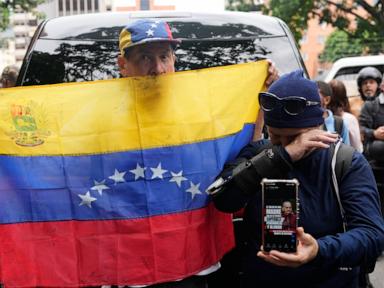
Look past the official press releases, and you see who is actually walking out the door. The first wave included 16-year-old Samanta Sofía Hernández Castillo, who spent six months in a care facility after her grandparents' house was raided. Local journalists noted she was essentially the last minor held on politically motivated grounds. Another face in the crowd was Merys Torres de Sequea, a 71-year-old woman whose son was handed a 24-year sentence for a failed maritime raid against the previous administration.
The list also includes three former police officers—Erasmo Bolívar, Héctor Rovaín, and Luis Molina. These men have been behind bars since 2003, serving maximum 30-year sentences linked to the brief, chaotic overthrow of Hugo Chávez way back in 2002.
The Invisible Hand of Washington
You can't talk about this move without talking about the intense pressure from the United States. Just days ago, Donald Trump openly bragged about his administration's ability to pull strings in Caracas, promising he would get every single remaining political prisoner out of the country.
The political shift inside Venezuela is impossible to ignore. Since the dramatic events of January 2026, the interim government has tried to project a image of reform to the outside world. They want the oil majors like Chevron and ExxonMobil to keep pumping capital into the economy. They want the sanctions to stay off.
So when Jorge Rodríguez stands up and says, "We are not asking anything of anyone, we simply want this gesture to be appreciated," don't buy it. This is a direct nod to Washington. The regime is trying to signal that it can be reasonable, hoping to buy itself a little breathing room while it consolidates power under the new interim structure.
What Human Rights Groups Say About the Opaque Process
If this was a true judicial reform, the process would be clear, open, and fair. It's none of those things. Organizations like Foro Penal and Human Rights Watch have been shouting from the rooftops about how messy and arbitrary this entire rollout has been.
Consider the massive gap in the actual data. The interim government claims that over 8,000 people have benefited from the February amnesty law, with hundreds getting out of jail and thousands more seeing their parole conditions wiped clean. Foro Penal paints a completely different picture. Their records show that only around 186 people have truly been freed under that specific amnesty framework.
The criteria for who gets out and who stays behind bars seems totally random. While a few high-profile elderly prisoners or minors are paroled for a quick public relations win, hundreds of others are explicitly blocked. Just a couple of months ago, a Caracas judge denied amnesty to five labor union workers who were locked up in 2022 simply for organizing public sector wage protests. They were slapped with generic "conspiracy" charges, and the court decided their cases didn't fit the arbitrary timeline of the new law.
The same thing happened to independent journalists and activists. They get trapped in a legal gray area—released from physical prison cells but forced to report to a judge every few weeks, effectively keeping them under the state's thumb.
The Danger of Remaining Behind Bars
For the hundreds of political detainees left behind, time is a luxury they don't have. The reality inside Venezuelan prisons remains horrific. Over 20 political prisoners have died in state custody over the last decade, and just weeks ago, the government quietly acknowledged the death of another detainee, Víctor Hugo Quero Navas, while in custody.
The regime still publicly denies that it holds anyone for political reasons, repeating the old line that these individuals are just common criminals. It's a semantic game that lets them keep a massive pool of human bargaining chips.
Next Steps for Monitoring the Situation
If you are analyzing the situation or trying to support advocacy groups, here is where you need to focus your attention right now:
- Track the local audits: Don't rely on state media announcements. Follow the daily roll calls updated by Foro Penal to see which names are actually validated as free.
- Watch the legal conditions: Check whether the individuals being released are receiving full, unconditional freedom or if they are being placed on restrictive parole that prevents them from speaking out or leaving the country.
- Monitor the oil sector response: Watch how international energy companies adjust their local operations over the coming weeks, as these humanitarian gestures are tightly bound to economic concessions and sanctions relief.
The release of 300 people is a lifeline for 300 families, and that matters immensely. But as a political indicator, it's a mirage. It's a calculated move designed to appease Washington and paint a thin veneer of reform over a system that is still deeply broken. Keep your eyes on the hundreds who didn't make the list.