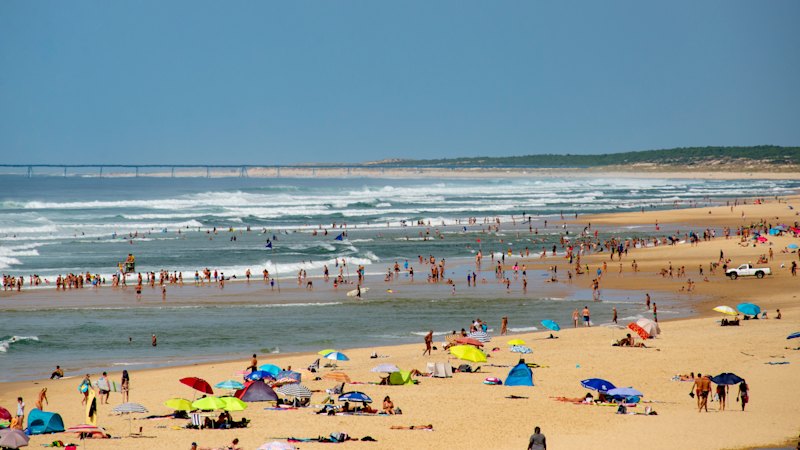
When rumors circulate that bales of cocaine lost at sea have washed onto a public coastline, hundreds of locals and tourists routinely descend on the sand, treating a felony narcotics dump like a weekend treasure hunt. This phenomenon happens repeatedly along major maritime smuggling corridors—most notably in Florida, the Caribbean, Central America, and parts of Western Europe—whenever rough weather or law enforcement interdictions force traffickers to jettison cargo overboard. While viral social media posts often frame these incidents as quirky coastal folklore, the reality on the sand involves severe legal jeopardy, immediate physical danger from high-purity narcotics, and the very real risk of crossing paths with organized criminal recovery crews.
The mechanics of how multi-million-dollar shipments end up tangled in seaweed are straightforward, even if the public reaction rarely is. Maritime smuggling relies heavily on go-fast boats, semi-submersibles, and commercial cargo vessels moving product north from South America. When Coast Guard cutters, maritime patrol aircraft, or naval task forces close in on a smuggling vessel, the crew faces a binary choice. They can be caught red-handed with tons of evidence on deck, guaranteeing decades in federal prison, or they can dump the waterproofed bundles into the ocean to buy time and destroy the prosecution's physical case.
Weather plays an equally destructive role in maritime logistics. Tropical storms, unexpected squalls, and shifting ocean currents routinely tear loose tethered drop-offs—known in the trade as dead drops—where smaller local boats are meant to retrieve packages anchored to buoys or submerged weights. Once a waterproofed bale breaks free from its mooring, it becomes subject to the Gulf Stream and coastal wind patterns, eventually making landfall on popular swimming beaches, rocky coves, and state parks.
The Anatomy of a Smuggling Bale and Why It Floats
To understand why these packages survive weeks in saltwater, you have to look at how cartels engineer their packaging. Traffickers do not toss loose powder into the ocean. They compress the narcotics into dense, brick-shaped kilograms, wrap them in multiple layers of industrial plastic, coat them in grease, mustard, or coffee grounds to confuse drug-sniffing dogs, and seal the entire bundle inside thick rubber tubing or heavy-duty burlap sacks.
Trapped air between the layers of plastic and rubber gives the heavy bricks positive buoyancy. A standard maritime drug bale typically contains between 20 and 30 individual one-kilogram bricks, weighing roughly 50 to 70 pounds in total. Because they sit low in the water, floating just beneath or right at the surface, they are virtually invisible to radar and difficult to spot from the air until wave action pushes them onto the shoreline.
Coastal residents who spend their mornings walking the tide line with metal detectors or trash bags are usually the first to find them. In regions where this happens with seasonal regularity, beachcombers have even coined slang terms for the haul, such as "square grouper." That lighthearted nickname masks the reality of what is inside those salt-crusted packages.
The Illusion of Easy Money on the Sand
The primary driver behind the beach crowds is simple human greed fueled by instant digital communication. In the past, a lone fisherman who stumbled across a floating bale might quietly decide what to do before anyone else knew it existed. Today, a single photo uploaded to a local community group, WhatsApp chat, or TikTok feed can draw hundreds of people to a specific stretch of coastline within an hour.
People show up with shovels, flashlights, and backpacks, convinced they are about to solve their financial problems in an afternoon. That fantasy collapses the moment you examine the actual logistics of moving illicit narcotics. Finding a brick of cocaine on the beach does not make you a millionaire; it makes you an amateur holding a felony-weight controlled substance with zero safe way to liquidate it.
Street value figures quoted in press releases are notoriously misleading. Law enforcement agencies calculate the value of a seizure by taking the wholesale weight and multiplying it by the highest possible retail price after the drug has been diluted and sold gram by gram on the street. An individual with no criminal network cannot sell a wholesale kilogram of uncut cocaine. Attempting to offload even a fraction of it means approaching mid-level distributors, undercover informants, or violent street gangs—all of whom have every incentive to simply rob or eliminate an inexperienced civilian rather than pay cash.
The Severe Legal Consequences of Beachcombing
Under federal and state laws in the United States, as well as comparable statutes across Europe and Latin America, there is no "finders keepers" defense for controlled substances. The moment you pick up a suspected drug package, put it in your trunk, and drive away, you have committed felony possession with intent to distribute.
Prosecutors do not need to prove you bought the drugs or intended to sell them to secure a conviction. Possession of a threshold weight—often as little as a few hundred grams, far less than a single standard one-kilogram brick—triggers mandatory minimum prison sentences in many jurisdictions.
- Federal trafficking thresholds: Carrying five kilograms or more of cocaine across state lines or within federal maritime jurisdiction carries a mandatory minimum sentence of 10 years in federal prison, stretching up to life depending on prior offenses.
- Asset forfeiture risks: If you load a recovered bale into your car or boat and get pulled over, law enforcement can seize your vehicle, vessel, and any cash on your person under civil asset forfeiture laws, often before you are even convicted of a crime.
- Conspiracy charges: Texting a friend to come help you carry or hide the packages instantly elevates the situation to a criminal conspiracy, exposing everyone involved to enhanced penalties.
Even taking a selfie with a washed-up bale before calling the police can create serious legal headaches, inviting intense scrutiny from detectives trying to determine whether you kept a portion of the shipment for yourself.
The Overlooked Physical and Criminal Dangers
Beyond the courtroom, digging through the sand for lost cartel cargo carries immediate physical hazards that rarely make the local news headlines. The first is chemical exposure. Smuggling bales battered against coral reefs, barnacles, and rocky jetties frequently rupture. Raw, uncut cocaine coming directly from South American processing labs routinely tests at 80 to 90 percent purity, compared to the heavily adulterated product sold on the street.
Handling a torn, waterlogged brick without protective gear allows the alkaloid to absorb directly through cuts, abrasions, or mucous membranes if a person touches their face. In recent years, the threat has grown even worse due to cross-contamination. Smuggling networks frequently transport multiple substances in the same compartments, meaning packages washing ashore can contain or be tainted with synthetic opioids like fentanyl. Inhaling airborne powder while tearing open a compromised wrapper on a windy beach can cause rapid respiratory depression and fatal overdose before paramedics can even reach the shoreline.
Then there is the human element that treasure hunters completely ignore. Cartels do not simply write off millions of dollars in lost inventory without trying to recover it. Modern smuggling packages are often fitted with waterproof GPS beacons, satellite trackers, or radio transponders sewn directly into the outer layers of rubber.
When a shipment goes missing in a storm or gets dumped during a chase, local recovery teams—often armed spotters operating on personal watercraft or small fishing boats—are dispatched to ping the trackers and retrieve the cargo. Showing up on a remote stretch of beach at night with a flashlight to hunt for missing bales puts civilians directly in the path of organized criminal operatives who view anyone touching that merchandise as a thief stealing from their syndicate.
Why Law Enforcement Struggles to Contain the Crowds
When word gets out that packages are washing ashore, local police departments and coastal patrol units face an immediate logistical nightmare. A shoreline can stretch for dozens of miles, and tides do not deposit debris neatly in one location. By the time a beachgoer calls 911 and patrol cars arrive at the nearest public access point, dozens of bystanders may already be combing the dunes.
Officers are forced to split their attention between securing the perimeter, recovering scattered bricks before the next high tide pulls them back out to sea, and detaining individuals caught trying to stuff packages into coolers or backpacks. Because the drugs are often spread across municipal, state, and federal jurisdictions—spanning city beaches, state parks, and federal waters—interagency coordination slows down the initial response.
Law enforcement agencies rely heavily on public compliance in these moments, yet issuing a press release warning residents to stay away almost always backfires. Announcing that millions of dollars in narcotics have washed onto a specific beach acts as a starting pistol for opportunistic treasure hunters from neighboring counties. As a result, investigators often try to conduct quiet sweeps using ATVs, drones, and K-9 units before the news leaks, though smartphone cameras make keeping a lid on a major wash-up nearly impossible.
The Protocol for Stumbling Across Suspicious Packages
If you are walking along a coastline and spot a heavily taped, rubber-wrapped, or barnacle-encrusted rectangular bundle sitting in the wrack line, the margin for error is zero. Treat the object with the exact same caution you would apply to unexploded military ordnance or a leaking barrel of industrial chemicals.
- Maintain distance immediately. Do not touch, kick, prod, or attempt to move the package out of the surf, and keep children and pets well away from the area.
- Never open or puncture the wrapping. Saltwater degradation weakens plastic and rubber, meaning even slight pressure can cause a compromised brick to burst and release toxic dust into the wind.
- Note your exact location. Drop a pin on your smartphone map, identify the nearest beach access marker, lifeguard tower, or landmark, and keep your distance while keeping the object in sight if it is safe to do so.
- Contact local authorities or the Coast Guard. Call 911 or notify marine patrol directly so hazardous materials teams and narcotics investigators can secure the site safely.
Leaving the scene after making the report is usually the smartest move, especially if a crowd begins to gather or if the area is isolated. Let armed professionals with protective gear handle the recovery, because nothing buried in that seaweed is worth a decade in a federal penitentiary or a fatal encounter in the dunes.