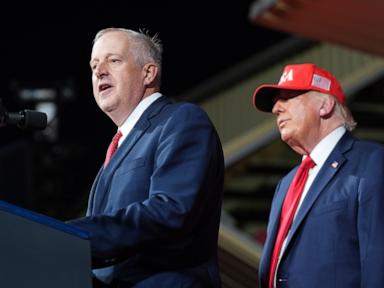
Campaign trail promises are rarely subtle, but President Donald Trump's midterm pitch took a massive leap when he vowed to hand out a five thousand dollar cash dividend to every adult citizen. The catch? Republicans need to retain control of both chambers of Congress to make it happen. Yet, if you listen closely to the down-ballot candidates fighting to keep their seats, you will notice something loud and clear: complete silence.
When politicians turn down a chance to talk about handing out cash, you know the policy is radioactive behind closed doors. While Trump has doubled down on the proposal during rallies from Texas to North Carolina, GOP nominees running in tight congressional districts are keeping their distance. Smart campaign strategists know that promising a check worth more than a trillion dollars invites tough questions about inflation, ballooning national debt, and basic math that suburban swing voters care about. You might also find this connected story interesting: The Arctic Gamble Behind the Washington Copenhagen Greenland Security Pact.
The Arithmetic Problem Behind the Pitch
Trump framed the proposed payout as a corporate-style cash distribution to national shareholders, suggesting that tariff revenues and economic growth could foot the bill. Economists and fiscal conservatives immediately pointed out the glaring discrepancy. With roughly 240 million adult citizens in the United States, a flat five thousand dollar payout translates to a staggering price tag of roughly one point two trillion dollars.
For Republican candidates who spent years campaigning against federal spending, ballooning deficits, and policies that stoke inflation, endorsing a trillion-dollar cash injection is a trap. Independent analysts and mainstream economists warn that dropping that much capital directly into consumer hands could reignite inflationary pressures at a time when voters are already exhausted by high grocery and fuel prices. As extensively documented in latest articles by USA Today, the results are significant.
House Speaker Mike Johnson acknowledged that any such measure would face heavy hurdles and require formal congressional approval, despite Trump's assertion that executive action or existing funds might suffice. That reality check leaves local candidates in an awkward spot. They want Trump's base fired up and heading to the polls, but they do not want to defend a policy that fiscal hawks view as reckless.
Divergent Strategies on the Campaign Trail
The contrast on the ground reveals a fractured party messaging machine. In safe Republican districts or among staunch loyalists, the pledge plays exceptionally well. Voters who trust Trump's economic intuition view the proposal as a bold giveback from a system that rarely rewards ordinary taxpayers. For these voters, it represents tangible proof that the administration is fighting for them against entrenched federal bureaucracy.
In competitive battleground districts, however, candidates are taking a different route. Incumbents and challengers alike prefer to keep the focus squarely on local issues, border security, and traditional tax cuts rather than a polarizing dividend that gives opponents an easy talking point. When pressed by reporters, many choose to dodge the topic entirely, focusing instead on the broader economic landscape and cost-of-living concerns without tying their political fortunes to an unvetted payout.
A few exceptions exist, of course. Representative Derrick Van Orden in Wisconsin openly praised the concept, and a handful of lawmakers have expressed willingness to look at the legislative framework if the numbers pan out. But these voices are outliers in a broader strategy of calculated omission.
The Political Calculus of Big Promises
Elections are won and lost in the margins, and midterm cycles notoriously punish the party in power if voters feel the pinch of inflation and international instability. Proposing a massive cash handout is an attention-grabbing strategy designed to dominate news cycles and mobilize low-propensity voters.
Yet, when the cameras turn off and the town halls begin, local candidates have to answer to constituents who understand that money printed or redistributed at that scale usually comes with hidden costs. The silence from Republican nominees isn't an accident. It is a survival tactic. They are happy to let the top of the ticket throw out the big ideas, as long as they do not have to explain how to pay for them.



