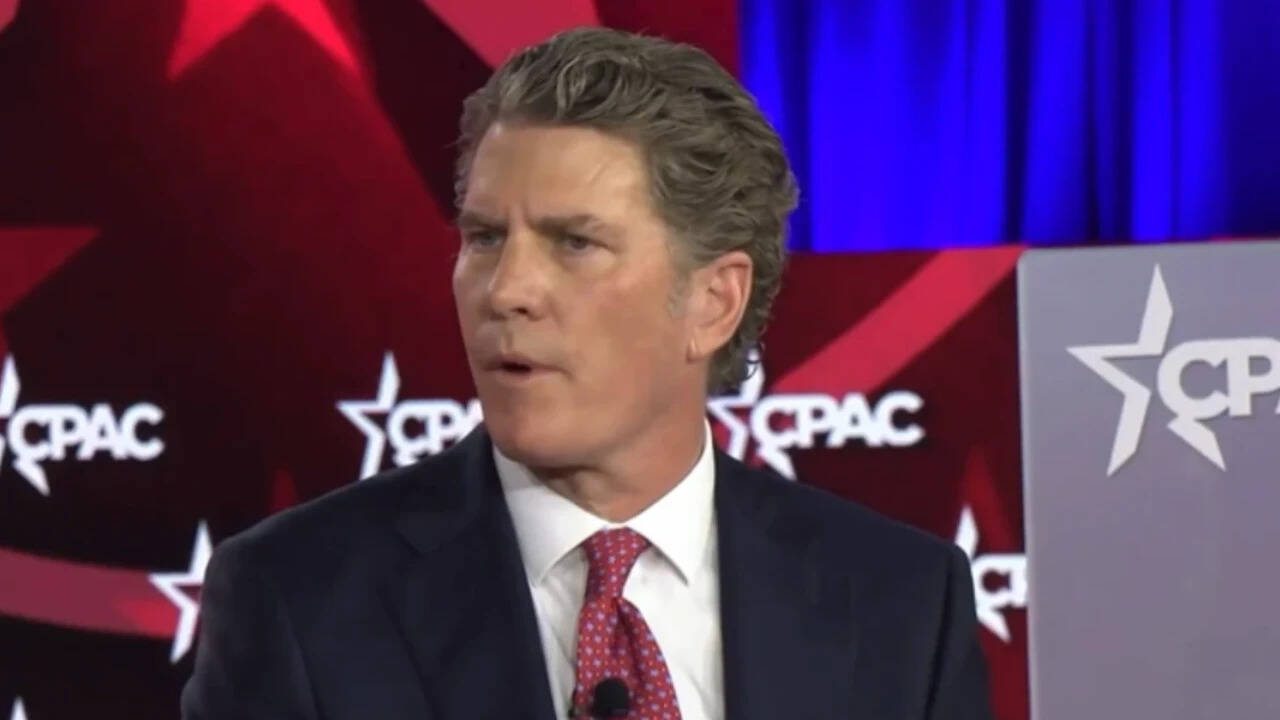
The expulsion of former Tarrant County Republican chair and Texas Railroad Commission candidate Bo French from Fort Worth’s River Crest Country Club demonstrates a precise threshold in institutional governance: private elite networks absorb private moral infractions while aggressively liquidating public reputational liabilities. When an individual’s public political signaling threatens the collective social license and brand equity of a private institution, the governing board treats membership revocation as a standard risk-mitigation transaction rather than an ideological judgment.
The Mechanics of Private Institutional Governance
Private membership organizations—ranging from historic country clubs to corporate boards—operate on an implicit contract of mutual reputational protection. Unlike public democratic institutions bound by First Amendment constraints and due process standards, private clubs enforce bylaws designed to preserve internal cohesion, asset valuation, and external standing. Learn more on a connected subject: this related article.
In November 2026, River Crest Country Club’s nine-member board voted to terminate French’s membership after he refused an earlier September request to resign. The board’s formal communication cited the protection of the club’s reputation and general welfare. French’s public defense attempted to reframe the dispute around internal hypocrisy, alleging that other members had engaged in extramarital affairs without facing expulsion.
This defense misdiagnoses the risk matrix used by private governing boards. Institutional risk is not weighed on an abstract scale of personal morality; it is calculated based on externalized negative externalities. More analysis by Reuters Business explores similar perspectives on the subject.
- Private Transgressions (Low Externalized Cost): Personal conduct violations—such as infidelity among members—remain contained within interpersonal networks. Unless such behavior triggers criminal litigation or public media coverage tied directly to the institution's name, it generates zero market friction for the club.
- Public Brand Contamination (High Externalized Cost): Viral public controversies create immediate association risk. In September 2026, French published a post on X featuring a photograph of South Asian students celebrating a University of Texas at Austin football victory over Ohio State, accompanied by the caption: "I heard UT graduation this year looked like this. I didn't believe it. The problem is now obviously far worse than anyone imagined".
Once national media outlets, bipartisan political figures, and local stakeholders link a member's viral controversy to a specific private institution, the club absorbs uncompensated reputational damage. Corporate sponsors, prospective members, and civic partners evaluate the institution based on the conduct it tolerates. Expulsion becomes the rational mechanism to sever the association and restore equilibrium.
The Collision of Asymmetric Political Signaling and Elite Networks
Modern populist political strategy relies on high-variance, polarizing rhetoric to capture algorithmic attention and consolidate base support. In digital ecosystems, outrage functions as an attention subsidy, lowering customer acquisition costs for political candidates.
However, the incentive structures of digital political campaigning are structurally incompatible with the incentive structures of legacy civic institutions.
- Digital Political Incentives: Reward maximalist rhetoric, out-group framing, and refusal to apologize. Doubling down signals authenticity to an online audience and generates earned media.
- Legacy Institutional Incentives: Reward discretion, coalition maintenance, and de-escalation. High-net-worth networks depend on stability and cross-sector relationships—particularly in industries like Texas oil and gas, which rely on global talent pipelines and international capital.
French’s broader campaign platform targeted the H-1B visa program and foreign-born students, framing demographic shifts at public universities as an existential threat to native Texans. When confronted by the River Crest board, French maintained that his remarks were mischaracterized and intended to highlight alleged fraud within the H-1B visa system, claiming without substantiated evidence that up to 90 percent of certain applicant groups utilized fraudulent documentation.
From an operational standpoint, conflating American university students of South Asian descent with visa fraud exposes a fatal flaw in strategic communication. In an empirical environment, policy critiques regarding immigration enforcement or visa allocation mechanisms require verifiable data, statutory specificity, and precise targeting. When a political actor substitutes sweeping demographic generalizations for policy analysis, the resulting backlash encompasses domestic citizens, business leaders, and allied political figures alike.
Quantitative and Electoral Feedback Loops
The market feedback on this communication strategy extended beyond private club governance into electoral performance. Political capital operates under supply-and-demand constraints; alienating moderate coalition partners and major economic stakeholders erodes the vote share required to win statewide office.
During the 2026 cycle, French’s rhetoric drew immediate condemnation from within his own party, including prominent Texas Republicans such as U.S. Senator John Cornyn and Lieutenant Governor Dan Patrick. By November 3, 2026, the electoral cost of this isolation became quantifiable: French lost the general election for the Texas Railroad Commission to Democratic candidate Jon Rosenthal by roughly 677,000 votes.
This sequence illustrates a compounding failure across three distinct arenas:
- Intra-Party Coalition Fracture: Public repudiation by senior party leadership strips a candidate of institutional fundraising networks and endorsement credibility.
- Electoral Rejection: Losing a statewide race in a traditionally Republican-leaning jurisdiction by a margin exceeding half a million votes demonstrates that maximalist identity rhetoric fails to clear the median voter threshold.
- Social Capital Liquidation: Following the electoral defeat, the November 19 expulsion from River Crest Country Club removed access to a primary venue for private business networking and informal political deal-making.
French attributed the club's actions in part to political retaliation orchestrated by Lieutenant Governor Dan Patrick. Even if political rivals amplified the controversy behind the scenes, that amplification only succeeded because the underlying public statements provided an indefensible vulnerability. In strategic risk management, attributing an institutional failure to an adversary's exploitation of a self-inflicted error does not alter the operational outcome.
Limitations of Reputational Containment Strategies
Boards and executive committees executing member expulsions or executive terminations face distinct constraints. Removing a controversial figure resolves immediate brand contamination, yet the mechanism carries secondary risks that leadership must manage.
- The Streisand Effect and Martyrdom Framing: A quiet resignation preserves institutional discretion. When a targeted member refuses to resign and forces a formal expulsion vote—subsequently publishing the board's letters and their own defense statements on social media—the institution inadvertently generates a second wave of publicity. The expelled individual converts institutional sanction into currency for a populist narrative, framing the loss of elite privileges as proof of ideological courage.
- Precedent and Selective Enforcement Claims: Every formal expulsion establishes an unwritten precedent. If a board intervenes in one member’s public political speech, stakeholders will inevitably scrutinize the board's inaction regarding other members' legal disputes, regulatory violations, or public controversies. Inconsistent enforcement erodes internal trust among the remaining membership.
- Inability to Control Downstream Narratives: Private bylaws govern membership status, not public discourse. Once an expulsion occurs, the institution loses all structural mechanisms to influence how the former member characterizes the board's motives or internal deliberations.
The Strategic Play for Institutional Boards and Public Figures
For governing boards managing high-profile members, the optimal containment protocol requires decisive front-loaded action combined with strict procedural neutrality. Boards must establish explicit conduct clauses tied directly to objective external liabilities—such as sustained national media controversy or demonstrable harm to institutional asset value—rather than subjective moral standards. When a threshold is breached, offering a brief, non-negotiable window for private resignation minimizes public friction; if refused, the board must execute the termination swiftly through a single, factual statement referencing bylaw compliance, refusing all subsequent engagement in public debate.
For political actors and executives operating across both digital media and legacy institutions, strategic survival depends on strict message discipline and domain separation. Policy arguments concerning labor markets, visa compliance, or higher education admissions must be anchored in verifiable statutory data and economic metrics rather than demographic generalizations. Deploying uncalibrated, viral identity rhetoric in public forums permanently impairs the institutional trust required to govern, build durable coalitions, and retain access to high-value professional networks.
To see the local news coverage detailing the timeline of events and statements surrounding the club's decision, watch Bo French, Failed Texas Republican Behind Anti-India Posts, Kicked Out Of Elite Club.