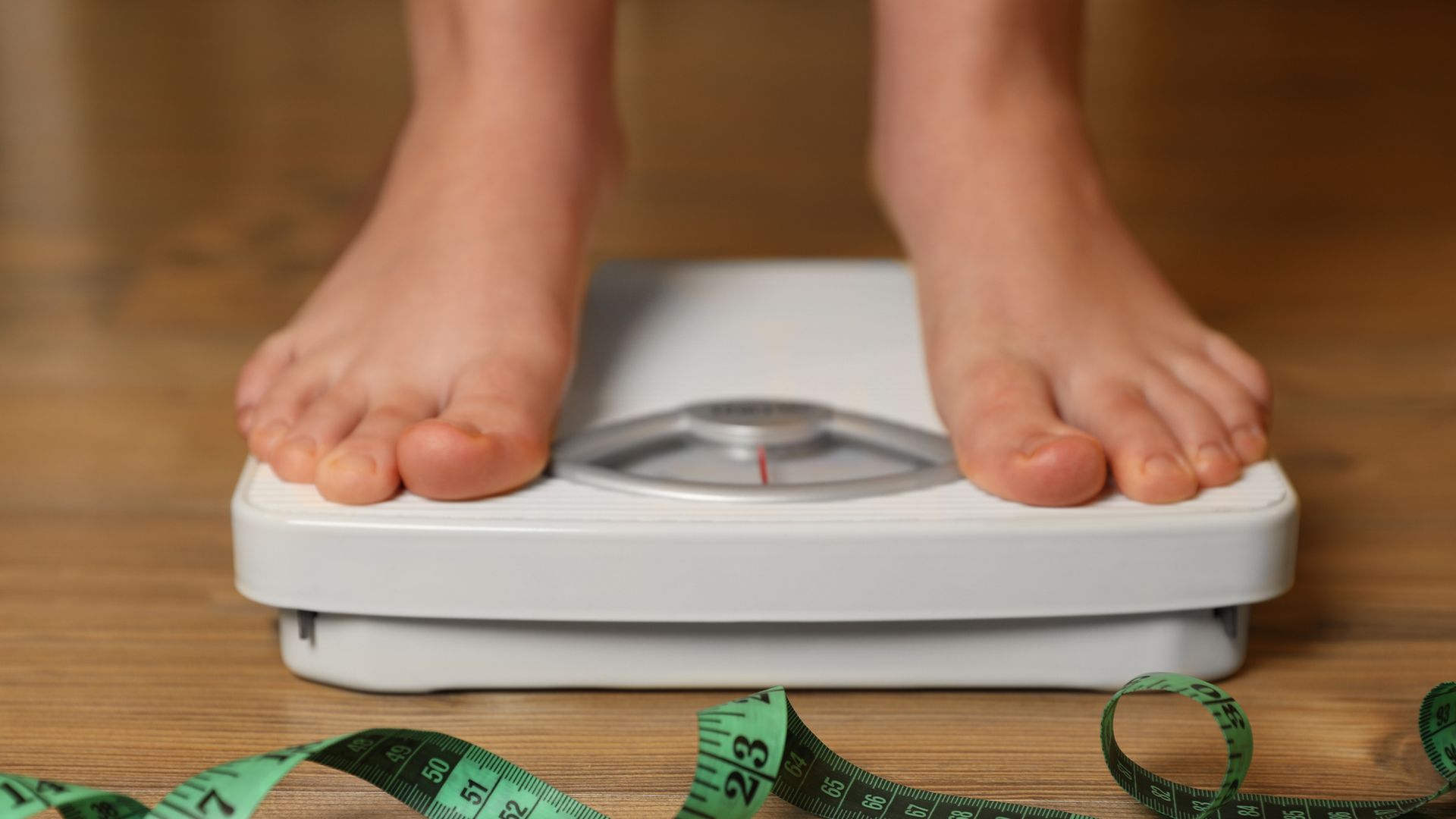
Your doctor probably uses a 190-year-old math formula to decide if you're healthy. That formula is Body Mass Index, and according to recent UK research, it's getting millions of people completely wrong.
I've spent years watching people stress over a single number on a clinic chart. Someone walks into an appointment feeling strong, sleeping well, and eating decent food, only to leave with an "overweight" or "obese" label slapped onto their medical record. On the flip side, plenty of people with a "normal" score walk out thinking they're safe when their metabolic health is quietly tanking. Researchers across the UK have been digging into large-scale population data—including cohorts like the UK Biobank—and the numbers are hard to ignore. Millions of adults in Britain are either falsely flagged as high-risk or falsely reassured that everything is fine.
Why Body Mass Index Fails So Many People
Adolphe Quetelet invented the formula in the 1830s. He wasn't a doctor, and he wasn't trying to measure individual health. He was a Belgian mathematician and astronomer looking for the statistical "average man" using measurements taken almost exclusively from white European men.
Fast-forward to today, and the National Health Service (NHS) and healthcare systems worldwide still rely on dividing your weight in kilograms by your height in meters squared. It's fast. It costs nothing. And it's dangerously blunt.
The math can't tell the difference between a kilogram of dense skeletal muscle and a kilogram of visceral fat wrapped around your liver. Think about that for a second. Two people stand side by side at the exact same height and weight. One lifts weights four times a week and has low internal fat. The other sits at a desk for ten hours a day, smokes, and carries excess fat around their midsection. On paper, their Body Mass Index is identical. In reality, their health risks are worlds apart.
The Hidden Danger of Normal Weight Obesity
When UK researchers cross-referenced standard BMI scores against actual body fat percentages, waist-to-height ratios, and metabolic markers like blood pressure and cholesterol, a massive blind spot showed up. Millions of British adults fall into what clinicians call "normal weight obesity."
You look slim in clothes. Your BMI sits comfortably between 18.5 and 24.9. Your GP glances at the screen and moves on. Yet underneath the surface, you have low muscle mass and high levels of visceral fat. Because BMI gives you a passing grade, nobody checks your blood sugar or liver enzymes until symptoms show up years later.
The Flip Side for Athletes and Older Adults
Then you have the false positives. Anyone who carries significant muscle mass gets penalized by the scale. Rugby players, powerlifters, and even regular gym-goers routinely land in the "overweight" or "obese" brackets despite having low body fat and stellar cardiovascular fitness.
Older adults run into a different problem altogether. As we age, we naturally lose muscle mass—a process called sarcopenia—and bone density drops. An older person's weight might stay completely steady on the bathroom scale, keeping their BMI in the "healthy" zone, while their actual body composition shifts toward higher fat and weaker muscles. Meanwhile, carrying a few extra pounds later in life can actually offer a protective buffer during illness or hospital stays, something standard BMI cutoffs completely ignore.
How Ethnicity Breaks the Standard UK Cutoffs
One of the biggest takeaways from UK public health research involves ethnic diversity. Because Quetelet built his equation around white Europeans, the standard thresholds—25 for overweight, 30 for obesity—don't translate cleanly across different populations.
Researchers studying South Asian, Black, Chinese, and Middle Eastern communities in the UK found that metabolic risks like type 2 diabetes and heart disease show up at much lower BMI numbers than they do in white Europeans. Someone of South Asian heritage with a BMI of 23.5 can carry the exact same diabetes risk as a white European with a BMI of 30.
The National Institute for Health and Care Excellence (NICE) eventually updated its UK guidelines to reflect this reality. They lowered the action thresholds by 2.5 points for people from South Asian, Chinese, other Asian, Middle Eastern, Black African, or African-Caribbean family backgrounds. Even with those adjustments on paper, awareness among everyday patients—and even busy clinics—still lags behind. Millions of people have spent decades looking at charts designed for someone else's genetics.
What UK Guidelines Are Shifting Toward Instead
If BMI is so flawed, why haven't doctors thrown it in the trash? Simple. When you're studying ten million people at a population level, BMI is cheap, quick, and still correlates loosely with disease risk at the extreme ends. If someone has a BMI of 42, you don't need a complex scan to know their joints and heart are under heavy strain.
The problem happens in the massive gray zone between 22 and 32, where most of the UK adult population actually lives. That's where misclassification runs rampant.
To fix this, NICE updated its guidance in recent years to push a much simpler, smarter metric alongside BMI—the waist-to-height ratio.
Why Waist-to-Height Ratio Beats the Scale
You don't need a calculator for this one. Grab a piece of string, measure your height, and fold it in half. If that folded string fits comfortably around your waist, you're likely in a healthy range. In clinical terms, your waist measurement should be less than half your height.
Here's why researchers love it so much:
- It targets the fat that actually hurts you. Subcutaneous fat—the stuff you can pinch under your skin on your arms or thighs—is mostly harmless. Visceral fat stored deep inside your abdominal cavity pumps out inflammatory chemicals and messes with insulin sensitivity. Waist circumference tracks visceral fat far better than total body weight ever could.
- It works across sexes and ethnicities. Unlike raw waist circumference cutoffs (which have to be adjusted separately for men, women, and different ethnic groups), keeping your waist under half your height holds up remarkably well across diverse populations.
- Muscle doesn't skew the result. Adding ten pounds of muscle to your legs and back won't suddenly expand your waistline into the danger zone.
In the UK studies re-evaluating population data, switching from BMI alone to waist-to-height ratio reclassified huge swaths of adults. People who were previously told they were healthy suddenly showed clear central adiposity risks, while muscular individuals classified as "overweight" moved cleanly into the low-risk group.
The Real Cost of Getting Misclassified
This isn't just an academic debate over charts and decimals. When millions of people get put in the wrong bucket, real-world consequences follow.
First, healthcare resources get misallocated. In the NHS, BMI cutoffs frequently act as gatekeepers. Your score can determine whether you qualify for fertility treatments, certain joint replacement surgeries, weight-management medications, or specialized referrals. If a rigid cutoff blocks someone from getting a hip replacement when their actual metabolic health and muscle mass are solid, that's a system failure.
Second, false reassurance delays early intervention. Imagine a 44-year-old office worker in Birmingham with a BMI of 24. He feels sluggish after meals, carries a noticeable spare tire around his middle, and rarely exercises. Because his BMI stays under 25, he assumes he's fine and skips routine blood pressure or HbA1c checks. By the time prediabetes turns into full-blown type 2 diabetes, he's lost years of easy prevention.
Third, the psychological toll is brutal. Labeling healthy, active people as "obese" fuels weight stigma, triggers disordered eating habits, and makes patients avoid the doctor altogether. Nobody wants to walk into an appointment for an ear infection only to get lectured about a math equation from 1832.
Better Ways to Measure Your Actual Health Right Now
You don't have to wait for your local clinic to overhaul its computer system. If you want an honest picture of where your health stands today, stop treating BMI as the final verdict and look at a combination of practical markers instead.
- Measure your waist-to-height ratio properly. Stand up straight, breathe out normally, and wrap a soft tape measure around your bare midsection halfway between the bottom of your ribs and the top of your hip bones (usually right around your belly button). Don't suck your stomach in. Divide your waist measurement by your height in the same units. Aim for under 0.5. Between 0.5 and 0.59 signals increased health risks, and 0.6 or above points to high risk.
- Check your metabolic blood work. A number on a tape measure still doesn't show what's happening inside your bloodstream. Ask your GP for a basic metabolic panel covering HbA1c (your three-month average blood sugar), fasting triglycerides, HDL cholesterol, and blood pressure. Someone with a high BMI and pristine blood work is in a completely different category than someone with a normal BMI and elevated triglycerides.
- Test your functional strength and fitness. Can you carry heavy groceries up a flight of stairs without gasping for air? How fast does your heart rate recover two minutes after brisk exercise? Grip strength and cardiovascular fitness predict longevity far more reliably than weight-for-height ratios ever will.
- Use DEXA or bioelectrical impedance only for trends. If you want exact body fat and lean muscle numbers, a DEXA scan gives the gold standard, while smart scales offer rough estimates. Just remember that hydration levels swing smart-scale readings wildly from morning to night, so watch the multi-month trend rather than daily fluctuations.
Body Mass Index isn't going to disappear overnight because healthcare bureaucracies love simple numbers. Treat it as a rough screening tool, nothing more. Pull out a tape measure, check your waist against your height, look at your actual blood markers, and judge your health by how your body functions rather than what an outdated 19th-century formula says you weigh.