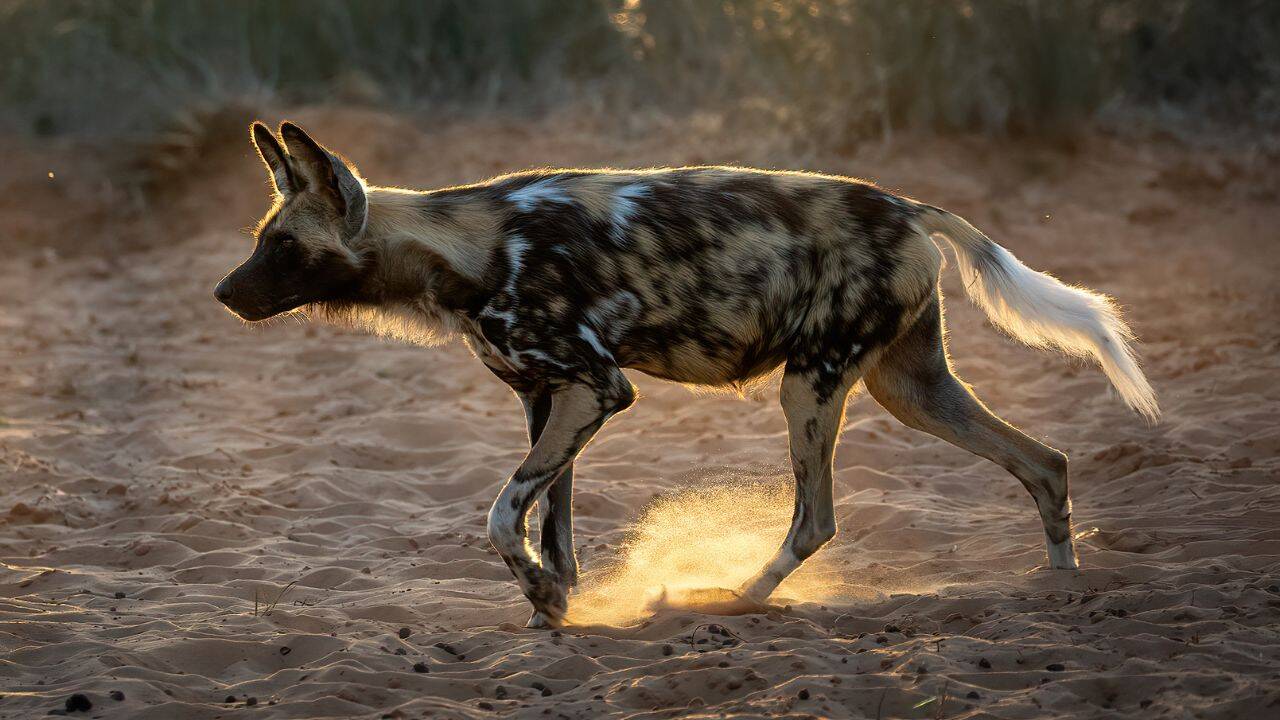
Ecosystem restoration is fundamentally an exercise in structural reassembly rather than passive preservation. When a keystone predator is extirpated from a habitat, the systemic consequences cascade downward through every trophic level, altering herbivore behavior, vegetation density, and nutrient cycling. The return of twenty African wild dogs to a protected national park in Zimbabwe after a multi-decade absence represents a calculated attempt to reverse a top-down trophic collapse. Understanding the viability of this intervention requires abandoning romantic conservation narratives and examining the mechanics of carnivore reintroduction through the lenses of population viability analysis, home range economics, and anthropogenic edge effects.
The Ecological Deficit of Predator Removal
The removal of Lycaon pictus, commonly known as the African wild dog, from a landscape creates a vacuum in the apex carnivore guild. Unlike lions or leopards, which rely on stealth and ambush, African wild dogs are obligate coursers. Their hunting strategy depends on sustained high-speed pursuit over open terrain, selecting primarily for vulnerable prey within impala and medium-sized antelope populations.
When this predation pressure vanishes, secondary effects emerge across the ecosystem:
- Mesopredator Release: Populations of smaller carnivores, such as jackals and baboons, expand unchecked in the absence of dominant competitor-predators, increasing predation pressure on ground-nesting birds and smaller fauna.
- Herbivore Stagnation: Without the continuous culling of weak or diseased stock, ungulate populations alter grazing pressure patterns. Herbivores tend to over-utilize preferred riparian zones rather than remaining vigilant in open, high-risk habitats.
- Vegetation Suppression: Concentrated herbivore browsing prevents the regeneration of woody vegetation along watercourses, which in turn degrades habitat complexity for amphibians, reptiles, and avian species.
Reintroducing a pack of twenty individuals is not merely an addition of biomass; it is the reactivation of a missing feedback loop. However, the success of this reactivation is governed by strict spatial and demographic thresholds.
Population Viability and the Allee Effect
A cohort of twenty animals represents a fragile demographic base. In mammalian carnivores, population persistence depends on cooperative breeding systems and pack cohesion. African wild dogs operate under a strict dominance hierarchy where typically only the alpha pair reproduces, while subordinate pack members contribute to pup rearing and provisioning.
Small reintroduction groups face severe operational risks governed by the Allee effect—where individual fitness declines as population density drops below a critical threshold.
[Initial Cohort: 20 Individuals]
       │
       ├──> Demographic Stochasticity (Skewed Sex Ratios)
       ├──> Disease Vulnerability (Rabies / Canine Distemper)
       └──> Home Range Friction (Boundary Collisions)
If disease vectors such as domestic dog pathogens enter the park, a single epizootic event can eradicate fifty percent of the founder population within weeks. Furthermore, genetic drift in small, isolated populations reduces long-term adaptability. The logistical challenge for conservation managers is not the initial release event, but mitigating post-release dispersal. Wild dogs have extraordinarily large home ranges relative to their body mass, often exceeding several hundred square kilometers per pack. When released into a fenced or bounded reserve, their natural impulse to disperse frequently brings them into direct conflict with surrounding land uses.
Spatial Economics and Edge Effects
The primary vector of mortality for reintroduced carnivores is anthropogenic rather than natural. National parks rarely exist as pristine ecological islands; they are bounded by agricultural zones, cattle ranches, and rural communities. This creates a high-tension interface known as the park edge.
African wild dogs are particularly vulnerable to edge-related mortality due to their wide-ranging movement patterns. Unlike resident lions that may patrol predictable territories, wild dogs cross property boundaries in pursuit of migratory prey. This spatial behavior exposes them to three primary failure modes:
- Snares: Poachers setting wire snares for bushmeat indiscriminately capture large carnivores, resulting in severe trauma or mortality.
- Retaliatory Killing: Livestock depredation outside protected boundaries triggers immediate lethal control measures by pastoralists.
- Road Collisions: High-speed transit across infrastructure corridors bisecting wildlife areas presents a persistent mechanical hazard.
Mitigating these variables requires shifting the operational focus from internal habitat management to buffer zone governance. Fencing strategies alone are insufficient for wide-ranging coursers; success depends on community-based livestock management systems, rapid-response de-snaring patrols, and satellite telemetry monitoring to intercept packs before they breach high-risk boundaries.
Systemic Metrics for Long-Term Trajectory
Assessing the efficacy of the Zimbabwe reintroduction cannot rely on short-term survival metrics or public relations milestones. A functional evaluation framework must measure systemic recovery across multiple temporal scales.
In the short term, success is defined by pack stabilization, successful denning, and a localized shift in ungulate vigilance behavior. If impala herds begin utilizing open plains more frequently—signifying the restoration of predation risk landscapes—the behavioral ecology of the park is responding as predicted.
In the medium term, demographic self-sustainability requires natural recruitment rates to outpace adult mortality without supplemental translocations. The emergence of dispersing sub-adults forming new satellite packs indicates that the carrying capacity of the core habitat is being tested and utilized.
The ultimate benchmark of restoration is not the mere presence of the species, but the functional redundancy of the guild. When African wild dogs, lions, and leopards coexist within a shared trophic matrix, regulating herbivore populations and driving structural heterogeneity across the landscape, the historical ecosystem deficit is officially closed. The current reintroduction in Zimbabwe is an empirical test of whether fragmented African landscapes can still support large-scale ecological engineering.