A three-week-old calf on a ranch in Zavala County, Texas, recently developed an infestation on its belly. When the rancher looked closer at the raw, foul-smelling wound, the movement inside confirmed a nightmare that American cattlemen haven't faced in generations. The U.S. Department of Agriculture (USDA) confirmed it on June 3, 2026. The New World screwworm is back on American soil.
Two days later, a second case popped up in another young calf just five miles away. This isn't a minor agricultural nuisance. It's a full-blown biological emergency.
The New World screwworm (Cochliomyia hominivorax) is a horrific parasite. While regular blowfly maggots only eat dead, decaying tissue, screwworm larvae burrow directly into the living flesh of warm-blooded animals. They eat their hosts alive. If you've ever smelled an active screwworm wound, you never forget it. It's a distinct, sickening odor of rotting livestock mixed with a chemical-like discharge. Left untreated, the larvae cause massive tissue destruction, secondary infections, and a painful death within days.
If you're wondering how a pest eradicated from the U.S. sixty years ago suddenly re-appeared in Texas, the answer lies in the quiet collapse of a thin biological barrier thousands of miles away.
The Broken Shield at the Darién Gap
For nearly twenty years, the American cattle industry relied on a single facility in Pacora, Panama, to keep this parasite out of North America. This facility is run by the Panama-United States Commission for the Eradication and Prevention of Screwworm (COPEG).
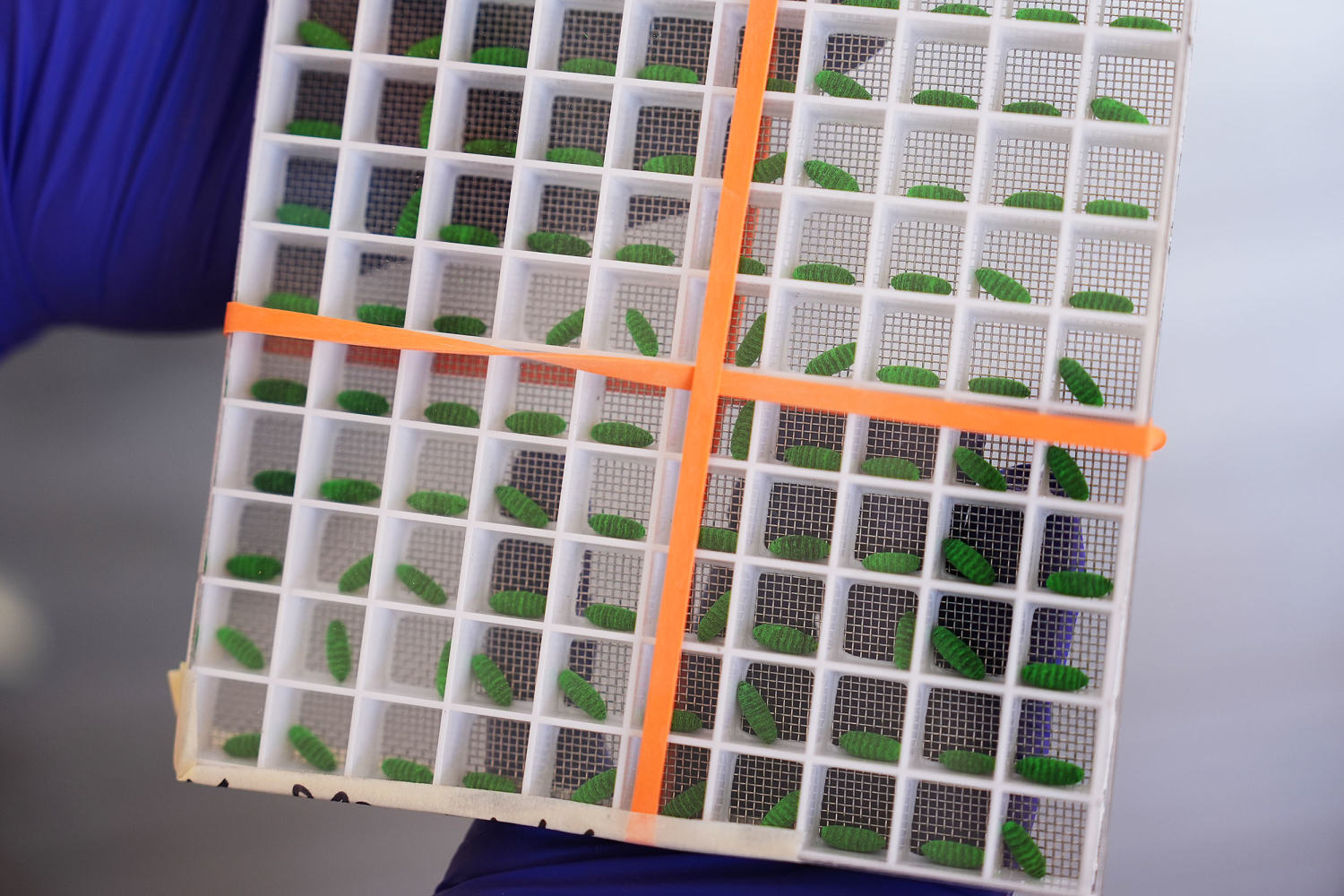
The strategy relies on a biological hack called the Sterile Insect Technique (SIT). Scientists breed millions of screwworm flies in a laboratory, expose the pupae to gamma radiation to sterilize them, and then drop them from airplanes over targeted zones. Because female screwworms only mate once in their entire lives, mating with a sterile male means she lays unfertilized eggs that never hatch. The wild population collapses.
By continuously flooding the Darién Gap—the dense jungle border between Panama and Colombia—with up to 100 million sterile flies every week, COPEG maintained a permanent invisible wall. South America has never eradicated the screwworm, but the barrier kept the pest from migrating north. The USDA estimated in 2025 that this Panama barrier saved the U.S. livestock sector roughly $2.3 billion every single year.
Then the wall crumbled.
In 2023, annual screwworm detections inside Panama's supposedly secure barrier zone spiked from a baseline of about 25 cases to over 6,500. The facility was simply overwhelmed. Investigators point to a mix of aging infrastructure at the Pacora plant, soaring operational costs, and shifting cattle smuggling routes through Central America. Funding cuts didn't help either. In early 2025, the USDA reduced budget support for several international animal disease control programs, reducing the cash flow meant for regional outbreak investigations.
The parasite didn't wait around. It tore northward through Costa Rica, Nicaragua, Honduras, Guatemala, and El Salvador. By late 2024, the flies crossed into southern Mexico. By September 2025, a case was detected in Nuevo León, less than 70 miles from the Texas border. Now, in June 2026, the fly has officially crossed the Rio Grande.
The Cost of Losing the War
The economic stakes are massive. Texas is the largest cattle-producing state in America. If the screwworm establishes a permanent foothold here, the financial devastation will ripple through the entire food supply chain.
When the parasite gets loose, it doesn't just attack adult cows. It targets the most vulnerable animals. Female flies are drawn to any open wound—a tick bite, a scratch from barbed wire, branding marks, or the fresh umbilical cord of a newborn calf. That's exactly where the Texas larvae were discovered.
- Skyrocketing Labor Costs: Ranchers can no longer let herds graze freely on large pastures for weeks. Every single animal must be rounded up, penned, and physically inspected for minor cuts.
- Massive Production Loss: Infested livestock lose weight rapidly, stop producing milk, and abort their calves due to the extreme stress and fever caused by the larvae.
- Immediate Trade Shutdowns: The international fallout is instant. Within days of the Texas detection, Canada announced strict import restrictions on U.S. livestock.
We have a historical playbook for this disaster. The U.S. technically wiped out the pest in 1966, though an isolated outbreak flared up in the Florida Keys in late 2016. That infestation got into the local population of endangered Key deer, brutally killing 135 of them before agricultural officials dropped 188 million sterile flies to choke out the population by March 2017.
The Florida Keys outbreak was contained on an isolated chain of islands. Texas is a wide-open continent.
The 2026 Counter-Offensive
The USDA isn't sitting still. They're trying to build a new defensive line while simultaneously stamping out the active spot-fires in Texas.
First, a strict 20-kilometer quarantine zone now surrounds the detection sites in Zavala County. Animal movement is heavily restricted, and mandatory inspection checkpoints are going up.
Second, the government is rushing to expand chemical treatments. The Food and Drug Administration (FDA) just issued a conditional approval for Exzolt Cattle CA1, a topical solution designed to kill screwworm larvae and cattle fever ticks on contact. It gives ranchers a localized tool to protect wounded or newborn animals right now.
But the real war will be won or lost in the air. The single facility in Panama can't produce enough sterile flies to cover the entire path of the current outbreak.
To fix this bottleneck, the U.S. and Mexico jointly poured $61.3 million into a massive biofactory in Metapa, Chiapas, located in southern Mexico. The facility is 87% complete, and Mexican technicians are currently finishing intensive training at the COPEG plant in Panama. When it opens later this month, it will start scaling up to pump out an extra 100 million sterile flies per week.
Simultaneously, the USDA broke ground on a massive $750 million sterile fly production factory at Moore Air Force Base in Edinburg, Texas. The goal for the Texas mega-plant is to hit a production capacity of 100 million sterile flies per week by late 2027, eventually scaling up to a staggering 300 million flies weekly.
What Livestock Producers Must Do Right Now
If you run cattle, goats, horses, or even have outdoor pets anywhere near the southern United States, you can't assume the government will handle this passively. The flies fly miles a day, and the wind carries them even further. Survival of your stock depends on daily, boots-on-the-ground vigilance.
Inspect Every Animal Daily
Focus on newborns and recently worked livestock. Check navels, castration wounds, dehorning sites, and ear-tag punctures. Look for signs of moisture, unusual blood staining, or a jagged tear in the skin that looks like it's growing rather than healing.
Know the Smell and Appearance
Screwworm wounds don't look like typical maggot infestations. Regular maggots sit on top of dead tissue. Screwworm larvae pack themselves tightly into the wound like an array of screws, burrowing deep vertically into the healthy flesh. The discharge is bloody and watery, accompanied by that distinct, foul stench.
Treat Wounds Instantly
Do not leave any scratch untreated. Apply approved topical larvicides or wound dressings immediately to create a barrier that prevents the female fly from depositing her eggs.
Isolate and Report Suspected Cases
If you see maggots in living tissue, do not just clean the wound and move on. Isolate the animal immediately to prevent larvae from dropping off into the soil, where they pupate into new flies. Collect a sample of the larvae in alcohol if possible, and immediately call your state veterinarian or the USDA area office. Early detection is the only way to expand the sterile fly drop zones before the pest spreads beyond control.