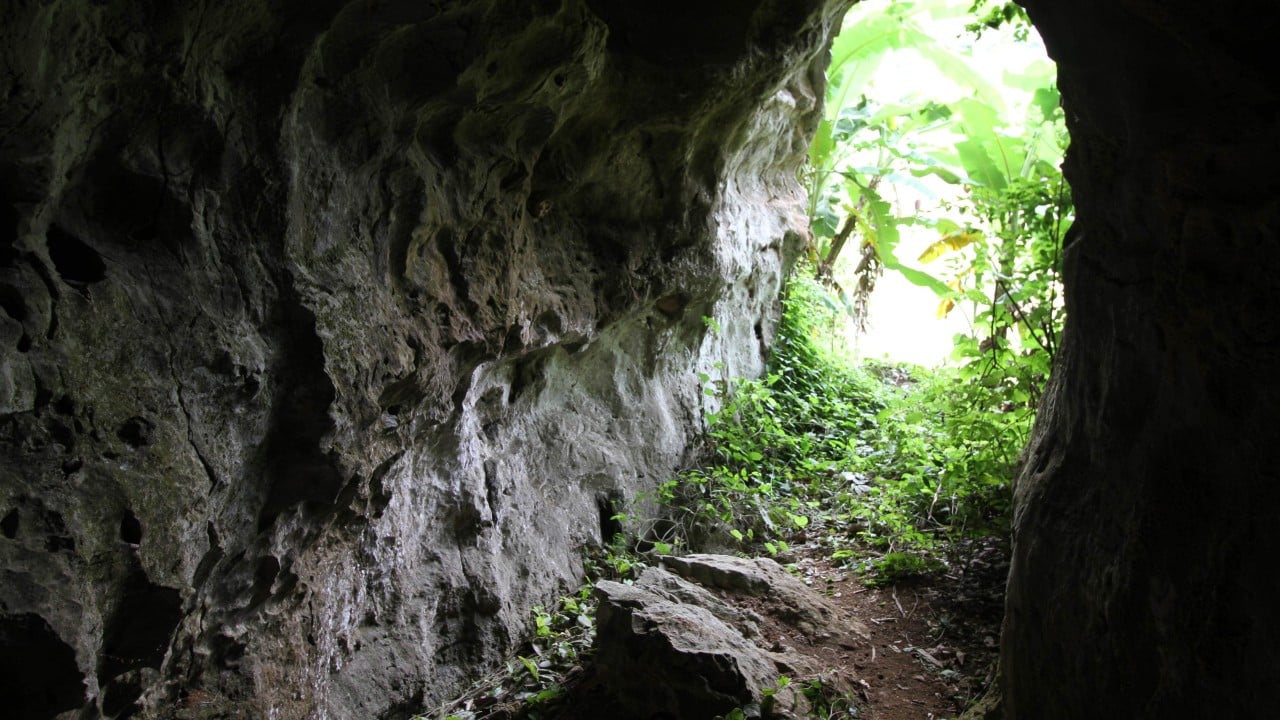
The discovery of Homo erectus dental remains within subtropical rainforest paleoenvironments in southern China invalidates the long-standing Savanna Hypothesis of early hominin dispersal. For decades, paleoanthropological models operated on the assumption that early Homo populations lacked the physiological adaptations, caloric extraction strategies, and behavioral flexibility required to penetrate dense, closed-canopy tropical and subtropical forests. The fossil record now proves that early Pleistocene hominins successfully colonized these high-biomass, resource-dispersed ecosystems, forcing a structural recalibration of both Out-of-Africa migration timelines and archaic hominin ecological modeling.
Deconstructing the Savanna-Corridor Orthodoxy
Classical models of hominin biogeography relied on a strict ecological constraint: Homo erectus was viewed exclusively as an open-habitat specialist. This framework rested on three foundational assumptions regarding early Pleistocene physiology and behavior:
- Thermoregulatory Specialization: Bipedalism and reduced body hair were modeled primarily as adaptations to dissipate heat in open, high-insolation grasslands rather than humid, low-airflow forest interiors.
- Caloric Density Requirements: The expansion of the hominin brain required high-quality, energy-dense food sources—specifically megafauna meat and marrow—concentrated in open savanna ecosystems where cursorial hunting and scavenging were viable.
- Locomotor Trade-offs: Morphological shifts toward elongated lower limbs and arched feet optimized long-distance terrestrial striding at the expense of arboreal climbing efficiency, theoretically penalizing survival in complex three-dimensional forest canopies.
This orthodox view treated tropical and subtropical rainforests as biogeographical barriers—impermeable walls that deflected migrating populations along coastal routes or grassland corridors. Whenever hominin fossils appeared in East or Southeast Asia, researchers automatically inferred that the local paleoenvironment at the time of deposition must have been a seasonal woodland or open grassland, regardless of conflicting regional climate proxies.
The Subtropical Chinese Dental Assemblage
The empirical disruption stems from fossilized dental specimens recovered from karst cave systems in southern China, specifically within regions that maintained persistent subtropical broadleaf evergreen forest cover during the Early to Middle Pleistocene. Unlike skeletal postcrania, which are prone to taphonomic destruction in acidic forest soils, tooth enamel preserves both morphological markers and geochemical signatures of an individual’s lifetime environment.
Taxonomic Attribution and Metric Analysis
Taxonomic assignment to Homo erectus relies on distinct crown morphology, root structure, and enamel thickness metrics that differentiate the species from both contemporaneous Homo habilis and later archaic Homo populations, as well as from sympatric non-hominin primates such as Gigantopithecus blacki and Pongo (orangutans).
- Crown Dimensions: The recovered molars exhibit the characteristic mesiodistal elongation and buccolingual narrowing typical of Asian Homo erectus (such as the Zhoukoudian and Sangiran assemblages), falling well outside the metric range of fossil orangutans.
- Enamel-Dentin Junction (EDJ): Micro-computed tomography (micro-CT) of the internal EDJ topography confirms a hominin occlusal pattern, eliminating the possibility of misidentification with large-bodied fossil apes that shared the same karst habitats.
- Enamel Thickness: Thick molar enamel indicates a masticatory apparatus capable of processing mechanically resistant foods, a critical trait for exploiting forest resources.
Paleoenvironmental Reconstruction and Stable Isotopes
To confirm that these individuals inhabited a true rainforest rather than an anomalous grassland pocket, researchers cross-referenced the dental remains with multi-proxy paleoenvironmental data.
- Carbon Isotope Ratios ($\delta^{13}\text{C}$): Analysis of tooth enamel carbonate reveals depleted $\delta^{13}\text{C}$ values. In terrestrial ecosystems, plants utilizing the $\text{C}_3$ photosynthetic pathway (trees, shrubs, and forest herbs) exhibit significantly lower $\delta^{13}\text{C}$ signatures than $\text{C}_4$ tropical grasses. The depleted values in the Chinese Homo erectus teeth demonstrate a diet derived almost entirely from closed-canopy $\text{C}_3$ forest resources, with negligible input from open grassland biomes.
- Faunal Associations: The stratigraphic layers containing the hominin teeth also yield classic members of the Ailuropoda-Stegodon faunal complex—including giant pandas, tapirs, and orangutans—species strictly obligate to humid, closed-canopy forest environments.
- Palynological Records: Fossil pollen profiles from the same sedimentary horizons confirm high percentages of arboreal taxa, ruling out seasonal aridification or savanna expansion during the period of hominin occupation.
The Metabolic and Behavioral Mechanics of Forest Survival
Surviving in a subtropical rainforest presents an acute energetic problem known to ecologists as the "green desert" bottleneck. While rainforests possess immense total biomass, the vast majority of that energy is locked in indigestible structural cellulose (wood and mature leaves) or sequestered high in the canopy. Terrestrial mammals face severe caloric deficits unless they deploy specific extraction strategies.
The presence of Homo erectus in these forests indicates the mastery of three operational adaptations:
- Subterranean Storage Organ (USO) Exploitation: Thick dental enamel and heavy occlusal wear patterns suggest the consumption of tough, fibrous plant tissues, such as tubers, rhizomes, and corms. Extracting USOs requires systematic digging, implicating the use of perishable wooden tools that do not survive in the archaeological record.
- Arboreal and Small-Fauna Targeting: Without large, open-plain herd animals, protein acquisition shifted toward smaller, arboreal, or semi-aquatic prey, alongside high-fat plant foods like nuts and seeds. Dental microwear textures—specifically complex pitting and scratching—corroborate a diet incorporating hard, brittle objects alongside tough vegetation.
- Behavioral Plasticity Over Morphological Specialization: Homo erectus did not evolve specialized climbing anatomy to conquer the Chinese rainforests. Instead, the species applied generalized, high-endurance terrestrial locomotion and cognitive problem-solving to map seasonal fruiting cycles and dispersed resource patches across complex terrain.
Methodological Limitations and Analytical Constraints
While the southern Chinese dental evidence dismantles the strict Savanna Hypothesis, over-interpreting these findings introduces distinct analytical risks. A rigorous evaluation requires acknowledging the boundaries of the current dataset:
- Temporal Resolution Limits: Karst cave deposits in southern China suffer from complex depositional histories, including water transport, reworking, and bioturbation. While electron spin resonance (ESR) and uranium-series dating constrain the fossils to the Early-to-Middle Pleistocene, precise millennial-scale correlation between a specific tooth and a specific pollen core remains subject to stratigraphic margin-of-error.
- Sample Size Vulnerabilities: Reconstructing population-level subsistence strategies from isolated dental specimens risks extrapolating individual dietary anomalies to an entire regional metapopulation. Without associated lithic assemblages or butchered faunal remains in direct primary context, the exact technological toolkit used to process forest resources remains hypothetical.
- Seasonal vs. Permanent Occupation: Stable isotope profiles average dietary intake over the period of enamel mineralization (several years in early childhood). While the data prove sustained $\text{C}_3$ resource reliance during tooth formation, it cannot definitively distinguish between year-round deep-forest residency and seasonal exploitation of forest margins during periods of resource abundance.
Recalibrating Hominin Dispersal Architecture
The empirical proof that Homo erectus thrived in subtropical rainforests requires an immediate overhaul of predictive archaeological modeling and paleoanthropological research design.
First, field survey protocols across East and Southeast Asia must abandon the historical bias toward open-basin and paleolake sediments. Predictive GIS models used to locate early Pleistocene sites must weight humid, closed-canopy karst systems and ancient riverine forest corridors equally with savanna-woodland interfaces.
Second, researchers must expand the application of non-destructive micro-CT scanning and high-resolution stable isotope profiling (including zinc and strontium isotopes alongside carbon and oxygen) across existing museum collections of unclassified Pleistocene primate teeth. Many Homo erectus specimens likely sit mislabeled as fossil Pongo or Gigantopithecus due to outdated assumptions about where hominins could live.
Finally, evolutionary theorists must decouple the emergence of the genus Homo from single-biome determinism. The defining characteristic of early Homo was not adaptation to the savanna, but ecological generalism—the capacity to engineer behavioral and dietary solutions across radically different environmental extremes, from arid African grasslands to the dense subtropical forests of southern China.