The war in Ukraine has entered a phase where the sky is never silent. It’s a terrifying reality. Seven civilians lost their lives recently when a drone struck a passenger bus in a region controlled by Russian forces. This isn’t an isolated incident. It’s part of a brutal, evolving pattern of drone warfare that’s increasingly catching ordinary people in the crossfire. When a bus carrying commuters becomes a target, the distinction between military objectives and civilian life evaporates.
We need to talk about what this means for the future of the conflict. This attack happened in the Zaporizhzhia region, specifically in a village named Voznesenka. Reports from local officials and news agencies like TASS indicate that a suicide drone—often called a kamikaze drone—slammed into the vehicle. It didn't just kill seven people. It injured many others, leaving a scene of charred metal and shattered glass. These aren't just statistics. They're people who were likely just trying to get to work or visit family.
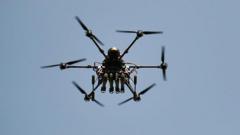
The use of First Person View (FPV) drones has changed everything. They’re cheap. They’re precise. And they’re everywhere. While both sides claim they only target military assets, the reality on the ground tells a different story.
Why Civilian Infrastructure Is Increasingly at Risk
The frontline isn't a static line on a map anymore. It’s a porous, 3D space where loitering munitions can travel miles behind the perceived "safe" zone. In the Russia-Ukraine conflict, transportation hubs and vehicles have become high-risk areas. Why? Because drones are often operated by pilots looking through goggles, sometimes miles away. At high speeds, a bus can look like a troop transport. Or worse, it’s targeted because it’s moving in a restricted zone.
I’ve looked at how these engagements happen. Often, a drone pilot has only seconds to make a decision. The pressure is immense. But that doesn't excuse the loss of life. When you have thousands of these devices flying every single day, the margin for error shrinks to almost zero. In this specific strike in Zaporizhzhia, the bus was reportedly targeted in an area that Russia has occupied and claimed as its own territory. This adds a layer of political complexity. Ukraine views these areas as occupied and legitimate zones of resistance, while Russia treats them as domestic soil. The civilians living there are stuck in a deadly tug-of-war.
The Technical Reality of Small Drone Strikes
People often confuse these small drones with the massive Predators or Reapers used by the US military. Those are the size of small planes. The drones causing havoc in places like Voznesenka are often no bigger than a dinner plate.
They carry a shaped charge or a fragmentation grenade. When they hit a soft target like a bus, the effect is devastating. The thin metal skin of a commercial vehicle offers zero protection against an explosion designed to disable armored trucks.
- Precision vs. Identification: A drone can hit a specific window, but the operator might not know who is behind it.
- Signal Jamming: Electronic warfare (EW) is rampant. Sometimes drones lose their feed and drift, hitting whatever is nearby.
- Low Cost: You can build one for $500. This low barrier to entry means they are deployed in massive swarms.
If you’re following this conflict, you’ve seen the footage. It looks like a video game. That’s the problem. The "gamification" of war through drone feeds can desensitize operators to the human cost. It makes it easier to pull the trigger—or in this case, fly the drone—into a target that might be civilian.
Regional Stability and the Zaporizhzhia Factor
Zaporizhzhia is a powder keg. It’s home to Europe’s largest nuclear power plant, and the surrounding villages are constantly under fire. The strike on the bus highlights just how unstable the region remains despite Russian claims of "normalization."
Russian-installed officials, such as Yevgeny Balitsky, frequently use these incidents to rally support and paint the Ukrainian forces as terrorists. Meanwhile, Kyiv often maintains silence on specific strikes or points to the fact that Russia initiated the invasion, making any presence of their forces—and the infrastructure supporting them—a target. It’s a cycle of blame that leaves the families of the seven dead with no real recourse.
The International Committee of the Red Cross (ICRC) has repeatedly warned about the protection of civilians in occupied territories. International law is clear. Civilians must be spared. But in a war defined by "attrition by drone," those laws are being shredded daily.
What This Means for Future Urban Combat
What we’re seeing in Ukraine is a blueprint for every future conflict. The age of the "safe" rear area is over. If you're within 20 miles of the front, you're in the kill zone. This strike proves that even mundane activities like taking a bus are now life-threatening.
Military analysts are struggling to keep up. The traditional air defense systems—the big, expensive missiles—aren't great at catching a tiny plastic drone flying six feet off the ground. To protect civilians, we’d need a massive rollout of localized electronic jamming. But that jams civilian cell phones and emergency services too. It’s a mess.
Honestly, it’s gut-wrenching. You have tech that could be used for delivering medicine being used to blow up buses. We’re witnessing a shift where the "human element" in targeting is being replaced by low-res video feeds and split-second twitch reflexes.
How to Stay Informed and Stay Safe
If you have family in conflict zones or you're following the geopolitical fallout, you have to look past the headlines. One side will call it a "surgical strike gone wrong." The other will call it "deliberate terror." The truth is usually found in the wreckage.
Check your sources. Don't rely on a single Telegram channel. Look for corroboration from international monitors like the OSCE (when active) or human rights groups that use satellite imagery to verify strike locations.
The immediate next step for international observers is to demand transparency on drone targeting protocols. If these "kamikaze" drones are being used as standard artillery, they need to be governed by the same strict rules of engagement. For those on the ground, the reality is grimmer. Avoid traveling in large vehicles near known military supply routes. It sounds paranoid, but in 2026, it's survival. The sky has eyes, and they aren't always looking for the right things.
Demand accountability from leadership on both sides. War is hell, but a war without distinctions is a descent into something much worse. Stop assuming technology makes war "cleaner." It just makes it more efficient at being messy. Keep your eyes on the data, not just the rhetoric. The loss of these seven lives shouldn't be a footnote in a daily briefing. It’s a warning of what’s to come if drone proliferation continues unchecked.