The rain in Bangkok does not fall so much as it arrives. It is a presence, heavy and gray, turning the afternoon sky the color of old pewter before the first drop even hits the pavement.
Down in the concrete arteries of One Bangkok, that sprawling city-within-a-city of glass and gleaming ambition, the water found its way. It always finds its way. When the drainage channels choked under the sudden, biblical weight of the monsoon, the streets did not merely flood; they transformed. Curbs vanished. Taxis became stalled islands. And inside the terminal gates, a different kind of rising tide began to quietly panic the weary.
Airports and transit hubs are fragile ecosystems built entirely on the illusion of motion. When the ground stops moving, everything else begins to clot.
Consider a hypothetical traveler named Somchai, though he could just be any one of us. Let us call him Somchai for the sake of the hour he spent staring at a blank carousel in Suvarnabhumi, waiting for a black nylon suitcase that contained three changes of clothes, a laptop charger, and a jar of homemade chili paste from his mother in Chiang Rai. Somchai had survived the flooded highway outside the district, wading through knee-deep water with his trousers rolled to his thighs, only to find that his journey had merely fractured into a new kind of waiting.
Thai Airways was racing. There is no other verb for it.
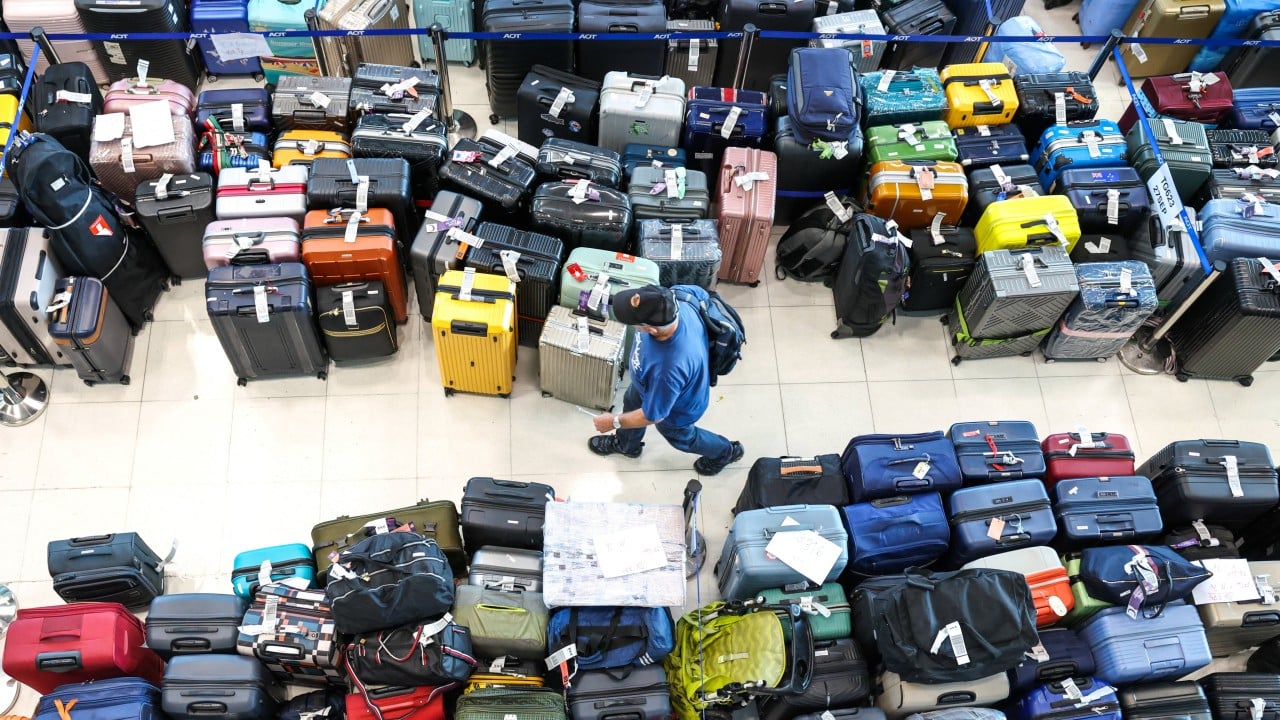
When the floodwaters lapped at the thresholds of transport networks, schedules did not just slip; they shattered. Baggage systems, usually humming with the quiet efficiency of barcode scanners and rubber belts, stuttered and died when power grids flickered under the strain. Thousands of bags—heavy leather duffels, cheap polyester rollers, cardboard boxes tied with twine—piled up in the cavernous belly of the sorting hubs.
A backlog is an abstract word. It sounds clean. It sounds like numbers on a spreadsheet in an air-conditioned office on the fourteenth floor.
It is not clean.
A backlog smells like damp cardboard and stale sweat. It looks like a mountain of luggage rising toward the rafters, guarded by weary handlers whose boots have been soaked since dawn. It feels like the cold knot in a passenger's stomach who has arrived in a foreign city with nothing but the clothes on their back and a boarding pass that now feels like a hollow promise.
The battle of One Bangkok was not just fought with sandbags and industrial pumps. It was fought in the quiet, frantic coordination between ground crews trying to clear flooded access roads and airline logistics teams trying to match orphaned luggage with passengers who had long since taken cabs to downtown hotels.
Rainwater is an equalizer. It does not care about brand-new commercial developments or national flag carriers. It enters the lobby, pools around the ankles of executives and baggage handlers alike, and demands a response.
For Thai Airways, the race against the backlog became a test of institutional memory. Systems fail, but people remember how to work in the dark. Flashlights beam against concrete pillars. Walkie-talkies crackle with static through the roar of pumps clearing basement levels. Handlers load bags manually, lifting two at a time because the conveyor belts are dead, their motors drowned in brown sludge.
By the second day, the water had receded enough for the trucks to move. But the human backlog remained.
Every unclaimed suitcase represents an unkept promise. A missed meeting. A wedding dress locked in a hard-shell case. A child's favorite blanket tucked safely—or so the parent hoped—in the side pocket of a duffel.
We talk about infrastructure as if it were made only of steel and fiber optics. We forget that the true infrastructure of any city is its tolerance for chaos, its stubborn refusal to stop moving entirely when the sky breaks open.
When Somchai finally got his black nylon bag seventy-two hours later, it was damp along the bottom seam. The chili paste had leaked just a little bit, staining the lining red. He didn't care. He hoisted it onto his shoulder, stepped out into the humid Bangkok evening where the asphalt was still steaming, and hailed a motorbike.
The city was already drying. The floodwaters were draining into the Chao Phraya, carrying away the debris of a bad afternoon. But deep inside the terminals, the memory of the pileup lingered—a reminder of how thin the margin is between order and the deep, rising tide.