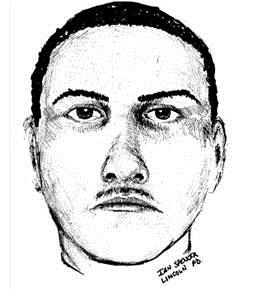
When the girlfriend of a celebrated surfer told investigators that masked intruders broke in and killed him during a robbery, the narrative initially tapped into a familiar coastal anxiety. Within days, however, homicide detectives pivoted away from the phantom-intruder theory and named her as the primary suspect in his murder. That abrupt reversal highlights a recurring pattern in domestic homicide investigations, where staged crime scenes, inconsistent timelines, and digital forensics routinely dismantle fabricated break-in alibis long before a case ever reaches a courtroom.
For decades, law enforcement agencies across coastal hubs—from Southern California and Hawaii to Australia's Gold Coast and Brazil's surf enclaves—have dealt with the distinct pressures of high-profile deaths inside tight-knit athletic communities. Surf culture prizes loyalty, privacy, and an informal code that often keeps outsiders at arm's length. Yet when a prominent figure in the sport dies violently at home, local grief collides immediately with the cold mechanics of forensic investigation.
Anatomy of a Staged Robbery
The staged home invasion is one of the oldest misdirections in criminal history. On paper, it offers an immediate, plausible villain: an anonymous outsider drawn by a victim's perceived wealth, lifestyle, or remote beachfront property. In practice, pulling off a convincing burglary-gone-wrong requires an understanding of criminal behavior that almost no amateur possesses.
Detectives trained in crime scene reconstruction look first for what is missing rather than what is present. Real burglars operate under extreme time pressure. They target high-liquidity items—cash, small electronics, jewelry, vehicle keys—and ignore bulky valuables that slow down an escape. When investigators arrive at a scene where drawers are neatly pulled out, items are knocked over without breaking, or obvious valuables sit untouched beside a body, the robbery hypothesis begins to fracture.
Physical Evidence Versus Narrative Claims
Forced entry leaves an unmistakable mechanical signature. A door kicked in from the outside splinters the jamb inward, scattering wood fragments across the interior floor. Glass broken from the exterior sends shards flying inside the room, often resting beneath displaced furniture. Conversely, when an insider stages a break-in, windows are frequently smashed from the inside out, or locks show tool marks that make no physical sense given the door's swing.
Violence itself also tells a specific story. Stranger robberies rarely escalate to personal, targeted lethality unless the perpetrator is cornered or armed for a confrontation. Overkill, close-range assaults inside a bedroom, or injuries concentrated on the face and head typically point toward emotional rage rather than commercial theft. Forensic pathologists and bloodstain pattern analysts read the geometry of the room to determine whether the victim was ambushed while vulnerable or killed during a sudden, panicked interruption.
How Modern Forensics Dismantle Alibis
Thirty years ago, a lone survivor inside a remote coastal home held a massive narrative advantage. Without eyewitnesses, police had to rely heavily on interrogation pressure and basic physical trace evidence to poke holes in a story. Today, every person in a modern household carries a continuous digital tracking system.
The Digital Breadcrumb Trail
Smartphones, wearables, connected home hubs, and vehicle infotainment systems log micro-events every second. When a suspect claims to have been asleep, locked in a bathroom, or out running an errand during an attack, investigators subpoena raw device telemetry.
- Step counters and health sensors record sudden spikes in heart rate, elevation changes, and bursts of physical exertion at exact timestamps.
- Wi-Fi routers and smart locks log when devices connect, disconnect, or when doors actually open and close, often contradicting verbal timelines down to the second.
- Cell-site location information (CSLI) and GPS caches reveal whether a phone stayed stationary inside a house or moved along a coastal highway.
- Ring cameras and neighbor surveillance capture the absence of getaway vehicles or fleeing suspects on streets with single access points.
In a hypothetical example, imagine a partner claiming two armed men entered through a sliding glass door at 2:15 AM, while the household's mesh Wi-Fi router shows no motion sensor triggers in the hallway until 2:40 AM, and the survivor's smartwatch logs a 140-beats-per-minute spike twenty minutes before the emergency call was placed. Those discrepancies do not merely raise suspicion; they establish a timeline that no defense attorney can easily explain away.
The Unique Dynamics of Surf Culture and Isolation
Surfing occupies an unusual space in global sports. Unlike stadium athletes surrounded by team security, agents, and constant media handlers, even legendary surfers often live remarkably unguarded lives. Many settle in semi-isolated beach towns, rural stretches of coastline, or developing surf destinations where homes are built for ocean views and open-air living rather than perimeter security.
That lifestyle creates a double-edged sword during a crisis. On one hand, open doors, unlocked gates, and transient visitors are normal features of beach-town life, making a sudden robbery seem superficially plausible to friends and fans. On the other hand, tight-knit surf communities function like small villages. Everyone knows who is in town, which cars belong on a dead-end beach road, and when something feels off.
Grief, Rumor, and the First 48 Hours
When a beloved waterman dies, the immediate reaction inside the lineup and across social media is shock followed by protective solidarity. Friends rally around the surviving partner. Memorial paddle-outs are organized within days. During that window, questioning the survivor's account feels almost taboo to people mourning a friend.
Veteran homicide investigators intentionally separate themselves from that emotional current. They treat the first 48 hours as an information-gathering vacuum. While public attention focuses on tributes and unverified rumors of local crime waves, detectives conduct separate, recorded interviews with the reporting witness, locking them into specific details before they can compare notes with lawyers or family members. Every change in story—whether the intruder wore gloves, how many voices were heard, which direction they fled—becomes a permanent benchmark against incoming lab results.
Financial and Interpersonal Motives Behind Closed Doors
When an investigation shifts from an external robbery to an intimate partner, the central question moves from who to why. While no single motive explains every domestic homicide, decades of criminological data point toward a handful of recurring triggers behind staged-robbery cases.
Financial entanglement sits near the top of the list. Retired or aging surf icons frequently possess complex asset profiles—coastal real estate that has appreciated dramatically, intellectual property, sponsorship royalties, board-shaping labels, or life insurance policies—paired with uneven cash flow. Pending breakups, disputes over property ownership, or hidden debts can turn a domestic separation into an existential financial crisis for a partner dependent on that lifestyle.
Relationship dissolution and control form the second major pillar. High-profile surfers often travel constantly for swells, contests, or brand appearances, creating long periods of separation punctuated by intense domestic friction. When a relationship reaches a breaking point, especially if custody, public reputation, or residency status is at stake, a staged crime offers a desperate attempt to eliminate a partner while retaining community sympathy and estate control.
The Psychology of the Victim-Hero Pivot
Staging a robbery does more than shift blame; it casts the perpetrator as a fellow victim. By claiming to have survived a terrifying home invasion, the suspect invites immediate emotional protection from police, neighbors, and the press. In behavioral analysis, investigators pay close attention to how a reporting witness behaves once paramedics and officers arrive.
Genuine trauma exhibits wide variation, so detectives avoid judging guilt solely on whether someone cries or appears stoic. Instead, they look for functional anomalies. Does the caller ask about the victim's condition, or do they focus immediately on explaining why they could not intervene? Are their minor defensive injuries superficial, symmetrical, and located only in non-vital areas accessible to their own dominant hand? Forensic examiners routinely identify hesitation marks and self-inflicted bruises designed to sell a struggle that never occurred.
Media Narratives and the Premature Headline Trap
Modern digital journalism operates on speed, and breaking crime stories routinely suffer from the gap between initial police dispatch logs and actual detective work. When an emergency call reports a fatal robbery, early headlines reflect that raw input. The public absorbs the first version of events as established fact.
When authorities later name the reporting partner as a suspect, the shift looks dramatic from the outside, as though the case turned upside down overnight. Inside the precinct, the trajectory is usually far more linear. Police rarely announce suspicions early because alerting a suspect compromises search warrants, wiretaps, and forensic collection. Allowing a suspect to believe their robbery story is working gives investigators time to secure phone records, financial ledgers, and DNA swabs without triggering flight or evidence destruction.
What Happens Between Suspicion and Conviction
Naming a suspect—or even making an arrest—marks the beginning of a grueling evidentiary test rather than the end of the story. Prosecutors taking a staged-robbery murder case to trial face high hurdles, particularly when no independent eyewitnesses exist.
To secure a conviction, the state must dismantle every alternative hypothesis a defense team will raise:
- Eliminating third-party DNA: Crime labs must account for every fingerprint, hair, and touch-DNA profile in the residence, proving that unknown genetic material belongs to legitimate guests, delivery workers, or contractors rather than a phantom burglar.
- Proving exclusive opportunity: Digital logs and physical access records must show that no outsider entered or exited the perimeter during the window of death.
- Establishing consciousness of guilt: Prosecutors use recorded police interviews, internet search histories, and post-incident financial or communication behavior to show deliberate deception rather than panicked confusion.
Defense attorneys counter by attacking tunnel vision. They argue that once detectives decide a partner is guilty, they stop looking for transient suspects, overlook sloppy perimeter checks, and over-interpret ambiguous grief responses. In coastal jurisdictions where local police departments may handle only a handful of homicides per year, mistakes in evidence preservation or chain of custody can give a skilled defense team ample room to manufacture reasonable doubt.
The Lasting Toll on Tight-Knit Communities
A domestic murder disguised as a street crime leaves a specific kind of scar on a community. Beyond the loss of a respected figure whose achievements shaped local surf history, the revelation forces friends, sponsors, and neighbors to re-evaluate months or years of personal interactions. Every dinner party, surf trip, and public tribute gets replayed through a darker lens.
At the same time, these cases serve as a stark reminder of how quickly external crime narratives can take root in beach towns. Before arrests are made, fabricated robbery claims often trigger neighborhood panic, misplaced suspicion toward local workers or outsiders, and demands for aggressive policing based on a crime that never happened.
Truth in a homicide room rarely arrives in a single cinematic confession. It emerges slowly through mismatched timestamps, silent motion sensors, and physical evidence that refuses to lie for anyone.